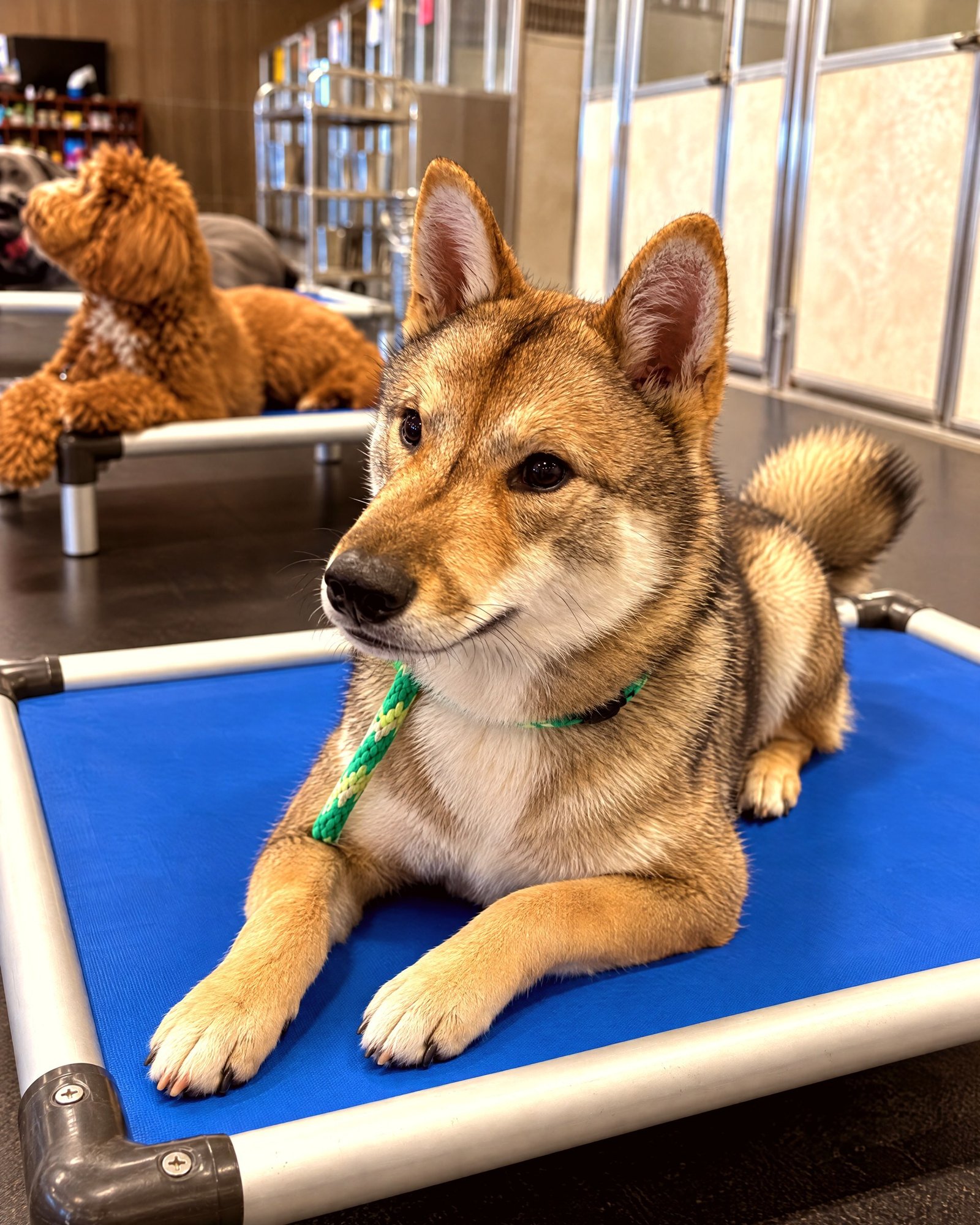
Shiba Inu resting on a blue elevated cot on an indoor training floor with another dog in the background.
Holding place on the platform
Est.
Dec 1997
Partners Dogs · Group class syllabus

Build on Kindergarten, then advance the commands.

Play guidance, impulse control, heel, place, and social manners for daily life.

EL
ElementaryGroup class · pet parents
How class runs

Four modes, every week.

Interval, Group, AMRAP, and Demo. Same structure across all twelve Elementary weeks.

  1. Interval rotating stations
  2. Group whole class · 15 min
  3. AMRAP rep volume · 5 min
  4. Demo trainer feedback · 5 min
What this grade is for
Impulse control, heel, place, and play guidance, with manners as the throughline.

That is the practical focus of Elementary. Results vary with the work you do at home. No guaranteed mastery timeline.

What Elementary covers

Manners, behaviors, tricks, and tools.

New Manners

Quiet/Settle, Spatial/Personal Boundaries, Calm Greetings, and Address Any Opportunistic Issues.

New Behaviors

Reset, Auto Sit, Recall To Heel, Back-⁠Up, Done/Drop it, Leave-⁠It, and Off.

New Tricks

Touch is the new trick introduced in this grade.

New Tools

E-⁠Collar, Muzzle, Tab, and Prong Collar, with trainer guidance on fit.

Who it is for

Dogs who completed Kindergarten and are ready for impulse control, advanced commands, and tool introduction.

Twelve weeks

Four stations each week, from Foundations for Focus through Advanced Engagement.

How skills move at this grade

Elementary teaches, reinforces, and proofs.

New work starts in Teaching. Kindergarten skills keep moving in Reinforcing. Pre-⁠School skills keep moving in Proofing.

introduce, then reinforce, then proof

01

Teaching

Shape the cue piece by piece: lure, integrate, condition, and desensitize in a quiet setting.

15 at Elementary
02

Reinforcing

Deepen a skill the dog already recognizes, including Kindergarten carryovers.

15 at Elementary
03

Proofing

Hold the skill through the five D's when it is ready, including Pre-⁠School carryovers.

14 at Elementary
04

Maintenance

Daily use at home and in class keeps it sharp. There is no finish line.

You lead
Words we use in class

Signature commands and markers.

Reset
Move back into heel if the dog has left the position. Practice backward, forward, and figure-8 recovery on the left.
Done
Also called Drop it. Cue the release of a held toy or object, then mark and reward the drop.
Leave It
Stop unwanted interaction with an object or person. Mark and reward when the dog leaves the item alone.
Off
Keep all paws on the ground. Use when the dog jumps on people, furniture, or lifts paws without permission.
Yes
Reward marker. Marks the correct moment and pairs with a treat, toy, or clicker so the dog knows what earned the pay.
No
Correction marker. A clear interrupt for undesired behavior. Stay consistent, and do not reward the thing you just stopped.
New manners

Settle, clear space, and calm hellos

Quiet/Settle, Spatial/Personal Boundaries, Calm Greetings, and Opportunistic Issues.

  1. 01Opening
  2. 02New manners
  3. 03New behaviors
  4. 04New tricks
  5. 05New tools
Quiet / Settle

Stop the noise, then pay the quiet.

  • Start somewhere quiet begin in a distraction-⁠free place so your dog can hear the cue
  • Get their attention use their name, a small noise, or a treat to earn focus first
  • Say your quiet cue firmly say the cue word once you have their attention
  • Mark and reward the stop pay immediately when barking stops
Coach tip

Repeat the loop

Short reps make quiet easier to offer next time.

Spatial / personal boundaries

Clear space builds respect.

Personal space first. Then temporary zones. Then lasting off-⁠limits spots.

  1. Claim your spaceStep into your dog to prompt a back-⁠away, then reward them for conceding space.
  2. Set a temporary zonePick an area such as the kitchen. In a quiet setting, reward staying outside it.
  3. Add out, then grow itOnce they stay out, add the cue out, then slowly add distance and distractions.
  4. Make permanent spotsFor places such as a bed, start with sit or down stay, reward the hold, then add duration and distractions.
Calm greetings

Polite hellos with four paws down.

No jumping, mouthing, or whining. Pay calm. Turn away from the rush.

  1. Start neutralBegin in a quiet space. Keep your dog on leash and stay steady.
  2. Pay calm onlyAttention or treats only when calm and seated. If they jump or get loud, turn away until they settle.
  3. Practice with visitorsFamiliar people approach only while your dog stays calm, then reward the greeting.
  4. Grow and keep payingAdd new people and places slowly, and keep rewarding calm so excitement stays lower.
Address opportunistic issues

Stop the rehearsal, then show the better choice.

Teach before you correct

Opportunistic habits show up when the setting makes them easy. While the cue is new, manage the space with a leash or a baby gate so your dog cannot keep practicing the unwanted pattern.

Teach the cue with rewards first. Once your dog knows it, interrupt with a calm, fair correction, redirect into the behavior you want, and reward that choice right away.

Takeaways
  • Manage the setting
  • Teach the cue first
  • Correct, then redirect
New behaviors

Reset, Auto Sit, and the daily controls

Reset, Auto Sit, Recall To Heel, Back-⁠Up, Done/Drop it, Leave-⁠It, and Off.

  1. 01Opening
  2. 02New manners
  3. 03New behaviors
  4. 04New tricks
  5. 05New tools
Reset

Get back to heel when the position slips.

Walk it in. Curve it in. Use it the moment they leave your side.

  1. Walk back and forwardPractice straight backward steps, then forward, with your dog recovering to heel.
  2. Use a figure-8Keep them on your left as they turn into you in a small figure-8 recovery.
  3. Apply when out of heelRun the same recovery when they have fully left the heel position.
  4. Mark the returnPay the moment they settle back at your left side so Reset stays worth offering.
Auto Sit

When you stop, the sit shows up alone.

Default sit when the handler stops walking. No verbal sit cue needed.

  1. Pay natural sitsIn a quiet space, reward sits your dog already offers so sitting pays.
  2. Stop and pay the sitAdd walking. Every time you stop, reward the auto-⁠sit that follows.
  3. Practice across the dayRepeat in ordinary moments so the pattern stays easy to offer.
  4. Grow distractionsSlowly add busier settings and keep paying clean auto-⁠sits.
Recall To Heel

Come in, then finish at my side.

Build a clean recall first. Add heel at the arrival. Grow distance later.

  1. Foundation recallIn a quiet area, say their name and come. Reward the moment they arrive.
  2. Add heel at arrivalStand still, call them in, say heel as they reach you, and guide them to your side.
  3. Combine the chainPractice recall with heel at the end. Increase distance only after clean reps.
  4. Change the settingRepeat the same sequence in busier places, still paying successful finishes.
Back-⁠Up

Move the hind end back for space and balance.

Personal space, confidence, and body awareness in one backward step.

  1. Teach hind-⁠end awarenessHelp your dog move the hind legs independently so a true backup can happen.
  2. Use natural guidesPractice near a wall, sidewalk edge, or threshold so the path stays clear.
  3. Vary the pictureOnce they understand, try beside you, in front, while sitting, or while lying down.
  4. Keep reps shortMark and pay clean backward steps, then reset before the form falls apart.
Done / Drop it

Release the toy, then get paid to play on.

Say done while they hold it. Mark the drop. Return the toy so giving up still wins.

  1. Cue during playIn a familiar game, clearly say done while your dog is holding the toy.
  2. Keep the picture quietStart with few distractions so they can hear the cue and offer the drop.
  3. Mark and return the toyPay with good or a clicker when it drops, then treat or praise and give the toy back.
  4. Repeat in short gamesPractice the cue, mark, reward, and continue play so Done stays easy to offer.
Leave-⁠It

Skip the temptation and look back to me.

Start with something low value. Mark the leave. Pay the disengage.

  1. Start low valueUse a mild temptation such as kibble. Say leave it as your dog sniffs it.
  2. Mark the leaveThe moment they disengage, mark with Yes or a clicker, then reward.
  3. Repeat to reliabilityKeep short reps going until leave it earns a clean look-⁠away on cue.
  4. Protect the repsWhile the cue is new, manage the space so they cannot keep rehearsing the grab.
Off

Four paws down, every time they jump.

People, furniture, or lifted paws without permission. Cue Off. Pay the ground.

  1. Spot the triggerNotice what starts the jump: your arrival, visitors, or excitement.
  2. Teach the Off cueLure them off with a treat. If needed, guide with the leash to where they should be, then reward.
  3. Repeat until consistentKeep clean reps going so Off means get down right away.
  4. Pay four paws downOnce Off is understood, reward keeping all four paws on the ground.
New tricks

One new trick that steers attention

Touch. A nose-⁠to-⁠palm target that builds focus, direction, and confidence.

  1. 01Opening
  2. 02New manners
  3. 03New behaviors
  4. 04New tricks
  5. 05New tools
Touch

Nose to palm, then pay the touch.

A target that grabs attention and points your dog where you want them.

  1. Start in SitBegin with your dog seated in front of you.
  2. Offer your palmExtend your hand with the palm facing up as the target.
  3. Mark the nose touchMark and reward with a treat or toy the moment their nose meets your palm.
  4. Repeat, then move the handBuild clean reps, then raise or lower your hand once the touch is reliable.
New tools

Four tools, introduced with a trainer

E-⁠Collar, Muzzle, Tab, and Prong Collar. Fit and first uses stay under trainer guidance.

  1. 01Opening
  2. 02New manners
  3. 03New behaviors
  4. 04New tricks
  5. 05New tools
E-⁠Collar

Condition it as a check-⁠in tap.

A remote stim collar introduced thoughtfully, always with a trainer and always paired with reward.

  1. Start with your trainerIntroduce it only with Partners Dogs trainer guidance, not alone from a manual.
  2. Find the working levelUse the lowest level your dog notices, like an ear flick or head turn.
  3. Pair the tap and payGive the cue, then reward the moment they check in or respond.
  4. Keep sessions shortStay calm and low-⁠distraction first, then grow the environment.
Muzzle

Make the basket muzzle calm and voluntary.

Basket muzzle conditioning for safety and vet visits, never as punishment.

  1. Look, sniff, treatShow the muzzle, mark a calm sniff, pay, and put it away. Do not buckle yet.
  2. Nose in for treatsFeed treats through the bars so they push their nose in, then let them back out.
  3. Build a little durationWait one or two seconds before the treat so the nose-⁠in pause gets longer.
  4. Strap, then short buckleTouch the strap until it is boring, then buckle briefly, treat, and unbuckle.
Tab

A short grab handle for the fast moments.

A short handle clipped to a collar or harness. It is not a slip lead or chain collar.

  1. Wear it in calm momentsClip it on at home during meals, play, and downtime so it feels ordinary.
  2. Touch, then treatPick the tab up gently while your dog is calm and pay right away.
  3. Grab and redirectAt a knock or doorbell, take the tab calmly and cue a known behavior.
  4. Pay the redirectReward that calm choice generously so a reach for the tab stays good news.
Prong Collar

Fit it with a trainer, then pay the slack.

A leash-⁠pressure tool for strong pullers, aimed at a loose leash without lunging.

  1. Get a trainer fittingSnug and high behind the ears, with a backup collar on the leash too.
  2. Condition it firstWear it for meals and short sniff walks on a slack leash, then take it off.
  3. Reward every slack leashPay loose-⁠leash walking far more often than you ever correct pulling.
  4. Light pulse, then praiseOnly for a known heel cue: a quick pulse and release, then reward the return.
Week 1

Foundations for Focus

Pro tipReset ends with your dog back at your left side. Pay that moment.

Week 1

Foundations for Focus

Pro tipReset ends with your dog back at your left side. Pay that moment.

Week 2

Boundaries & Commands Mastery

Pro tipAuto Sit: stop walking and wait. Pay every sit that comes on its own.

Week 2

Boundaries & Commands Mastery

Pro tipAuto Sit: stop walking and wait. Pay every sit that comes on its own.

Week 3

Comprehensive Polite Behavior

Pro tipCalm earns hello. Four paws on the floor, then the greeting.

Week 3

Comprehensive Polite Behavior

Pro tipCalm earns hello. Four paws on the floor, then the greeting.

Week 4

Behavior Enhancement

Pro tipName each turn before you make it. Pay when your dog stays with you.

Week 4

Behavior Enhancement

Pro tipName each turn before you make it. Pay when your dog stays with you.

Week 5

Polished Behavior & Handling

Pro tipAfter Done, give the toy back sometimes. Letting go keeps the game going.

Week 5

Polished Behavior & Handling

Pro tipAfter Done, give the toy back sometimes. Letting go keeps the game going.

Week 6

Refined Skills & Positive Interaction

Pro tipFree is the only way out of a command. Release, then pay.

Week 6

Refined Skills & Positive Interaction

Pro tipFree is the only way out of a command. Release, then pay.

Week 7

Tranquil Behavior & Adaptability

Pro tipPay settled, quiet time in the crate, not just walking in.

Week 7

Tranquil Behavior & Adaptability

Pro tipPay settled, quiet time in the crate, not just walking in.

Week 8

Structured Behavior & Skill Development

Pro tipDoorways: your dog waits for your Free. Calm first, then through.

Week 8

Structured Behavior & Skill Development

Pro tipDoorways: your dog waits for your Free. Calm first, then through.

Week 9

Polite Interactions & Responsive Training

Pro tipRecall To Heel finishes at your left side. Pay right there.

Week 9

Polite Interactions & Responsive Training

Pro tipRecall To Heel finishes at your left side. Pay right there.

Week 10

Behavioral Adjustment & Skill Enhancement

Pro tipSame Down, new places. Start easy in a busy spot, then build.

Week 10

Behavioral Adjustment & Skill Enhancement

Pro tipSame Down, new places. Start easy in a busy spot, then build.

Week 11

Refined Commands & Impulse Control

Pro tipLeave It: pay for looking away, then reward from your hand.

Week 11

Refined Commands & Impulse Control

Pro tipLeave It: pay for looking away, then reward from your hand.

Week 12

Advanced Engagement & Response

Pro tipTouch: nose to palm. Move your hand a little farther each rep.

Week 12

Advanced Engagement & Response

Pro tipTouch: nose to palm. Move your hand a little farther each rep.

After class
Results vary. The hard commands get the home reps.

Between classes, keep working the commands your dog finds most difficult.

Fair questions

Class logistics parents usually ask.

Who joins Elementary?

Dogs who finished Kindergarten. Some sociable dogs leaving Camp boarding may be ready too.

Where do we train?

Group classes meet at our Scottsdale and Cave Creek campuses.

Can we start any week?Open enroll

Yes. Open enrollment runs year-⁠round, so you can start any week.

What do we practice at home?

The commands your dog finds most difficult, before the next class.

Thank you

See you on the floor.

480.595.6700
partnersdogs.com/grade-⁠levels/elementary
Scottsdale · Cave Creek, Arizona