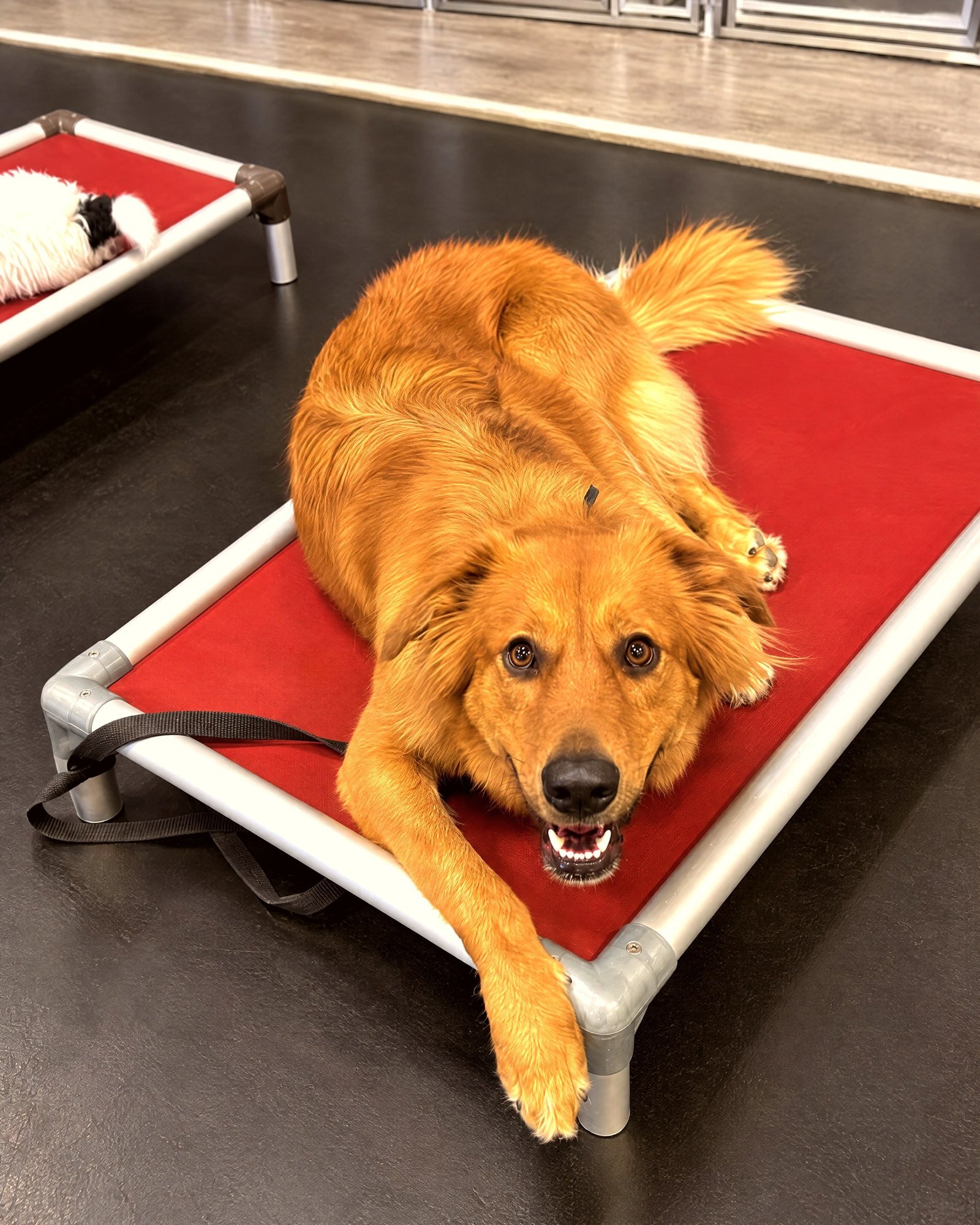
A happy golden dog lying on a red elevated cot during indoor place training.
Place, in the training hall
Est.
Dec 1997
Partners Dogs · Group class syllabus

High School puts skills to work.

Pivots, turns, Bye, retrieve, and pacing, plus calm around kids, loud sounds, and a gentle check-over.

HS
High SchoolGroup class · pet parents
How class runs

One class shape, every week.

Four focus behaviors a week, and the same flow every class.

  1. Interval the week's four stations
  2. Group whole class together · 15 min
  3. AMRAP your pick, max reps · 5 min
  4. Demo show one, get feedback · 5 min
  5. Home practice the hard ones, before next class
What this grade is for
Skills your dog can use with you, and calm in the real world.

High School follows Middle School. Behavior comes first, and results vary with the practice you do at home.

What High School covers

Manners, behaviors, tricks, and tools.

New Manners

Calm around children, around loud sounds, and during a gentle check-over (taking vitals).

New Behaviors

Pacing, standing pivots and advanced turns, Bye, and retrieve.

New Tricks

Speak, Hug, and High Five, three ways to work together.

New Tools

Thermometer and noise-makers, introduced by your trainer.

Known skills

Recall, Flip to Heel, off-leash heel, and more, raised a level.

Twelve weeks

Four stations each week, with repeats that build on each other.

How skills move

High School works all four stages.

New skills start in Teaching. Skills from earlier grades come back a level higher, so a repeat is progress.

introduce, reinforce, proof

01

Teaching

Kids, sounds, check-overs, pacing, pivots, Bye, retrieve, Speak, Hug, High Five.

New here
02

Reinforcing

Recall to Front, Flip to Heel, off leash, Out, objects, grooming, car, Crawl, Rollover.

From Middle School
03

Proofing

Calm, boundaries, greetings, Reset, Auto Sit, Done, Back-Up, Off, Leave It, Touch.

From Elementary
04

Maintenance

Sit, Down, Stay, Place, thresholds, crate, heel, turns, socializing, hand off.

From earlier grades
Words we use in class

Front, heel, pivot, and place.

Front
Your dog comes and sits squarely in front of you, facing you.
Heel
Your dog at your left side, matching your pace.
Pivot
Front paws stay put while the back legs step around.
Pacing
You change speed, slow or fast, and your dog matches you.
Place
All four paws on the place bed until you release.
New manners

Kids, sounds, and the check-over

Calm around children, doorbells and knocks, and gentle handling at home.

  1. 01New manners
  2. 02New behaviors
  3. 03Tricks & tools
  4. 04Known skills
Child desensitization

Calm first, kids later.

Safety and comfort for your dog and the children, one calm step at a time.

  1. Controlled settingIntroduce your dog to children at home, on leash, in a calm space.
  2. Use known cuesSit, Down, or Stay help your dog relax around kids.
  3. Let your dog chooseYour dog may approach if they want to. Never force it.
  4. Pay calm, no contact yetReward calm behavior before any direct interaction.
  5. Pay the calm lookMark and reward when your dog looks at kids and stays calm.
Sound desensitization

Soft knock first, then a little louder.

Pause if your dog reacts

Doorbells and knocking can set a dog off. Get your dog's attention with their name, a treat, or a noise they like. Then tap lightly on the door or ring the bell, and reward calm with a treat or praise.

Repeat, raising the volume a little at a time. If your dog reacts, pause and try again later at a softer level. Treats and praise during the sound make it a good experience.

Takeaways
  • Attention first
  • Soft before loud
  • Pause if they react
Medical socialization (taking vitals)

A gentle check-over, paid for calm.

Practice at home so handling and tools feel normal to your dog.

  1. Show the toolsLet your dog sniff grooming tools and a thermometer, then pay.
  2. Touch, then treatBrief touches to paws, ears, and mouth, paid while calm.
  3. Mimic a check-overLook in ears, lift a paw, and hold gently for a moment.
  4. Keep it shortEnd on a calm rep, before your dog wants to leave.
  5. Be patientSome dogs take longer. Slow down, never push through.
New behaviors

Pacing, pivots, Bye, and retrieve

Moving together with more precision, and bringing things back.

  1. 01New manners
  2. 02New behaviors
  3. 03Tricks & tools
  4. 04Known skills
Pacing

Slow, fast, then switch.

Your speed is a cue

Pacing is timing and rhythm on the walk. A slow pace helps when your dog walks ahead, so you keep control and fix loose-leash drift without a fight.

A fast pace builds drive and makes training more fun. Shifting between paces challenges focus, and improves leash manners and obedience.

Takeaways
  • Slow for control
  • Fast for drive
  • Switch to sharpen focus
Standing pivots and advanced turns

Front paws still, back legs step around.

Rear-end awareness that sharpens heel work and turns.

  1. Set up the perchDog sits in front of you with a low, sturdy object between you.
  2. Front paws upLure so only the front paws step on. Mark and pay.
  3. Circle slowlyTreat at the nose, walk around your dog without moving your hand.
  4. Pay every few stepsMark the back legs stepping around while front paws stay.
  5. Advanced left turnsLeft about-turn into your dog, finish with a flip to heel.
Bye

Circle around, finish in heel.

Treats in both hands. Your dog loops around you and ends up at your side.

Pro tip Praise each correct circle so your dog learns Bye is a good thing.

Retrieve

Get it, hold it, bring it back.

Picking up and carrying things, safely, one piece at a time.

  1. Start with a soft toySay Get It and gently guide your dog to pick it up.
  2. Celebrate each pick-upMark and pay every successful grab.
  3. Add Hold ItPay a brief hold before you take the toy.
  4. Grow the carrySlowly add distance while they keep holding.
  5. Swap objectsMove to slightly harder items, keeping each one safe.
New tricks & tools

Speak, Hug, High Five, and new tools

Three fun tricks, then the tools your trainer may add.

  1. 01New manners
  2. 02New behaviors
  3. 03Tricks & tools
  4. 04Known skills
Speak

Bark on cue, quiet on cue.

A fun way to get your dog's attention and show off a skill.

  1. Find the triggerNotice what already makes your dog bark.
  2. Use it to startPresent the trigger to get a bark.
  3. Mark the barkSay Yes or click the moment they bark.
  4. Pay right awayReward immediately, every time at first.
  5. Pair your cueAdd Speak until the word alone gets the bark.
Hug, finished with Off

A gentle hug, only when invited.

Hug pairs with Off, so four paws come back to the ground on your cue.

  1. InviteStand tall and pat your chest or legs.
  2. Lure upMove a treat toward their face, then slightly higher.
  3. Mark the hugMark as front legs come up and hold you gently.
  4. Finish with OffCue Off and pay all four paws on the ground.
  5. Only on inviteJumping up without your cue does not get paid.
Fig. HPaw meets palm
PD field guide · new trick
High Five
TRICK paw to an open hand

Your dog lifts a paw to meet your raised hand. Fun to teach, and it gets your dog excited about training.

For exampleLure the paw

Dog in front, hand up at reach height. Move a treat toward the paw, mark the touch, and pay right away.

New tools

Tools for the check-over and the doorbell.

  • Thermometer part of practicing a calm, gentle check-over
  • Noise-makers sounds introduced softly, then louder, while your dog stays calm
  • Introduced in class your trainer shows each tool before you use it at home
Coach tip

Your trainer fits it

Each tool is introduced in class, one at a time, for your dog.

Known skills

Known skills, raised a level

Recalls, heel work, calm, space, and handling, now with more distance and distraction.

  1. 01New manners
  2. 02New behaviors
  3. 03Tricks & tools
  4. 04Known skills
Quiet/Settle and Calm Greetings

Pay the quiet, greet the calm.

  • Get attention first use their name, a noise, or a treat, then say your quiet cue once
  • Pay the silence reward the moment barking stops
  • Greet with low energy skip kneeling, excited talk, or petting while they are revved up
  • Start attention as they settle gentle interaction begins as your dog calms down
Why it works

Calm earns attention

Excited hellos teach excitement. Calm hellos teach calm.

Boundaries and home habits

Space you can ask for.

AvoidDo
Back away when your dog crowds you
Step calmly into their space and pay them for giving ground
Let the bed rule change day to day
For a permanent spot, start with a sit or down stay and pay the hold
Only train when you are watching
Know what starts counter surfing or mounting, and pay good choices
Wait until the habit is in full swing
Interrupt early with Leave It or Out, then pay the turn away
Handling on the move

Reset, Auto Sit, and Back-Up.

Reset

Back to heel

Walk straight back, then forward. Your dog tracks on your left and turns into you. Use it when they are fully out of heel.

Almost a figure 8
Auto Sit

Stop means sit

Reward a sit every time you stop walking. Practice daily, and add distractions slowly.

No cue needed
Back-Up

Straight back

Use a wall, curb, or threshold as a guide. Then try beside you, in front, sitting, or lying down.

Hind-end aware
Recalls: Front and Heel

Same come, two finishes.

Front faces you. Heel is at your side.

Recall to Front is the recall on your weekly stations. Call Come, and your dog finishes sitting squarely in front of you. Mark and pay in the sit, then add distance and distraction a little at a time.

Recall To Heel is a separate known behavior. Call Come, then say Heel as they arrive and guide them to your left side before you pay. Practice it in real places, like crossing a street.

Takeaways
  • Front: square sit facing you
  • Heel: guided to your side
  • Keep the two separate
Flip to Heel and off-leash heel

From front to heel, then one more step.

Heel work your dog knows, now with less lure and more freedom earned slowly.

  1. Start in frontYour dog sits facing you.
  2. Say Heel and lureGuide them into heel with a treat. Pay right away.
  3. Fade the lureCue Heel from front, with body pressure only if needed.
  4. Off leash: eye contactStart in heel and pay every look up at you.
  5. One step at a timeAdd a step forward only while eye contact holds.
Desensitize: grooming, objects, car, handling

Small doses, paid for calm.

  • Grooming brushes, bath, towel then dryer, nails: one tool at a time, paid for calm
  • Objects bike, wheelchair, or skateboard parked first, then brief, small moves
  • Car short outings, calm in and out on Load Up, a crate for the ride
  • Handling and textures brief touches to paws and ears, and one new surface at a time
  • Back off when tense stiffening, whining, or refusing food means lower the intensity
Read it right

Still is not calm

A frozen dog is not relaxed. Look for soft eyes and an easy body.

Disengage on cue

Move away, drop it, four paws down.

Known cues for the moments that matter, now with more distraction.

  1. OutSay Out, lightly guide away from the toy, food, or person, then pay.
  2. Leave ItSay it as your dog shows interest. Mark and pay the turn away.
  3. Done/Drop ItAdd distractions and different objects. Vary the reward.
  4. OffLure them off, then pay all four paws on the ground.
Thresholds, Stay, Place, Crate

Hold the spot until you release.

  • Threshold sit at the door, open wider only while they hold, release through on your cue
  • Stay step away, return, and pay; add distance and duration slowly
  • Place all four paws on the place bed, held until you release
  • Crate make it your dog's idea: pay going in, then add time slowly
Keep in mind

Your release, not theirs

If your dog breaks early, calmly reset and try a shorter hold.

Hand Off and new people

Pass the leash, keep the position.

Pro tip Meeting new people and dogs: on leash, a polite sniff, and pay calm hellos. Watch body language and go at your dog's pace.

Fig. KAsk, mark, pay
PD field guide · known skills
Keep sharp
DAILY short reps · everyday places

Quick, frequent reps of skills your dog already knows: Sit, Down, Name, Touch, Crawl, Rollover, Shake, Spin, markers, and turns.

For exampleOn a walk

Name at the curb, a left turn into your dog to refocus, Sit at the door, Touch to guide them past a distraction. Ask once, mark, pay.

Week 1

Sensory Adaptation & Skill Building

Pro tip Sound Desensitization. Start the sound softer than your dog notices, pay calm, and turn it up only while they stay loose.

Week 1

Sensory Adaptation & Skill Building

Pro tip Sound Desensitization. Start the sound softer than your dog notices, pay calm, and turn it up only while they stay loose.

Week 2

Confidence & Adaptation Development

Pro tip Recall to Front. Pay only the square front sit, close and facing you. A crooked finish gets a calm reset.

Week 2

Confidence & Adaptation Development

Pro tip Recall to Front. Pay only the square front sit, close and facing you. A crooked finish gets a calm reset.

Week 3

Healthcare and Mobility Integration

Pro tip Medical Socialization. Keep each check-over short and happy, and end before your dog wants to leave.

Week 3

Healthcare and Mobility Integration

Pro tip Medical Socialization. Keep each check-over short and happy, and end before your dog wants to leave.

Week 4

Communication & Behavior Repertoire

Pro tip Off Leash Commands and Heel. Add off-leash steps only as fast as eye contact holds.

Week 4

Communication & Behavior Repertoire

Pro tip Off Leash Commands and Heel. Add off-leash steps only as fast as eye contact holds.

Week 5

Enhanced Skills & Commands Training

Pro tip Hug. Hugs happen only when you invite them, and Off ends every one with four paws on the ground.

Week 5

Enhanced Skills & Commands Training

Pro tip Hug. Hugs happen only when you invite them, and Off ends every one with four paws on the ground.

Week 6

Interactive Training Mastery

Pro tip High Five. Hold your palm still at paw height and let your dog bring the paw to you.

Week 6

Interactive Training Mastery

Pro tip High Five. Hold your palm still at paw height and let your dog bring the paw to you.

Week 7

Sensory Acclimation & Behavior Mastery

Pro tip Objects Desensitization. A frozen dog is not a calm dog. Add distance, lower the intensity, and try again later.

Week 7

Sensory Acclimation & Behavior Mastery

Pro tip Objects Desensitization. A frozen dog is not a calm dog. Add distance, lower the intensity, and try again later.

Week 8

Confident Interaction & Behavior

Pro tip Calm Greetings. Keep your own hello low and slow, and pay four paws on the ground.

Week 8

Confident Interaction & Behavior

Pro tip Calm Greetings. Keep your own hello low and slow, and pay four paws on the ground.

Week 9

Healthcare & Communication Training

Pro tip Speak. Teach Quiet alongside Speak, and pay the quiet as much as the bark.

Week 9

Healthcare & Communication Training

Pro tip Speak. Teach Quiet alongside Speak, and pay the quiet as much as the bark.

Week 10

Engaging Commands & Skill Refinement

Pro tip Retrieve. Add carry distance one step at a time, and trade the toy for a treat so giving it back pays.

Week 10

Engaging Commands & Skill Refinement

Pro tip Retrieve. Add carry distance one step at a time, and trade the toy for a treat so giving it back pays.

Week 11

Engaging Skills & Behavior Development

Pro tip Reinforce Opportunistic Issues. Catch your dog being good at home. Leaving the counter alone gets paid too.

Week 11

Engaging Skills & Behavior Development

Pro tip Reinforce Opportunistic Issues. Catch your dog being good at home. Leaving the counter alone gets paid too.

Week 12

Environmental Acclimation & Behavior Mastery

Pro tip Threshold Protocol. Open the door wider only while your dog holds the sit, then release through on your cue.

Week 12

Environmental Acclimation & Behavior Mastery

Pro tip Threshold Protocol. Open the door wider only while your dog holds the sit, then release through on your cue.

Between classes
Take home the station that gave you trouble.

A few short sessions on the difficult commands before next class keep the week moving. Results vary with practice.

Fair questions

What High School parents usually ask.

Is my dog ready?

High School is for dogs who have completed Middle School.

How do we get feedback?

Take photos or videos of practice at home or outside, and we can add feedback.

Can we start any week?Open enroll

Yes. Enrollment is open year-round, so you can start any week.

Where do we train?

Group classes meet at our Scottsdale and Cave Creek campuses.

Keep practicing

Four habits that carry the whole term.

HighlightsHigh SchoolPro tips
  1. Place, all four paws on the place bed, held until you release.
  2. Recall to Front, Come, then a square sit facing you. Heel is a separate finish.
  3. Desensitization, start softer than your dog notices, pay calm, and back off if tension rises.
  4. Off, every hug and greeting ends with four paws on the ground.
Thank you

See you on the floor.

480.595.6700
partnersdogs.com/grade-levels/high-school
Scottsdale · Cave Creek, Arizona