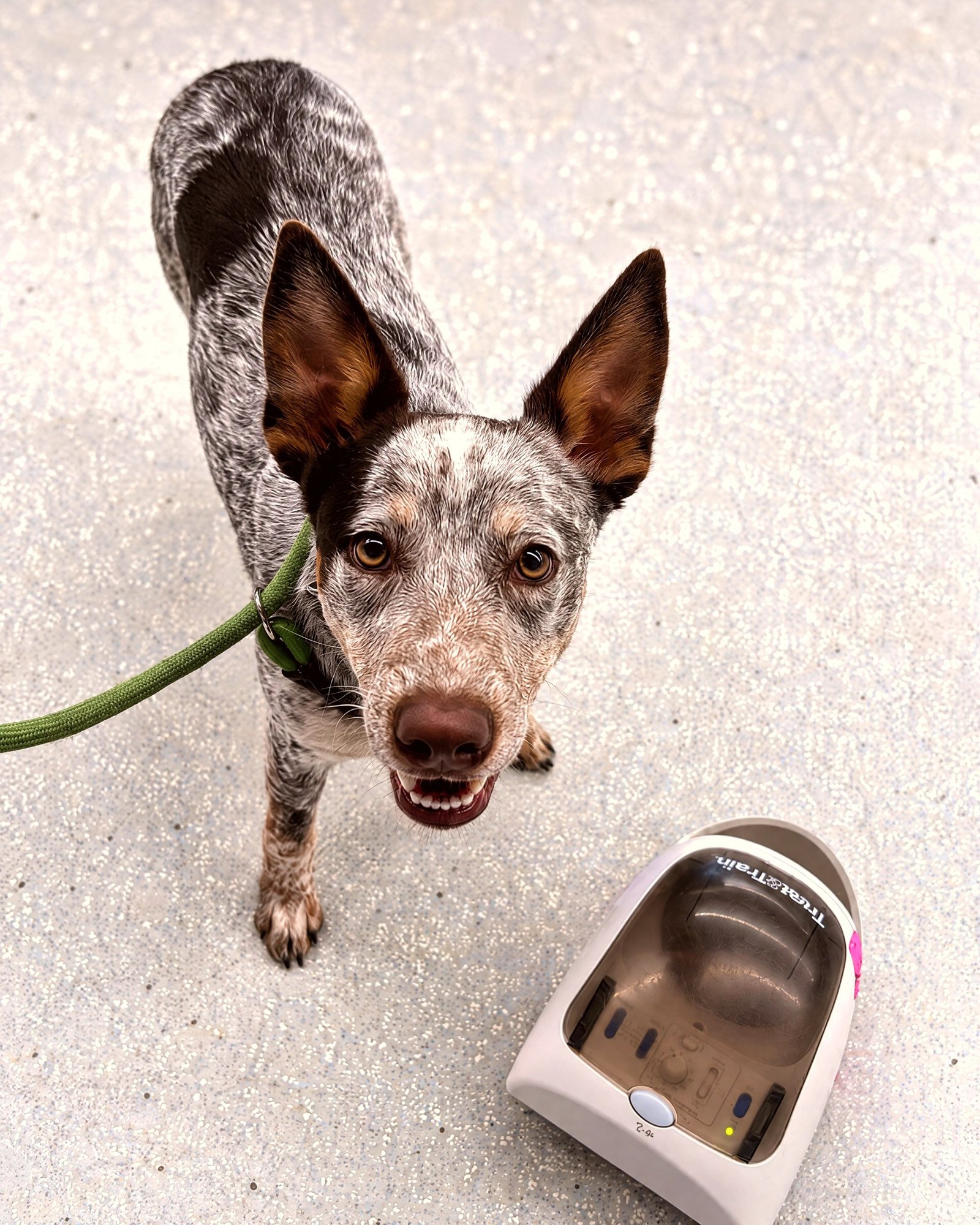
An Australian Cattle Dog looking up attentively next to a Treat & Train feeder on an indoor floor.
On the training floor, Cave Creek
Est.
Dec 1997
Partners Dogs · Group class syllabus

Pre-⁠School starts on the right paw.

Name recognition, marker words, and fundamental obedience, with confidence around new sights and sounds.

PS
Pre-⁠SchoolGroup class · pet parents
How class runs

Four modes, every week.

Interval, Group, AMRAP, and Demo. Same structure across all twelve Pre-⁠School weeks.

  1. Interval rotating stations
  2. Group whole class · 15 min
  3. AMRAP rep volume · 5 min
  4. Demo trainer feedback · 5 min
What this grade is for
Name, markers, and fundamentals, with confidence as the throughline.

That is the practical focus of Pre-⁠School. Results vary with the work you do at home. No guaranteed mastery timeline.

What Pre-⁠School covers

Manners, behaviors, and tools.

New Manners

Confidence, intros, etiquette, socialization, social cues, food gently, and Yes/No markers.

New Behaviors

Name Recognition/Watch, Sit w/Lure, Down w/Lure, Intro To Crate, and Spin.

New Tools

Slip Lead and Martingale, with calm on/off practice as class progresses.

New Tricks

Spin is the fun skill that sits with New Behaviors in this grade.

Who it is for

Puppies building a foundation, or adults new to structured training and confidence work.

Twelve weeks

From Foundational Skills through Reinforcing Manners, with four stations each week.

How skills move

Pre-⁠School starts skills in Teaching.

New work is shaped here first. Later grades deepen, proof, and maintain what you build.

shape first; deepen later

01

Teaching

Shape the cue piece by piece: lure, integrate, condition, and desensitize in a quiet setting.

Pre-⁠School focus
02

Reinforcing

Reps deepen a skill the dog already recognizes, moving from every time toward any time.

Next grades
03

Proofing

Hold the skill through the five D's when it is ready: duration, distraction, distance, direction, difficulty.

Later grades
04

Maintenance

Daily use at home and in class keeps it sharp. There is no finish line.

You lead
Words we use in class

Markers, lure, and crate.

Yes
Marks the correct moment. Pair it with a treat or toy so your dog knows what earned the reward.
No
A clear interrupt for undesired behavior. Stay consistent, and do not reward the thing you just stopped.
Lure
A treat that guides the body into Sit or Down. Mark the position, then fade the food hand over time.
Crate
A calm, positive place. Lure in, mark and reward inside, and build time slowly with minimal resistance.
Watch
Name recognition and eye contact. Mark and treat when your dog looks up so attention becomes easy.
New manners

Confidence first, then calm hellos

Intros, etiquette, social cues, food gently, and Yes/No markers.

  1. 01Opening
  2. 02New manners
  3. 03New behaviors
  4. 04Tools & weeks
Building confidence

New things become safe when you reward the try.

  • Introduce the new thing calmly, at a distance your dog can notice without panic
  • Reward any soft interaction look, sniff, step, or stay near counts
  • Invite a little more only while the response stays neutral or positive
  • Let them disengage if stress rises, then try again another time
Coach tip

Stress means pause

Backing off is part of the lesson, not a setback.

Intros w/ people & dogs

Short, polite hellos on a managed leash.

Safe setup first. Read the body. Pay the calm greeting.

  1. Start on leashBegin in a safe, controlled space with your dog on leash.
  2. Allow a polite sniffLet your dog greet the new person or dog without crowding.
  3. Watch the bodyGuide or pause if tension rises so the hello stays positive.
  4. Reward right awayMark success with a treat or toy the moment the greeting goes well.
  5. Practice oftenRepeat short, successful intros so calm greetings become familiar.
Appropriate interactions & etiquette

Play stays fun when you manage the energy.

Talk with your instructor

Every dog arrives with a different social history. Keep an open line with your instructor and the other pet parents so greetings and play stay safe for the whole room.

Learn your dog's play style, praise calm looks at other dogs, and move closer only while they stay soft. If energy spikes, call them back. Use food or the leash when a verbal recall is not ready yet.

Takeaways
  • Praise the calm look
  • Closer only while soft
  • Break when energy spikes
Intro to socialization

Dogs, people, and places, one calm step at a time.

Reward the soft body. Grow comfort without rushing the room.

  1. Start with calm exposureLet your dog notice other animals or people at a distance they can handle.
  2. Pay the soft responseMark and reward calm looking, soft posture, or a quiet stay-⁠near.
  3. Grow the picture slowlyAdd a little closer, longer, or busier only after calm reps stick.
  4. Include new placesPractice the same calm pattern in different environments over time.
Basic social cues

Read the room, then help them disengage.

AvoidSay
Crowd a stiff or looking-⁠away dog
Pause and create space so they can take the social hint
Keep pushing play when energy spikes
Call them out, then use food or leash if recall is not ready
Skip the reward after a good exit
Mark and pay Out or a simple recall the moment they disengage
Expect them to know the rules alone
Teach cue recognition, then practice calm responses with your instructor
Taking food gently

Closed fist first, then soft takes only.

  • Start calm Hold the treat in a closed fist in a quiet space
  • Skip the open palm Flat hands invite fingers to feel like food
  • Open slowly and praise soft Mark gentle takes with no mouthing, teeth, or pawing
  • Practice, then raise the bar Keep the same soft standard with more tempting treats
Why the fist

They wait to see it

A closed fist hides the treat until you open, which slows the grab.

“Yes” marker words

Mark the win the moment it happens.

One clear Yes. Quiet practice first. Pay right after the mark.

  1. Pick one markerUse Yes, a clicker, or a hand signal, and keep it consistent.
  2. Train in a quiet spotStart with few distractions so the mark is easy to notice.
  3. Get their attentionClap, say their name, or show a treat so they are with you.
  4. Mark the good momentSay Yes the instant the desired behavior happens.
  5. Pay right awayFollow the mark with food or play so Yes stays meaningful.
“No” marker words

Interrupt cleanly, then reset.

Firm No marks the unwanted. No pay while it continues. Said once, then guide and reward.

  1. Mark the unwanted nowSay a clear, firm No once, on a behavior they already know.
  2. Add a small leash cuePair No with a light tug so the interrupt is easy to feel.
  3. Do not pay the mistakeWithhold attention and treats while the unwanted behavior continues.
  4. Stay consistentSay it once, guide to the right choice, then reward it.
New behaviors

Name, Sit, Down, Crate, and Spin

Watch, lure sits and downs, crate comfort, then a fun spin.

  1. 01Opening
  2. 02New manners
  3. 03New behaviors
  4. 04Tools & weeks
Name recognition / Watch

Pay the eyes the moment they find you.

Name, noise, or treat gets attention. Mark the look. Repeat until they offer it.

  1. Call them happilyUse their name, a silly noise, or excitement if they are distracted.
  2. Mark the eye contactSay Yes, click, or signal the instant they look up at you.
  3. Treat the lookPay right away so watching you stays the easy choice.
  4. Repeat short setsPractice about 10 to 15 clean reps each session.
  5. Ask for the lookCue them to look up so attention becomes a practiced habit.
Sit w/ Lure

Lure the nose up so the sit happens.

Treat above the head. Mark the sit. Build a little duration over time.

  1. Lure into SitHold a treat above their head so the nose follows up and the rear sits.
  2. Mark the sitUse Yes, a clicker, or a hand signal the moment they sit.
  3. Pay the sitReward right after the mark so Sit stays worthwhile.
  4. Repeat until reliableKeep short reps going until they sit for the lure and the cue.
  5. Grow the holdWait a little longer before the treat once the sit is steady.
Down w/ Lure

Guide to the floor, then pay heavily.

Make Down a positive. Mark the fold. Fade the lure once it is easy.

  1. Lure into DownGuide them to the floor with a treat so the elbows land soft.
  2. Pay the DownReward immediately and heavily while they hold the Down.
  3. Repeat until reliableKeep clean reps going until they follow the lure into Down.
  4. Fade the lureMove the treat closer to your body so they rely less on the hand.
  5. Add the wordSay Down without a lure once the motion is easy and willing.
Intro To Crate

Make the crate their idea.

Quiet cozy setup. Lure in, mark inside, let them out. Grow calm time slowly.

Criteria: minimal resistance, non-⁠reactive in crate. Follow the practice plan your trainer assigns.

Spin

Lure a wide circle, then mark the finish.

Start from Sit in front. Nose follows the treat around. Pay the completed spin.

  1. Start in SitBegin with your dog sitting in front of you.
  2. Lure the circleHold a treat or toy at the nose and guide a wide circle.
  3. Mark the finishMark and reward when the spin is complete.
  4. Repeat until reliableKeep short reps going until they spin as lured.
New tools

Slip Lead and Martingale

Calm on and off. Pay soft pressure. No fuss, no fight with the gear.

  1. 01Opening
  2. 02New manners
  3. 03New behaviors
  4. 04Tools & weeks
Slip Lead

Pay every bit of leash pressure.

Sniff first. On and off without a fuss. Soft pressure gets paid so the lead stays friendly.

  1. Let them exploreAllow a calm sniff of the slip lead before you put it on.
  2. Practice on and offPut it on and take it off quietly with no struggle or excitement spike.
  3. Pay the pressureEvery time you apply light leash pressure, mark and treat so it stays soft.
  4. Keep sessions calmStart with easy asks in a quiet space, then add mild distraction later.
  5. Stay consistentSame calm handling in new places so the lead never becomes a fight.
Martingale

Introduce the collar calmly, then keep it soft.

Sniff and settle. On and off without reaction. Quiet practice first, then busier rooms.

  1. Sniff and settleLet them sniff the martingale and get comfortable before buckling.
  2. Calm on and offPractice putting it on and taking it off with no fuss or freeze.
  3. Pay soft responsesMark and treat calm wearing and light pressure so the collar stays easy.
  4. Quiet room firstRun short positive reps somewhere calm before you add distraction.
  5. Grow the pictureAdd busier spaces only while on/off and wearing stay soft.
Week 1

Foundational Skills

Pro tipSay the name once, mark the look, then pay. Keep it quick and easy.

Week 1

Foundational Skills

Pro tipSay the name once, mark the look, then pay. Keep it quick and easy.

Week 2

New Manners Introduced

Pro tipToss treats into the crate and let your puppy walk in on their own.

Week 2

New Manners Introduced

Pro tipToss treats into the crate and let your puppy walk in on their own.

Week 3

Social Cues & Reinforcement

Pro tipLure the nose, not the body. Mark the instant the sit happens.

Week 3

Social Cues & Reinforcement

Pro tipLure the nose, not the body. Mark the instant the sit happens.

Week 4

Behavior Refinement & Tools

Pro tipOffer treats from a closed fist. Pay soft takes; pause when teeth show up.

Week 4

Behavior Refinement & Tools

Pro tipOffer treats from a closed fist. Pay soft takes; pause when teeth show up.

Week 5

Continue Socialization

Pro tipNew people and dogs come at your puppy's pace. Pay calm curiosity.

Week 5

Continue Socialization

Pro tipNew people and dogs come at your puppy's pace. Pay calm curiosity.

Week 6

Reinforcing Intros & Tools

Pro tipSlip lead on and off with no fuss. Pay calm while it goes on.

Week 6

Reinforcing Intros & Tools

Pro tipSlip lead on and off with no fuss. Pay calm while it goes on.

Week 7

Consolidating Manners

Pro tipFade the lure: show the hand signal, then pay from the other hand.

Week 7

Consolidating Manners

Pro tipFade the lure: show the hand signal, then pay from the other hand.

Week 8

Reinforcing Obedience

Pro tipThe martingale should feel like nothing. Pay calm as it goes on and off.

Week 8

Reinforcing Obedience

Pro tipThe martingale should feel like nothing. Pay calm as it goes on and off.

Week 9

Reinforcing Obedience

Pro tipDown: bring the lure slowly to the floor. Pay when the elbows touch.

Week 9

Reinforcing Obedience

Pro tipDown: bring the lure slowly to the floor. Pay when the elbows touch.

Week 10

Reinforcing Manners

Pro tipSpin: lure a slow circle at nose height. Mark the full turn.

Week 10

Reinforcing Manners

Pro tipSpin: lure a slow circle at nose height. Mark the full turn.

Week 11

Reinforcing Communication

Pro tipShort sessions win. A few good reps, then a break and play.

Week 11

Reinforcing Communication

Pro tipShort sessions win. A few good reps, then a break and play.

Week 12

Reinforcing Manners

Pro tipReview week: practice your puppy's wins at home in short, happy bursts.

Week 12

Reinforcing Manners

Pro tipReview week: practice your puppy's wins at home in short, happy bursts.

After class
Results vary. Hard commands at home keep the week moving.

Keep working the difficult commands before the next class. No guaranteed timelines or mastery.

Fair questions

Class logistics parents usually ask.

How does each class run?

See How class runs up front. Same shared weekly shape across all twelve Pre-⁠School weeks.

Where do we train?

Group classes meet at our Scottsdale and Cave Creek campuses.

Can we start any week?Open enroll

Yes. Open enrollment runs year-⁠round, so you can start any week.

What do we practice at home?

Keep working the difficult commands before the next class.

Thank you

See you on the floor.

480.595.6700
partnersdogs.com/grade-⁠levels/preschool
Scottsdale · Cave Creek, Arizona