Dec 1997
Teach your dog to turn away
One short session trains your dog to move away from the scent and sound of a rattlesnake, on its own, before it gets close.
Curiosity is the danger.
Nose first, toward the rattle
The rattle is a strange sound and the scent means nothing yet, so most dogs move in to investigate, face first.
The rattle means move away
Your dog catches the rattle or the scent, often before you do, and backs away on its own.

Snake country, by the numbers.
Family owned, father and son.
Closer than you think.
Rattlesnakes turn up on trails, in washes and in backyards across the Valley.
- The season runs March through November
- Sessions at both Scottsdale and Cave Creek
- Book before the spring trails fill up

What Pet Parents assume, and what the desert shows.

Three stages, one session.
The same stages as every Partners program, condensed into one visit.
Teaching
Your dog meets the rattle and the scent at a safe distance. No stim yet: this step is recognition.
In the sessionReinforcing
On a long line toward the cage. Interest earns a brief stim; turning away earns nothing.
In the sessionProofing
New angles and distances, until your dog turns away cleanly without a prompt.
In the sessionMaintenance
A refresher once or twice a year keeps the avoidance sharp.
Refresher visits
We take the timing seriously.
Only hand-picked trainers join the snake avoidance team.
- Lead instructors complete at least two years of training first
- Every lesson is read to the dog in front of us
- Live, intact Diamondbacks, secured in double-mesh cages

In and out within the hour.
Fitted and asked
We fit the equipment and ask about your dog's age, background and any medical issues.
In the habitat
You walk out with your trainer while the instructor narrates what we see.
Your dog's default
How your dog did, and its default response: fight, flight, freeze or fawn.
A refresher plan
When to come back, based on how your dog responded and how much time it spends outdoors.
Good to know before you come.
Your dog's default response.
Moves in
Steps toward the snake to confront it.
Moves away
Turns and puts distance between itself and the snake.
Goes still
Stops and waits, unsure what to do next.
Looks to you
Seeks comfort or appeases instead of choosing.
Your instructor names it, and flags anything that could matter later.
Trained where snakes show up.
The same avoidance lesson at both campuses, built on the scent and the sound.
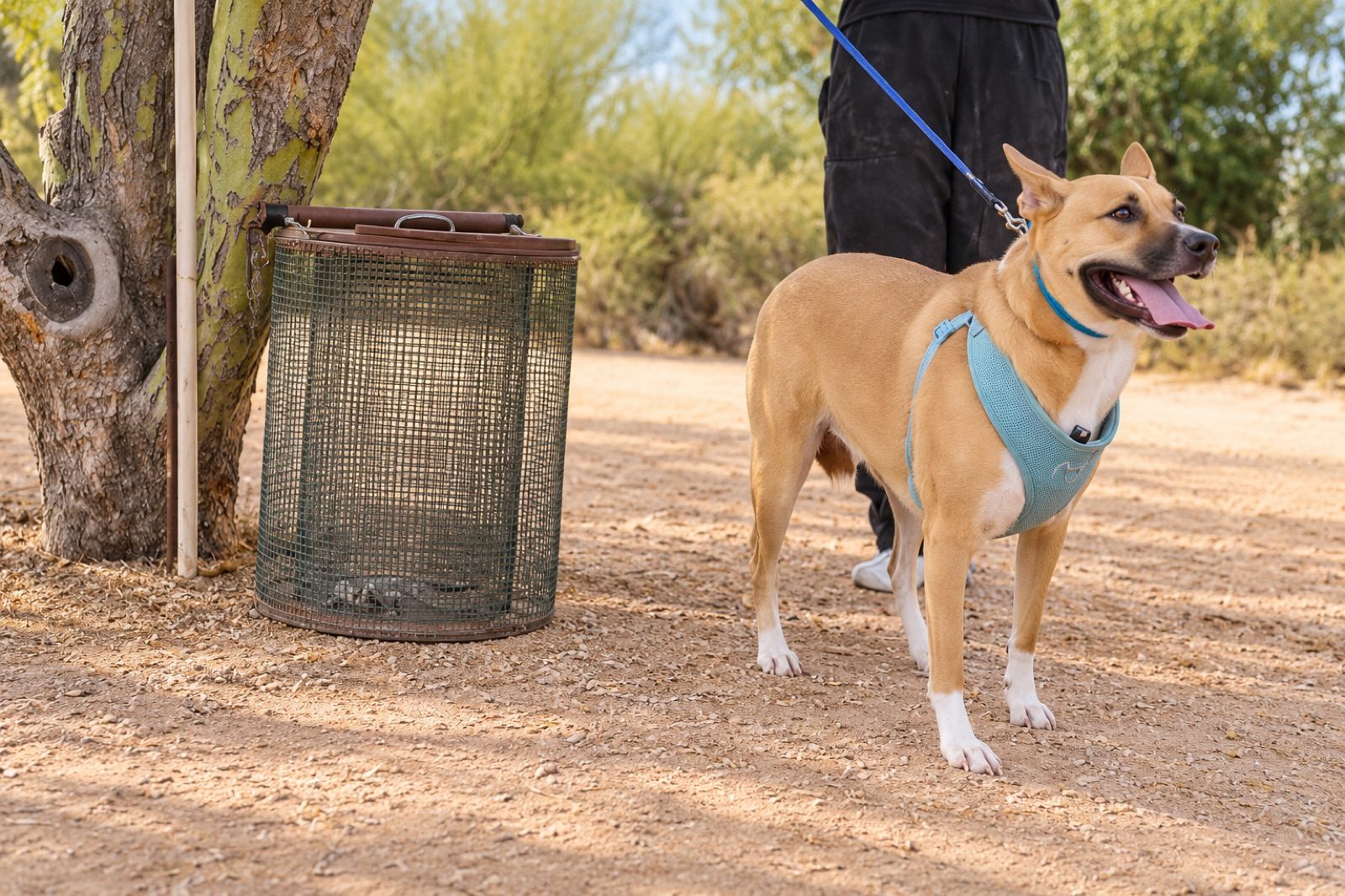
- Cave Creek: fully outdoors, in a controlled desert habitat
- The same saguaro, scrub and gravel your dog meets on a trail
- Scottsdale: primarily indoors, the same lesson

One session, then refreshers.
Now
Next
Later
Refresher timing is set dog by dog.


After training, our girl occasionally ran into snakes on trails and would not approach them at all. She often let us know there was a snake up ahead before we knew it ourselves.
What Pet Parents usually ask.
It's meant to be unpleasant enough to stop the approach, and it's over in an instant. The stim is brief and low-level, timed by an experienced instructor.
Never. It stays in a double-mesh cage the whole time, so it can never touch your dog.
No. One session builds a strong avoidance response, and refreshers keep it sharp.
Yes. Book a time slot for each dog in the same window and bring the whole crew.

Add it to a bigger plan.
Foundation Camp
A 14-night reset for manners. Add snake avoidance during the stay.
Boarding
Book a session during a stay, and come home rested and desert ready.
Private Lessons
Recall and leash skills that keep your dog close on the trail.
PD360 Assessment
A full evaluation and a plan, when you want more than one session.
Simple, per-dog pricing.
 Snake Avoidance
One session, three stages
What every session gives you
The scent and sound of a live, caged rattlesnake
Never within reach
An experienced instructor on the timing
At least two years of training
A debrief and a refresher plan
Your dog's default response, in plain language
Your investment
Per dogFirst session
About 15 to 20 minutes, per dog
Refresher session$89 per dog
More than one dogSame window
Book your session
One short session, a refresher plan from your instructor, and the timing that teaches your dog to keep its distance.
Ready for snake season.
- 1Pick First Timer or Refresher
- 2Choose Scottsdale or Cave Creek, a time per dog
- 3Book at partnersdogs.com/snake-avoidance
