
Living With Dogs in the Sonoran Desert
The Arizona Dog Owner's Guide: Keep Your Dog Safe and Thriving in the Desert
Arizona is one of the best places in the country to own a dog, and one of the riskiest if you do not know the terrain. Here is the heat, wildlife, and health knowledge that keeps Valley dogs safe and thriving year-round.

What do Arizona dog owners need to know to stay safe?
Owning a dog in Arizona means planning around three things most city dog guides ignore: extreme heat, venomous wildlife, and desert terrain. Pavement can hit 140 to 160 degrees when the air is only 95 to 105, rattlesnake season runs March through October, and coyotes hunt small dogs near open desert at dawn and dusk. This guide walks Scottsdale and Cave Creek owners through hot-pavement and hydration rules, the 7-second test, snake and coyote safety, monsoon prep, dog-friendly trails, and Arizona's vaccine requirements. It is the practical knowledge our trainers rely on after 28 years in the Sonoran Desert, plus how Partners helps your dog thrive here.
DESERT HEAT SAFETY
Beat the Heat: Pavement, Hydration, and Timing
The single biggest risk to a Valley dog is heat, and the danger starts at the ground. When the air reads 95 to 105 degrees, asphalt and concrete can climb to 140 to 160 degrees, hot enough to blister paw pads in under a minute. A safe, thriving Arizona dog lives by a few simple rules.
- Run the 7-second test. Press the back of your hand to the pavement. If you cannot hold it for 7 full seconds, it is too hot for paws. Move to grass or dirt, or wait.
- Walk early or late. From May through September, aim for before 7 AM or after 8 PM. Mornings are cooler than evenings because asphalt sheds heat slowly after sundown.
- Carry water on every outing. A collapsible bowl and a bottle prevent dehydration. Offer water before, during, and after any walk.
- Know heatstroke signs. Heavy panting, drooling, bright red gums, wobbliness, or vomiting are emergencies. Move to shade, wet the belly and paws with cool water, and call your vet.
- Never leave a dog in a parked car. An interior can pass 120 degrees in minutes, even with windows cracked.
When the afternoon is simply too hot to move, that is exactly what indoor conditioning is for. A treadmill session burns real energy in a cool, controlled room so your dog stays fit without risking the pavement.
GO DEEPER BY SEASON
Two Companion Guides for the Hardest Months
- Summer Heat Survival Guide Hour-by-hour walk timing, cooling gear, and the heatstroke response plan for triple-digit days.
- Monsoon Prep Guide Thunderstorm and fireworks anxiety, flash-flood and wash safety, and keeping a noise-sensitive dog calm from June through September.
VENOMOUS WILDLIFE
Rattlesnakes, Coyotes, and What Lives in the Wash
Rattlesnake season in Arizona runs March through October and peaks April through June. The state is home to 13 rattlesnake species, and the Western Diamondback is the one Valley dogs meet most. Snakes are most active at dawn and dusk when temperatures are mild, the same hours you are walking to beat the heat.
Coyotes are common across Scottsdale, Paradise Valley, Cave Creek, and any neighborhood near open desert or a wash. They hunt small dogs at dawn and dusk, so keep little dogs leashed and close, and never leave food or pets unattended in the yard at those hours. A solid recall and a dog who looks to you instead of bolting toward a rustle in the brush is your best everyday protection.
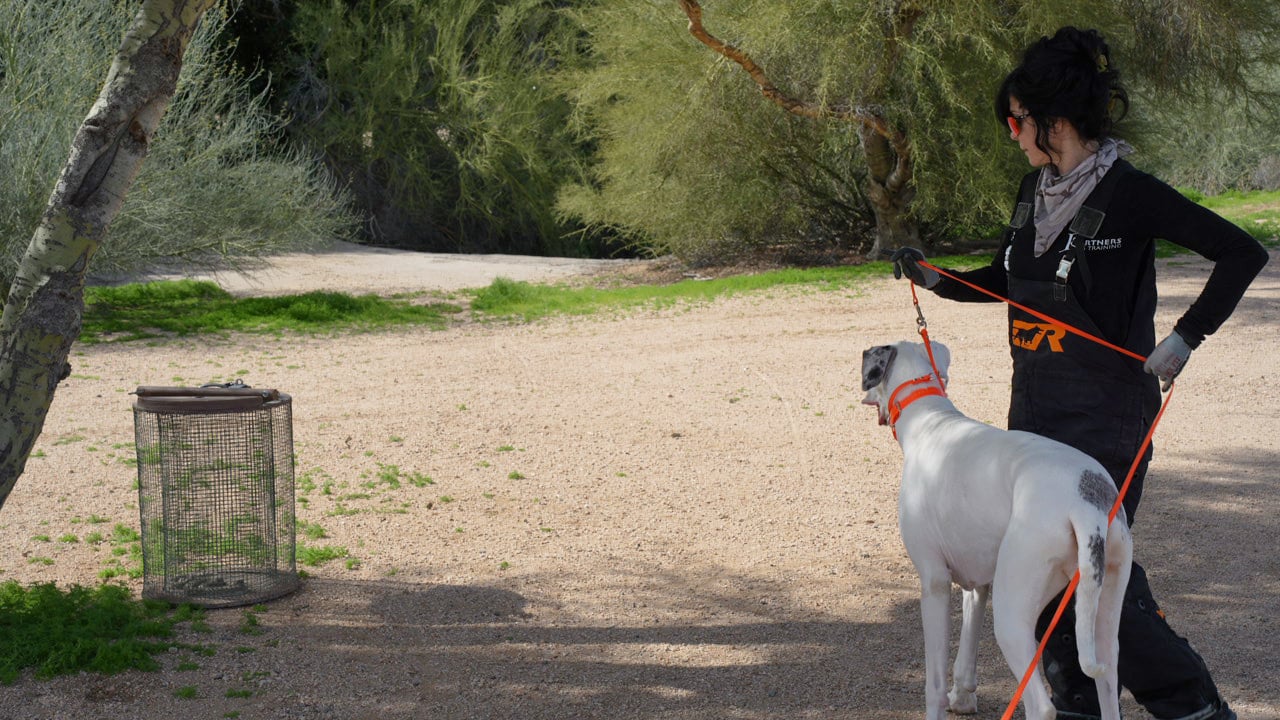
The most reliable safeguard is teaching your dog to recognize and avoid a snake before the encounter ever happens. Snake avoidance training uses sight, sound, and scent so your dog learns to turn and move away on their own.
TRAILS, PARKS, AND PATIOS
Exploring the Desert Together, Safely
The Valley is one of the best places in the country to have a dog, as long as you plan around the heat and the terrain. The cooler months from October through April are prime time for desert trails. In summer, switch to early mornings, shaded greenbelts, and indoor enrichment.
- Chaparral Park, Scottsdale. The area's most popular off-leash park, with separate large and small dog areas, shaded ramadas, and water stations.
- Scottsdale Greenbelt. Miles of paved, leashed paths through a green corridor, ideal for early or late walks when desert trails are too exposed.
- McDowell Mountain Regional Park. Easy to moderate desert trails, best October through April, leash required. Pack more water than you think you need and turn back before midday heat.
- Old Town patios. Dozens of dog-friendly restaurant patios along Stetson Drive and the Waterfront, many with water bowls ready for your dog.
On the trail, watch paws on sun-baked rock, carry water for both of you, and stay alert near brush and washes where snakes shelter. A dog who walks politely on leash and comes when called turns a desert hike from stressful to easy.
HEALTH AND VACCINES
Arizona Vaccine Requirements and Vet Readiness
Rabies is required by law in Arizona for every dog over four months of age. Beyond the legal minimum, a few core and lifestyle vaccines keep your dog protected and ready to join group settings.
- Rabies. Legally required statewide for dogs over four months. Keep the certificate handy.
- DHPP. Core protection against distemper, hepatitis, parvovirus, and parainfluenza. Required for boarding, daycare, and group classes.
- Bordetella. Guards against kennel cough and is required anywhere dogs gather, including our daycare and boarding.
- Rattlesnake vaccine. A recommended add-on for dogs that spend time outdoors. It can buy time after a bite, but it is not a substitute for avoidance training or an emergency vet visit.
- Lifestyle extras. Ask your vet about Leptospirosis and Canine Influenza based on how much your dog hikes, swims, or socializes.
Save an emergency vet number in your phone today. your nearest 24-hour emergency veterinary hospital and Emergency Animal Clinic in north Phoenix both handle snakebites and heatstroke around the clock. Partners verifies rabies, DHPP, and Bordetella records before any dog's first day, so have your paperwork ready when you enroll.
HOW PARTNERS HELPS
Built for Arizona Dogs Since 1997
We have trained more than 70,000 dogs across two Arizona campuses, and desert savvy is built into everything we do. Our Cave Creek campus sits on open desert land where rattlesnakes, coyotes, and real heat are part of daily life, so the team knows exactly what your dog faces. Here is how we help Valley dogs stay safe and thrive.
- Snake avoidance. Teach your dog to detect and retreat from a rattlesnake before it strikes. See snake avoidance
- Treadmill conditioning. Real exercise indoors when the pavement is too hot to walk, so energy never turns into trouble. See treadmill training
- Climate-controlled boarding. Cool, supervised overnight care for desert getaways and summer travel. See boarding
- DaySchool daycare. Shaded, staffed play and enrichment that keeps your dog active out of the midday sun. See DaySchool
- Group classes. The reliable recall and leash manners that make desert hikes and busy patios easy. See Group Classes
- Private lessons. A plan shaped to your dog, your yard, and the wildlife around your home. See Private Lessons
Give Your Dog a Safe, Thriving Arizona Life
Local owners at our Scottsdale and Cave Creek campuses trust us with heat-smart conditioning, snake avoidance, and the everyday training that makes desert life easy. Tell us about your dog and we will point you to the right next step. Call 480-595-6700 or get a fast quote.
Frequently Asked Questions
When is rattlesnake season in Arizona?
March through October, peaking April through June. Arizona has 13 rattlesnake species, and the Western Diamondback is the most common dog encounter, so avoidance training before the season is worth it.
How hot is too hot to walk my dog?
If the air is above 85 degrees, the pavement is likely too hot. Use the 7-second test: if you cannot hold the back of your hand on the asphalt for 7 seconds, walk on grass or wait for before 7 AM or after 8 PM. When it is simply too hot, swap the walk for indoor conditioning on a treadmill.
What vaccines does my dog need in Arizona?
Rabies is required by law for dogs over four months. DHPP and Bordetella are required for boarding, daycare, and group classes. The rattlesnake vaccine is a recommended add-on, not a replacement for avoidance training or emergency care.
Are there coyotes in Scottsdale?
Yes. Coyotes are common across Scottsdale, Paradise Valley, Cave Creek, and most of the Phoenix metro, especially near open desert or washes. They are most active at dawn and dusk, so keep small dogs leashed and close, and never leave food or pets unattended in the yard at those hours.
What are the best dog-friendly parks near Scottsdale?
Chaparral Park in central Scottsdale is the most popular, with separate large and small dog areas, shaded ramadas, and water stations. The Scottsdale Greenbelt offers miles of paved leashed paths, and McDowell Mountain Regional Park has desert trails that are best October through April. Always bring water and avoid peak heat hours in summer.