Skip to content
Family-owned · Est. 1997 70,000+ dogs trained 4.8 stars · 2,000+ parent reviews
    Home
    Programs
    Locations
    Resources
    Shop

    Dog Behavior Solutions

    Make Home Safe for Both Dogs Again

    Fights between dogs who live together affect every room and every routine. Partners Dogs helps you stop the next rehearsal, understand the relationship, and make realistic decisions about safety and coexistence.
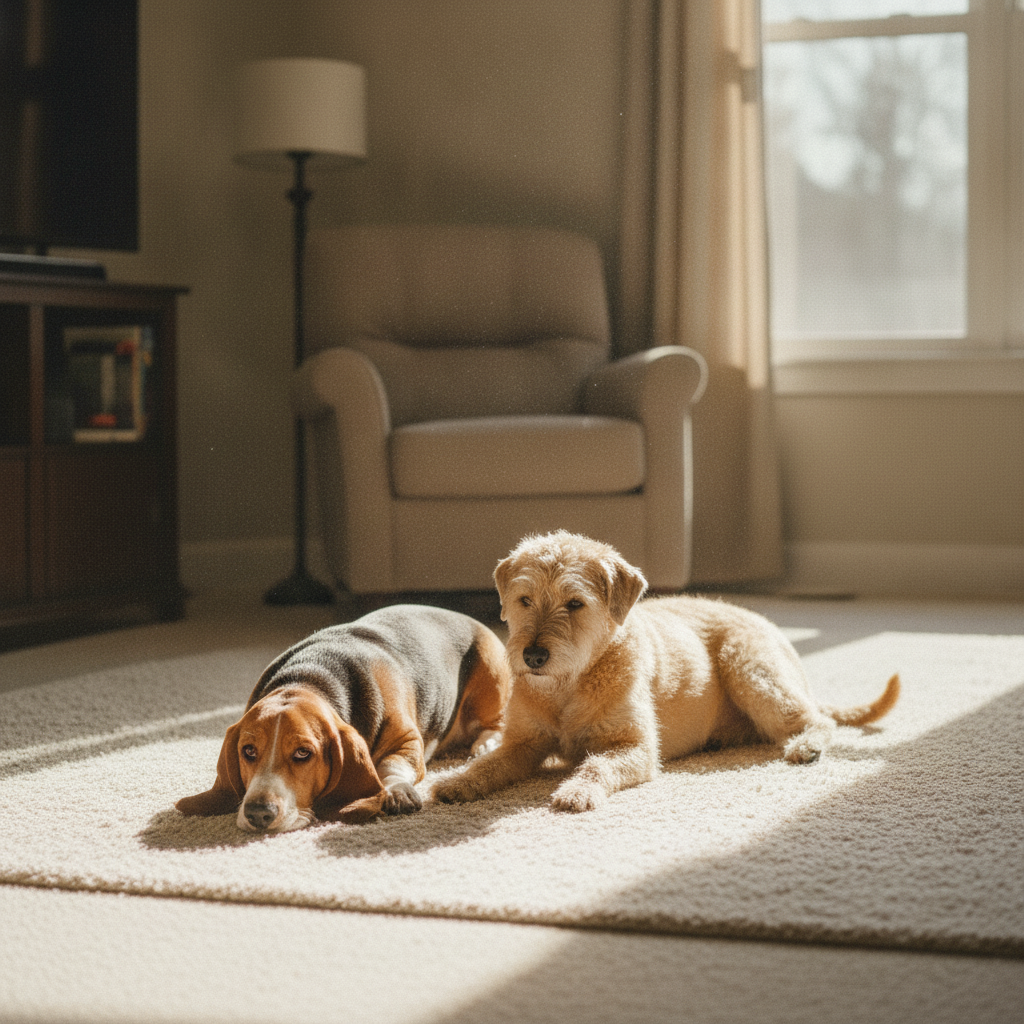
    Relaxed Basset Hound and Soft-Coated Wheaten Terrier resting together after Partners Dogs sibling aggression training.

    Behavior severity

    Severe

    What you may be seeing

    Common signs

    • Stiffening, staring, blocking, hovering, or tense movement between dogs
    • Conflict around food, toys, people, doorways, or resting spaces
    • One dog avoiding rooms or normal activities
    • Fights that become easier to trigger or harder to stop
    • A household organized around gates and rotations

    Seek help now

    • Any puncture, sustained fight, repeated attack, or veterinary injury
    • A large size or strength difference that increases harm
    • Redirected bites to a person breaking up a fight
    • Sudden onset, pain, illness, or neurological change in either dog

    Moderate-Severe is a starting point for planning, not a diagnosis. Keep the dogs securely separated and arrange veterinary care plus an in-person assessment before reintroduction.

    Understanding the behavior

    What is sibling aggression?

    Sibling aggression is conflict between dogs in the same household, whether biologically related or not. Resources, social maturity, pain, redirected arousal, household change, incompatible play, and repeated fights can all contribute. The dynamic involves both dogs and the environment.

    Secure separation is the first step after a serious fight. Use closed doors, crates when appropriate, gates with backups, separate feeding, and planned rotations. Do not force reunions or let the dogs work it out. Each dog should receive a veterinary check, especially when the aggression began suddenly.

    Severe cases receive an in-person assessment before program placement. Some pairs can rebuild safer coexistence. Others need permanent management or separate homes. Prognosis depends on injuries, fight pattern, triggers, size difference, household capacity, and follow-through.

    Partners Dogs has trained Arizona dogs through every kind of sibling aggression case since 1997, at our Scottsdale and Cave Creek facilities. Lifetime trainer support is included with every board-and-train program.

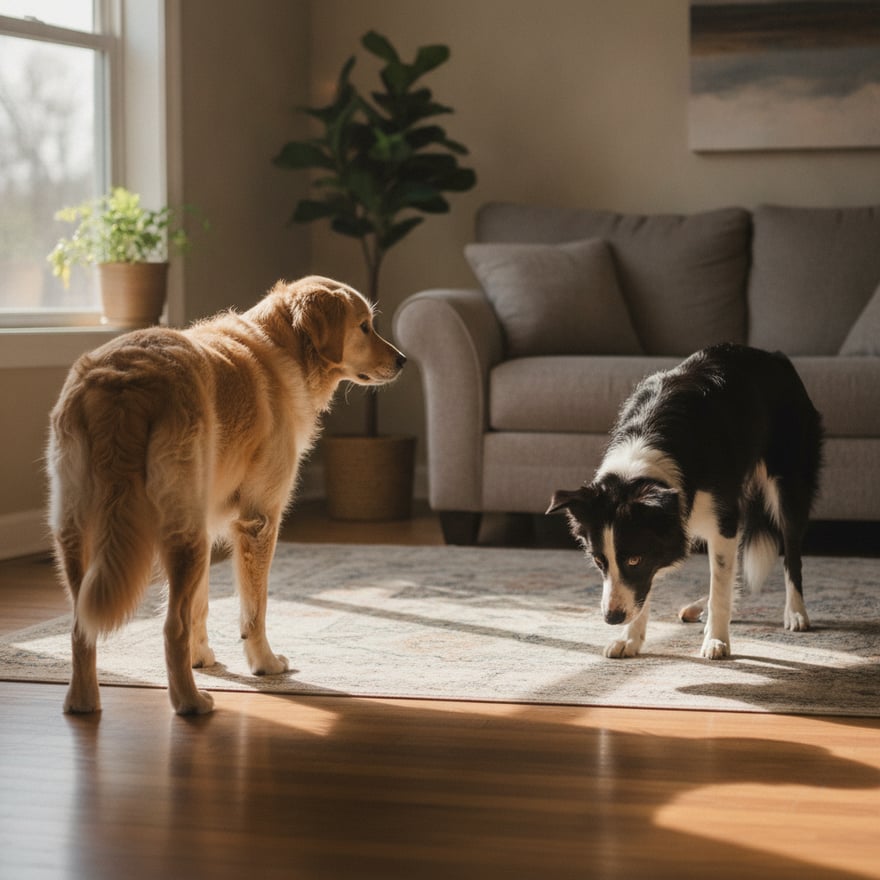
    Basset Hound and Soft-Coated Wheaten Terrier standing tense apart, sibling aggression before Partners Dogs training.

    The transformation

    Before and after training

    Drag the slider to see the change our programs make for a dog with sibling aggression. Same dog, same home, real outcome.
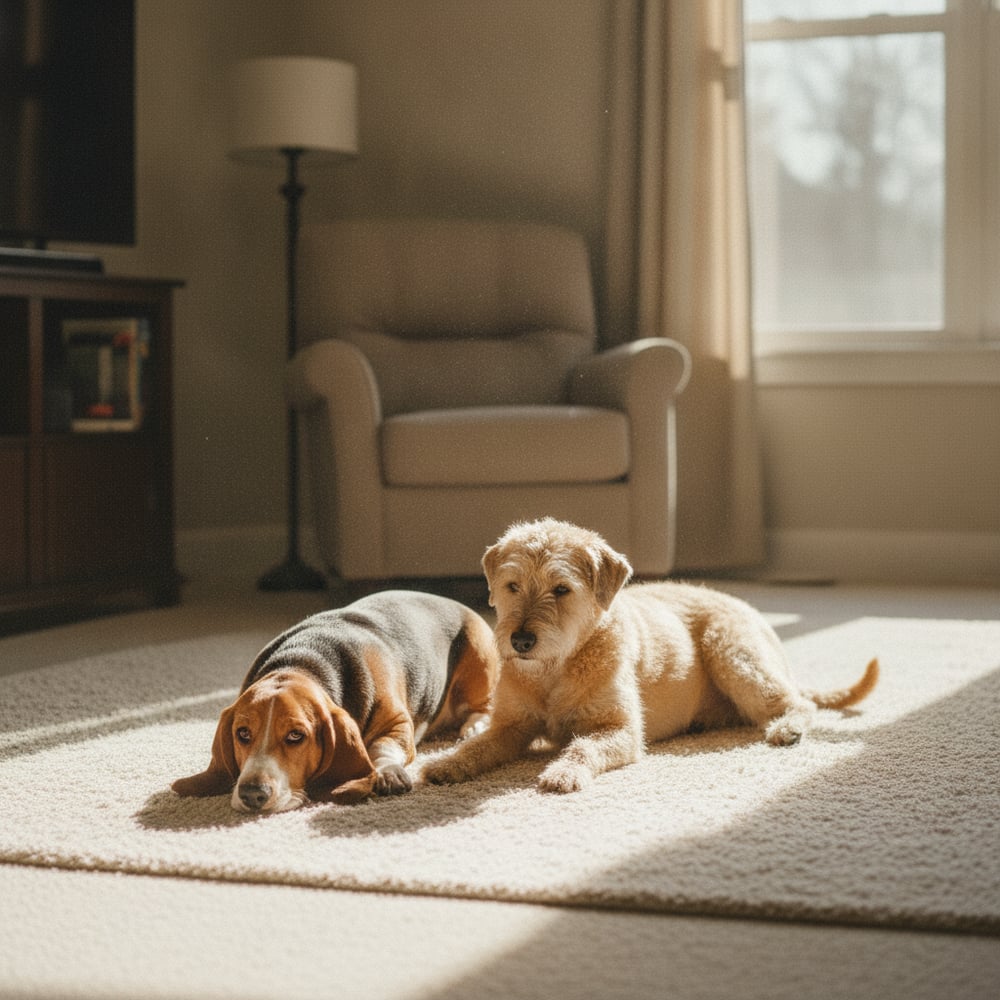
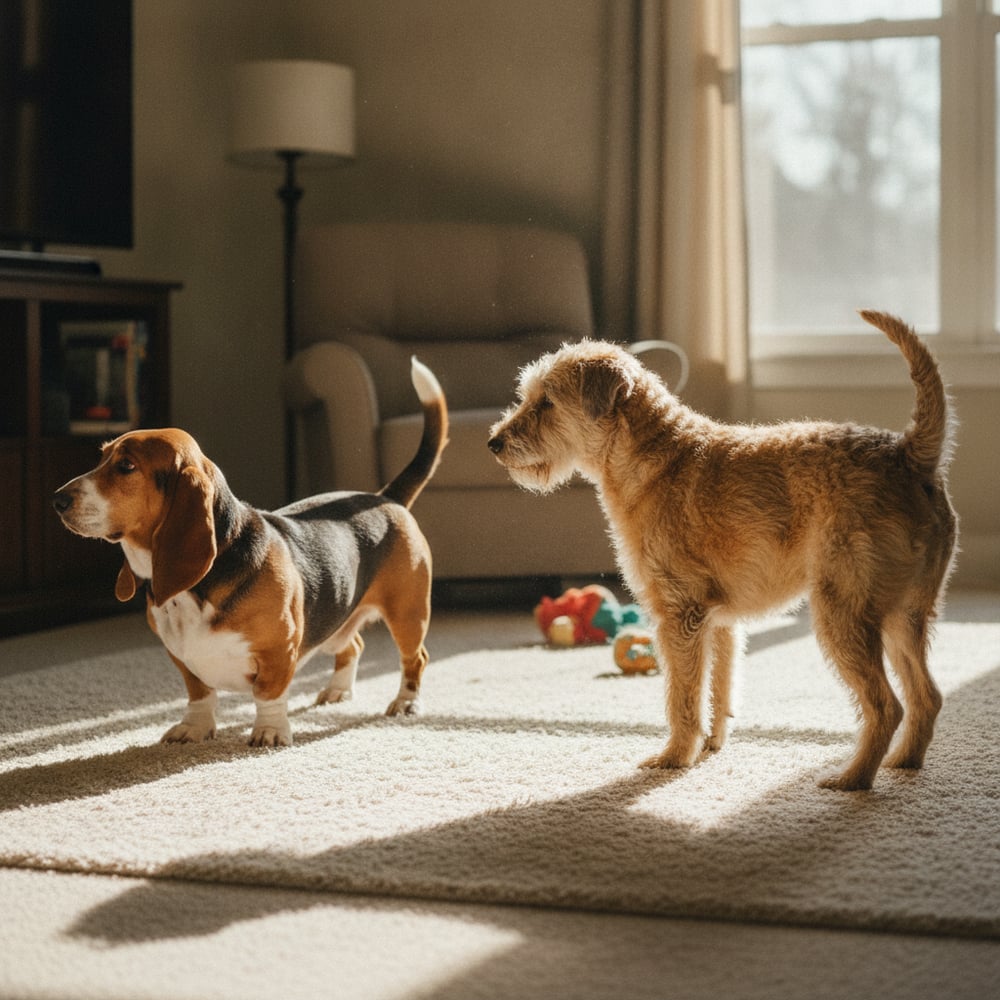
    Relaxed Basset Hound and Soft-Coated Wheaten Terrier resting together after Partners Dogs sibling aggression training. Basset Hound and Soft-Coated Wheaten Terrier standing tense apart, sibling aggression before Partners Dogs training.

    Watch

    How we work on sibling aggression

    Short walkthroughs from our trainers on the exact techniques we use to resolve sibling aggression. See how the work actually looks, then choose the path that fits your dog.
    Wooffles  Episode 1 video thumbnail
    Wooffles Episode 1
    Bruno  Episode 1 video thumbnail
    Bruno Episode 1
    Reactivity  Littermate Syndrome video thumbnail
    Reactivity Littermate Syndrome
    70,000+Dogs Trained
    28+Years Experience
    4.8★Average Rating
    2Arizona Campuses

    Recommended path · Severe severity

    The right program for sibling aggression

    Based on how sibling aggression typically presents, here is where we would start. Not sure which fits? Take the PD360 assessment for a personalized recommendation.

    Alternative

    Private Lessons

    One-on-one work at our facility or your home, ideal for transferring skills and handling triggers in real environments.

    The process

    How it works

    1

    Assessment and check-in

    • We verify vaccination records and complete pre-check-in forms.
    • Your dog receives a full behavioral assessment.
    • We set goals and build a personalized training plan.
    • You meet the primary trainer and tour the facility.
    2

    Training and progress reports

    • Multiple active training sessions every day.
    • Controlled exposure and desensitization to triggers.
    • Immersive socialization in a managed environment.
    • Regular progress reports with photos and video.
    3

    Transition and follow-up

    • Private lessons that transfer the training to you.
    • Pet Parenting group classes for ongoing support.
    • Access to our full Pet Parent Guide.
    • Weeks of follow-up so the change lasts at home.

    Not sure which program

    Get a recommendation in minutes

    Take our quick PD360 assessment for a personalized recommendation, or talk to a trainer who has seen sibling aggression many times before.

    What our clients say

    “"My two dogs had coexisted for three years and then one day everything changed. We'd had four serious fights in six weeks. I was gate-managing my own house and crying every night. The Partners team assessed both dogs, was honest about what we were dealing with, and put together a plan that addressed the dynamic between them. Eight months later, they can share space under our management. I still can't believe the change."”

    Vanessa G.

    “"We got two puppies at the same time, the littermate thing, and we had no idea what we were creating. By the time they were eighteen months old, they were having serious fights. Both went through programs at Partners. The team gave us a clear picture of what was happening between them and the tools to manage and rebuild the relationship. It took real work and patience, but we have both dogs and they can be together within the plan."”

    Matt and Carol S.

    Live Reviews

    What our families are saying

    Real reviews from real families across our Scottsdale and Cave Creek campuses.

    4.8average rating
    2,000+reviews collected

    Showing 12 recent reviews

    Christi B. Cave Creek Sep 2026 Google

    Excellent experience for our adopted puppy and for me! The staff are amazing, caring, and knowledgeable. Our puppy has learned so many valuable skills, including socialization and walking on a leash, and has become much more confident around other dogs. I’ve also learned a lot about training and how to better support our puppy at home.

    Marina S. Cave Creek Sep 2026 Google

    We had to go out of town and had absolutely no one to watch our furry friend. I trust the opinions of a few staff members and decided it was time for our girls first boarding session. I knew my dog was going to get absolutely loved on and taken good care of, even without add ons like training sessions or daycare. That she was! I have never seen this girl happier to just exist somewhere other than home or her favorite park. Staff communication was on point, especially at pick up when a kennel worker was explaining she ruined her dog bed, asking if I still wanted to take it home. So sweet. Some other staff could use some training on how to be personable, but over all 10/10 would recommend.

    Emily T. Scottsdale Sep 2026 Google

    all of the staff are so kind and attentive. Val has been working 1 on 1 with my puppy and she has been amazing my puppy always leaves happy and will be tired all day when she comes home I’ve had to make 2 changes and they were so accommodating and kind about it please if you are looking into this resort for any type of service I highly recommend

    Boyd D. Cave Creek Sep 2026 Google

    Chastity all 3 of my guys. The Huskys the worst. When he comes out of the trailer, man he's Handsome

    Dan P. Cave Creek Sep 2026 Google

    Lucy and Noa have been so great to work with!

    Cheryl S. Cave Creek Sep 2026 Google

    The people nd trainers are 150% awesome. The cost takes a little getting used to but likely worth it.

    Norbert D. Scottsdale Sep 2026 Google

    Sky is always excited to spend days at her favorite dog hotel… she is also happy when we pick her up, all fed and washed. Great place.

    Ursula A. Scottsdale Sep 2026 Google

    We had an great experience with our dog training. The training was professional, patient, knowledgeable, and truly worked with us to get what our dog needed. We especially appreciated the guidance and support in earning our AKC Community Canine (CGCA) and AKC Urban Canine (CGCU) certificates. Every step was clearly explained, and the classes gave plenty of group time with practical tools that helped build our dog’s confidence, manners, and skills in real-world situations. If you are looking for relaxed and patient trainers who genuinely cares about both the dog and the people at the other end of the leash, we recommend them.

    Nancy S. Scottsdale Sep 2026 Google

    The facility and staff are always very friendly and attentive. I love the concept of the dogs being able to play while they are also reinforcing their training! My dog always loves going to daycare and best of all I know he is being taken care of and is having fun with his friends. Thank you, Partners!!!!!

    John Y. Scottsdale Aug 2026 Google

    Great staff, our dog loves going there.She gets very excited when we say want to go to partners.

    Judy S. Scottsdale Jul 2026 Google

    Our Bouvier (Willie)loves everything about Partners. He looks forward to the daycare, parents class, and even boarding. He loves this facility as much as the staff loves him. I can't say enough good things about this place.

    Janet S. Scottsdale Jul 2026 Google

    Always a great experience. Staff are dedicated to the dogs and are extremely helpful.

    Loved working with us? Leave a review

    Good to know

    Frequently asked questions

    Do I have to rehome one of my dogs if they're fighting?

    Not necessarily, but sometimes, yes. The honest answer depends on the case.

    Indicators that the dogs can live together with proper work:

    • Fights have not drawn blood or have been short and resolved without injury
    • Triggers are identifiable (specific resources, specific situations)
    • Both dogs show appropriate communication signals, growling, lip lifting, snapping before biting
    • Owner can commit to multi-month behavior modification plus lifelong management

    Indicators that rehoming may be the right call:

    • Repeated serious bites between the dogs
    • One dog cannot live safely in the household even with management
    • Children in the home and the conflict cannot be managed safely
    • Quality of life for one or both dogs is genuinely poor

    At Partners Dogs we will assess honestly and tell you what is realistic. We have helped many families keep both dogs successfully. We have also been the people who told a family their best path forward was rehoming. We do not pressure either way. Your dogs' safety drives the recommendation.

    Do dogs of the same sex fight more than opposite-sex pairs?

    There is a real pattern here, but it is a risk factor, not a guarantee in either direction.

    • Female-female pairs statistically carry the highest risk of serious, sustained conflict when things do go wrong, often described as more intense and less likely to resolve quickly compared to other combinations.
    • Male-male pairs can also escalate, particularly with intact males or dogs with a history of conflict, though many male-male households do fine.
    • Male-female pairs statistically have the lowest average conflict rate, though “statistically lower” does not mean risk-free.
    • Individual temperament matters more than sex. A well-matched same-sex pair often does better than a poorly matched opposite-sex pair.

    If you are adding a second dog, sex pairing is one factor worth weighing among several, alongside energy level, age gap, and temperament fit.

    What program is recommended for sibling aggression, and how much does it cost?

    Sibling aggression with any bite history typically calls for Transform Camp, our most intensive 28-day immersive board-and-train ($8,929, discounted with membership), sometimes for one dog and sometimes for both depending on the case. A $199 PD360 Assessment, credited toward enrollment in your recommended camp or membership (not toward à la carte bookings or general reservations), determines exactly which dogs need to be enrolled and what the reintroduction plan looks like.

    Why are my dogs fighting at home?

    Sibling aggression is one of the most stressful patterns a family can face. The drivers we see most often:

    • Resource competition. Food, toys, beds, water bowls, your attention, any contested resource can spark a fight.
    • Social hierarchy disruption. Maturing dogs, a new dog added to the household, or an aging dog losing status often trigger a wave of conflict.
    • One dog has changed. Pain, vision loss, hearing loss, cognitive decline, when one dog's communication changes, the other dog often responds with conflict.
    • The owner is in the middle. Many sibling fights happen when both dogs converge on the human. The trigger is competition for you.

    Critical: never let dogs “work it out.” Each fight makes the next more likely. If blood has been drawn, this is a Transform Camp case at Partners Dogs and we will work with one or both dogs depending on the PD360 Assessment.

    Can two dogs live together again after a serious fight?

    Often, yes, but the path back is structured and gradual, not “let them work it out” a second time.

    • Full separation first. Different rooms, rotating access, no shared space while everyone decompresses from the incident.
    • Parallel activities at a distance. Walking both dogs separately but on the same route, feeding on opposite sides of a door, building positive association without direct contact.
    • Short, supervised interactions. Once both dogs are calm around each other at a distance, brief structured sessions, both leashed, both handled by capable people, gradually increasing duration.
    • Muzzle training as a safety net, not a punishment, gives everyone confidence during the reintroduction phase.

    After a serious fight, this process is best done with a professional guiding it. At Partners Dogs this is Transform Camp territory, and we will tell you honestly whether full reintegration is realistic for your specific dogs.

    What if my dogs are fighting each other over food, not guarding from me?

    Conflict between household dogs at feeding time is common and needs the same immediate management as guarding from a person: complete separation at meals, no shared bowls, and picking up food only once every dog has left the area. The dogs may also need individually tailored work, since one guarding dog can put every dog in the home at risk.

    Ready for the next step

    Talk to a trainer now

    Every dog and household is different. Get a real conversation with a Partners Dogs trainer who has treated sibling aggression for more than 28 years. We help you sort out what to try first and what can wait.