
Skip to content
Now Booking Family-owned · 28+ years · 70,000+ dogs trained
📞 480-595-6700 enroll@partnersdogs.com
    Home
    Programs
    Locations
    Resources

    Grade Level

    High-School

    Retrieve, pacing, pivots, and advanced tricks, practical skills with emotional bonding.

    View Class Schedule Schedule a Call

    In High-School, your dog picks up 12 new skills at this level and finishes carrying 71 skills in total, every one tracked individually in PD360. Classes run on a 12-week rotating cycle, and each skill moves through Teaching, Reinforcing, Proofing, and Maintenance, so it holds up around real-world distraction. The result is a calmer, more reliable dog you can actually live with.

    Syllabus Overview

    What High-School Covers

    In High-School, dogs reinforce and proof basic commands and manners while expanding into more complex behaviors that enhance their ability to engage in interactive and cooperative tasks. This level focuses on building advanced tricks, emotional bonding, and practical retrieval skills.

    The desensitization work at this level, covering children, sounds, and medical handling (taking vitals), is what makes Partners-trained dogs comfortable in the real world.

    Who this level is for

    Dogs who have completed Middle-School and are ready for retrieve work, pacing exercises, and the desensitization curriculum that prepares them for kids, loud sounds, and vet visits.

    Our Training Method

    How Every Skill Is Built

    Every skill your dog learns moves through the same four stages, from the first repetition to a behavior you can count on for life. Here is what happens at each stage and how we know it is time to move on.

    • Stage 1 of 4 Teaching Where the behavior takes shape

      Teaching is shaping, luring, integrating, conditioning, and desensitization. The goal behavior is built piece by piece in a low-distraction setting.

      What happens here

      • Shaping
      • Luring
      • Integrating
      • Conditioning
      • Desensitization

      Ready to move on when You see recognition, and often anticipation, of the goal behavior.

    • Stage 2 of 4 Reinforcing From every time to any time

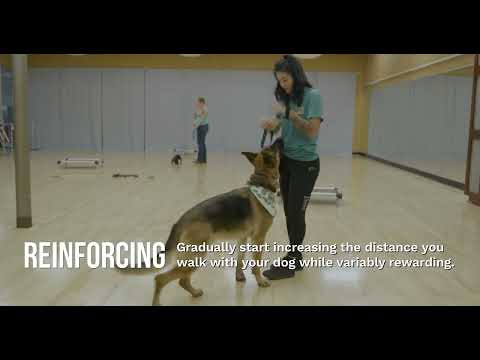
      Reinforcement starts continuous and moves to variable. All four quadrants can be used in this phase as long as the dog continues to recognize the goal.

      What happens here

      • Continuous reinforcement
      • Variable reinforcement
      • All four quadrants
      • Goal recognition checks

      Ready to move on when Your dog shows full comprehension of the goal.

    • Stage 3 of 4 Proofing The five D's, everywhere it matters

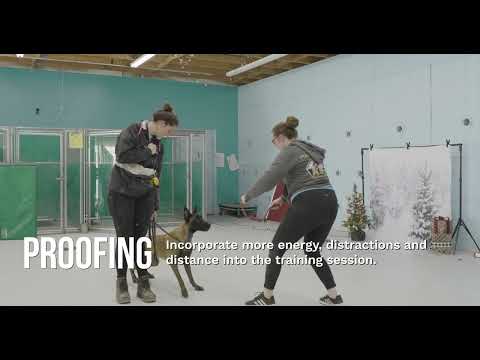
      Proofing continues with duration, distraction, distance, direction, and difficulty. It takes the longest because it is an ever evolving process: it solidifies the behavior, finding strengths and uncovering weaknesses.

      What happens here

      • Duration
      • Distraction
      • Distance
      • Direction
      • Difficulty

      Ready to move on when The behavior holds up in new places, around new distractions, at new distances.

    • Stage 4 of 4 Maintenance Progression prevents regression

      Maintaining continues indefinitely. Skills stay sharp because they keep getting used: in class, at DaySchool and DayCamp, during boarding, and at home.

      What happens here

      • Ongoing practice
      • Real-world use
      • Cross-service continuity
      • PD360 tracking

      No finish line. Skills stay sharp because they keep getting used, so hard-won gains never slip back.

    High-School Curriculum

    Every Skill Your Dog Carries by High-School

    Every skill your dog carries by High-School, from the ones first taught here to the ones now fully maintained. This list is cumulative, so it includes everything learned at earlier levels, each one tracked individually in PD360 with its own stage and success indicator. Skills new at this level are flagged, and you can open any card for the syllabus notes, home practice, and full guide.

    Teaching · 2 of 5 New skills your dog meets for the first time at this level. Reinforcing · 3 of 5 Carried over from the previous level and strengthened with reps. Proofing · 4 of 5 Tested against real-world distraction, distance, and duration. Maintenance · 5 of 5 Kept sharp so the foundation never slips.
    Teaching · 2 of 5 3 New skills your dog meets for the first time at this level.
    • Child Desensitization Teaching · 2 of 5 New at this level Calm, neutral response to the unpredictable movement and sound of kids.

      First taught in High-School.

      What it is

      When introducing a new dog to children at home, ensuring safety and comfort for both is vital.

      How we teach it

      • Controlled Environment Introduction: Introduce your dog to children at home to familiarize them with each other and reduce anxiety.
      • Practice Calm Behavior: Use familiar obedience commands like "sit," "down," or "stay" to encourage calmness around kids. Make sure that you let your pup approach if they want to, don’t force the interaction if they are uncomfortable.
      • Mark and Reward Calmness: Reward calm behavior in your dog without allowing direct interaction with children yet.
      • Positive Association Building: Mark and reward when your dog looks at or maintains calm behavior creating positive associations with children.

      Mastery: Dog tolerates child-like movement and volume without arousal.

      Practice at home

      • Immediate Reward: Reward instantly with a treat or toy upon successful introduction.
      • Consistent Practice: Allow your dog to regularly conduct safe and positive introductions.
      • Take Photos or Videos: Capturing your progress back at home or outside will help us provide additional feedback.

      Watch it

      Go deeper

      Children and dogs can be great companions, but it is important to take steps to ensure that both are safe and comfortable around each other. This is especially important when introducing a new dog to children in the home.

      Read the Full Children Socialization Guide
    • Sounds Desensitization Teaching · 2 of 5 New at this level Calm response to loud or sudden sounds (thunder, fireworks, sirens).

      First taught in High-School.

      Doorbells, Knocking, etc.

      What it is

      Dogs sometimes misbehave upon hearing new sounds, such as doorbells. They need to be desensitized to these sounds in order for them to behave.

      How we teach it

      • Get Dog's Attention: Capture your dog's attention using their name, a treat, or a noise they like.
      • Introduce Door Stimulus: Tap lightly on the door or ring the doorbell. If your dog remains calm, reward with a treat or praise.
      • Gradual Increase: Repeat, gradually increasing knock or doorbell volume. If your dog reacts negatively, pause training and retry later.

      Mastery: Dog stays calm when exposed to high-intensity sounds at gradual increments.

      Practice at home

      • Make it a positive experience: Try to make any sounds a positive experience for your dog. Give them treats and praise while you are exposing them to certain loud noises.
      • Take Photos or Videos: Capturing your progress back at home or outside will help us provide additional feedback.

      Watch it

      Go deeper

      Barking, growling, or charging the door when a dog hears knocking or the doorbell is a common behavior problem. This can be a nuisance for dog owners, as it can be disruptive and even dangerous.

      Read the Full Knocking/Doorbell Guide
    • Medical Socialization Teaching · 2 of 5 New at this level Tolerate vital-sign handling: temperature, heart rate, body checks.

      First taught in High-School.

      Taking Vitals

      What it is

      Medical socialization involves more than just acclimating your dog to the vet clinic; it's about fostering positive associations with all medical procedures, including handling, examinations, and injections. Start at home with familiarizing your dog with veterinary or grooming tools. Make "fun visits" to the vet to explore the environment and build positive associations.

      Mastery: Dog allows vital-sign handling without stress or restraint.

      Practice at home

      • Be patient and understanding: It may take some time for your dog to get used to medical procedures.
      • Take Photos or Videos: Capturing your progress back at home or outside will help us provide additional feedback.

      Go deeper

      Medical socialization isn't just about getting your dog used to the vet clinic. It's about building positive associations with all aspects of medical care, from handling and examinations to injections and uncomfortable procedures.

      Read the Full Medical Socialization Guide
    Reinforcing · 3 of 5 3 Carried over from the previous level and strengthened with reps.
    • Objects Desensitization Reinforcing · 3 of 5 Calm response to novel objects (umbrellas, vacuums, strollers).

      First taught in Middle-School. Now Reinforcing at High-School.

      Immediate Response

      What it is

      Dogs can react strongly to moving objects like bikes, wheelchairs, or skateboards, showing behaviors like barking, lunging, or chasing. Teaching dogs to stay calm around these items is crucial for everyone's safety.

      How we teach it

      Objects Desensitization

      • Initial Introduction: Begin with a stationary object (e.g., bike, wheelchair, skateboard).
      • Leash and Collar Setup: Place dog on leash and collar.
      • Exploration and Interaction: Allow dog to sniff, explore, or move around the object. Mark and reward any positive interaction.
      • Gradual Movement Introduction: Slowly move object around dog, keeping movements brief and subtle. Mark and reward for calm behavior during movement.

      Desensitize New Textures

      • Identify Triggers: Note textures or touches your dog dislikes.
      • Controlled Exposure: Gradually introduce triggers in a controlled setting.
      • Reward Calmness: Offer treats or praise for remaining calm during exposure.
      • Progressive Exposure: Increase duration and intensity gradually.
      • Watch for Distress: Stop if signs of distress like whining occur.

      Mastery: Dog stays calm when exposed to novel everyday objects.

      Practice at home

      • The dog should accept and tolerate moving objects nearby with little to no fixation or escalation. Corrections should be infrequent.
      • Continue to practice the training exercises regularly to maintain the dog's progress.
      • Be aware of triggers that could cause the dog to regress, and be prepared to intervene if necessary.
      • Use positive reinforcement: When your dog is calm and relaxed around the object, mark and reward them with a treat or praise. This will help them associate the object with positive experiences.
      • Take Photos or Videos: Capturing your progress back at home or outside will help us provide additional feedback.

      Watch it

      Go deeper

      Objects such as bikes, wheelchairs, skateboards, and other moving objects can trigger reactive behaviors from dogs, such as barking, lunging, cowering, or chasing. It's important that dogs learn how to maintain a calm, neutral state of mind around these objects to ensure the safety of them, their handlers, and other people.

      Read the Full Object Desensitization (Bike, Wheelchair, Skateboard) Guide
    • Grooming Reinforcing · 3 of 5 Tolerate handling: paws, ears, mouth, brushing, nail trims.

      First taught in Middle-School. Now Reinforcing at High-School.

      What it is

      Elevating the grooming experience for our beloved furry companions involves a strategic approach known as desensitization. While some dogs may require extra care, consistent effort can breakdown bath barriers. Here's the process:

      How we teach it

      • Brushing Mastery: Familiarize your pet with various brushes to effectively manage any tangles.
      • Bath Time: Encourage your dog with treats to enter the bathing area, secure them with a leash, and shower them with affection to maintain a calm demeanor.
      • Drying Ritual: Begin by patting your dog dry with a towel before introducing the blow dryer gradually, monitoring their response closely for any signs of comfort or discomfort.
      • Paw-some Pedicure: Approach nail care gently, using positive reinforcement and high-quality treats. Introduce clippers or a Dremel tool gradually, celebrating each relaxed moment as a small triumph.

      Mastery: Dog tolerates full body handling without stress.

      Practice at home

      • Be patient and gentle with your dog: If your dog is afraid of baths or blow dryers, be patient and gentle with them. Do not force them to do anything they are not comfortable with.
      • Take Photos or Videos: Capturing your progress back at home or outside will help us provide additional feedback.

      Watch it 3 videos

      Go deeper

      A bath and blow dry is a requirement for any dog that stays overnight with us. The bath consists of thoroughly shampooing, rinsing, conditioning and rinsing the dog again.

      Read the Full Bath and Dryer Guide
    • Car Socialization Reinforcing · 3 of 5 Calm, safe behavior in and around vehicles.

      First taught in Middle-School. Now Reinforcing at High-School.

      In/Out of Car

      What it is

      Car socialization teaches dogs to enter and exit vehicles calmly, reducing risk and preventing injury. This process can help car trips more enjoyable:

      How we teach it

      • Make the car a positive place with short, positive outings.
      • Introduce dog to getting in and out gradually with treats or toys.
      • Use a command like "load up" and gently guide with a leash if needed.
      • Reward calm behavior to associate car rides with positivity.
      • Utilize a crate to control your dog’s behavior and limit injury in the event of an accident

      Mastery: Dog loads, rides, and unloads calmly.

      Practice at home

      • If your dog starts to show any signs of anxiety or stress in the car, stop the car and take a break. You can also try playing calming music or giving your dog a calming treat.
      • Take Photos or Videos: Capturing your progress back at home or outside will help us provide additional feedback.

      Watch it 2 videos

      Go deeper

      Car socialization is the process of teaching your dog to get in and out of the car calmly, and to ride in the car without becoming anxious or stressed. This is important for a number of reasons, including: It can help your dog to feel more comfortable and relaxed when you go for car rides.

      Read the Full Car Socialization Guide
    Proofing · 4 of 5 4 Tested against real-world distraction, distance, and duration.
    • Calm Proofing · 4 of 5 Default to settled instead of revved up.

      First taught in Elementary. Now Proofing at High-School.

      Self-Soothe/Relax)(New Manner

      What it is

      The quiet command is important for your dogs to stop unnecessary barking.

      How we teach it

      Quiet/Settle

      • Quiet Environment: Start training "quiet" in a distraction-free place.
      • Gain Attention: Get your dog's focus using their name, a noise, or a treat.
      • Cue Word: Firmly say your chosen cue word.
      • Mark and Reward: Immediately reward if your dog stops barking.
      • Repeat: Practice the steps multiple times for faster learning.

      Calm Greetings

      • Start Neutral: Begin in a quiet environment. Keep your dog on a leash and remain calm to set a relaxed tone.
      • Reward Calmness: Only give attention or treats when your dog is calm and seated. If they jump or get overly excited, turn away until they settle.
      • Practice with Visitors: Introduce familiar people, instructing them to approach only when your dog remains calm. Reward calm greetings.
      • Gradual Exposure: Slowly introduce new people and environments, reinforcing calm behavior each time.
      • Consistent Reinforcement: Continue rewarding calm greetings to solidify the behavior, reducing excitement over time.

      Mastery: Dog defaults to a relaxed posture during downtime.

      Practice at home

      • Start in a quiet environment: and gradually add distractions.
      • Take Photos or Videos: Capturing your progress back at home or outside will help us provide additional feedback.

      Go deeper

      The "quiet" command is used to stop a dog from barking or making other excessive vocal noises. It is a useful command for dogs who bark excessively, such as at strangers, at other dogs, or at noises outside.

      Read the Full Quiet Guide
    • Boundaries Proofing · 4 of 5 Respect for off-limits zones in the home and environment.

      First taught in Elementary. Now Proofing at High-School.

      What it is

      Establishing boundaries fosters respect from your dog, curbing pushiness and territorial tendencies. Clear expectations should be set for personal and spacial boundaries.

      How we teach it

      • Personal/Spatial Boundaries: Step into your dog to prompt them to back away from your space. Reward your dog for conceding space.
      • Temporary Boundaries: Temporary Boundaries: Choose a specific area (e.g., kitchen). Practice in a quiet setting, rewarding for staying outside. Add verbal cue "out" once consistent. Gradually increase distance and distractions.
      • Permanent Boundaries: Permanent Boundaries: Choose a specific area (e.g., bed). Start with sit or down stay. Reward for holding. Increase duration and introduce distractions for challenge.

      Mastery: Dog stays out of designated off-limits areas without correction.

      Practice at home

      • Make sure the boundaries are clear and consistent: Your dog should know exactly where the boundaries are, and they should not be allowed to cross them.
      • Take Photos or Videos: Capturing your progress back at home or outside will help us provide additional feedback.

      Watch it 2 videos

      Go deeper

      Enforcing spatial boundaries is one of the most important ways to command respect from your dog. When a dog is responsive to spatial boundaries, they are less likely to be pushy or territorial.

      Read the Full Spatial Boundaries Guide
    • Greetings Proofing · 4 of 5 Polite, four-on-the-floor introductions to new people.

      First taught in Elementary. Now Proofing at High-School.

      Mastery: Dog greets new people without jumping or mouthing.

      Go deeper

      Picture this: You walk through the door, and instead of a joyful chaos, your furry friend welcomes you with a gentle wag and a happy smile. No frantic jumping, no barking frenzy, just calm contentment.

      Read the Full Calm Greetings Guide
    • Appropriate Play Proofing · 4 of 5 Read other dogs and adjust play style to match.

      First taught in Elementary. Now Proofing at High-School.

      Always on leash

      What it is

      In this section, we will explore how to understand your dog's play style and implement strategies to create a safe and enjoyable environment. We will also discuss how to use corrections as a tool to discourage unwanted behaviors.

      How we teach it

      • Recognize your dog's unique play style.
      • Ensure your dog understands commands like "gentle" or "leave it" to manage play and promote healthy social interactions.
      • Identify triggers that may lead to undesirable behavior.
      • Use commands like "leave it" to redirect and discourage unwanted actions.
      • If triggers are present, either avoid them or remove your dog from the situation to prevent escalation.

      Mastery: Dog matches play style to play partner and disengages on cue.

      Practice at home

      • Stay Patient and Consistent: Remember, training takes time and patience. Be consistent with your approach and celebrate even small victories as your dog develops appropriate play skills.
      • Take Photos or Videos: Capturing your progress back at home or outside will help us provide additional feedback.

      Go deeper

      Imagine happy tail wags, playful pounces, and joyous barks echoing through your home the symphony of appropriate dog play. This joyful interaction not only fosters a deeper bond between you and your furry friend but also provides essential physical and mental stimulation.

      Read the Full Appropriate Play Guide
    Maintenance · 5 of 5 10 Kept sharp so the foundation never slips.
    • Confidence Maintenance · 5 of 5 Build a baseline of confidence so your dog can engage with the world calmly.

      First taught in Pre-School. Now Maintenance at High-School.

      What it is

      Confidence and appropriate interactions is crucial for a well-rounded temperament. However, there will be times where a negative association or response needs to be reconditioned with appropriate guidance.

      How we teach it

      • Introduce the dog to the new or unusual object.
      • Begin building positive associations by rewarding any interaction.
      • Gradually encourage more interaction with the goal of achieving a neutral or positive response.
      • Allow the dog to disengage and try another time if they display reactivity or high levels of stress

      Mastery: Dog approaches novel sights and sounds without flight or freeze.

      Practice at home

      • Be patient and consistent: It may take time and patience for your dog to overcome their fear of objects. Do not get discouraged if your dog does not make progress immediately.
      • Take Photos or Videos: Capturing your progress back at home or outside will help us provide additional feedback.

      Go deeper

      Confidence is an important quality for all dogs to have. It helps them feel safe and secure, and it allows them to explore their environment and learn new things.

      Read the Full Confidence Building Guide
    • Etiquette Maintenance · 5 of 5 Learn the day-to-day etiquette that makes your dog a great neighbor.

      First taught in Pre-School. Now Maintenance at High-School.

      How we teach it

      • Safety Is Paramount: Remember, all dogs have been socialized differently prior to this class. Make sure to keep an open line of communication with your instructor, and other pet parents.
      • Understanding Play Style: Each dog displays different signals prior to and during any play. It's important to understand what appropriate play looks like and how to gradually build into that if your dog is not currently sociable.
      • Gradual Socialization: For dogs that are not already social, begin with positive associations. Every time your pup looks at another dog and doesn't react, praise them. If they are starting to show interest, start to move closer to the other dogs in the room. Small interactions with a lot of praise will help your dog feel more comfortable approaching.
      • Promoting Respectful Play: If your pup is starting to add a lot of energy into the group, call them back to you. If you are not at a point where your dogs comes back to you, make sure to have food or a leash. This will make the process of getting your dogs attention a lot easier. It also helps your pup understand when it is time to take a break

      Mastery: Dog greets calmly without jumping or mouthing.

      Practice at home

      • Safety Is Paramount: Remember, all dogs have been socialized differently prior to this class. Make sure to keep an open line of communication with your instructor, and other pet parents.
      • Take Photos or Videos: Capturing your progress back at home or outside will help us provide additional feedback.

      Go deeper

      Imagine happy tail wags, playful pounces, and joyous barks echoing through your home the symphony of appropriate dog play. This joyful interaction not only fosters a deeper bond between you and your furry friend but also provides essential physical and mental stimulation.

      Read the Full Appropriate Play Guide
    • Socialize Maintenance · 5 of 5 Structured exposure to other dogs and people in a controlled setting.

      First taught in Pre-School. Now Maintenance at High-School.

      What it is

      Creating positive interactions between people and dogs is essential for harmonious relationships.

      How we teach it

      Intros w/People & Dogs

      • Starting Position: Begin with your dog on a leash and in a safe, controlled environment.
      • Introduction: Allow your dog to politely sniff and interact with the new dog or person.
      • Guidance if Needed: Be sure to read your dog's body language to ensure the introductions are safe and positive.
      • Immediate Reward: Reward instantly with a treat or toy upon successful introduction.
      • Consistent Practice: Allow your dog to regularly conduct safe and positive introductions.

      Appropriate Interactions & Etiquette

      • Safety Is Paramount: Remember, all dogs have been socialized differently prior to this class. Make sure to keep an open line of communication with your instructor, and other pet parents.
      • Understanding Play Style: Each dog displays different signals prior to and during any play. It's important to understand what appropriate play looks like and how to gradually build into that if your dog is not currently sociable.
      • Gradual Socialization: For dogs that are not already social, begin with positive associations. Every time your pup looks at another dog and doesn't react, praise them. If they are starting to show interest, start to move closer to the other dogs in the room. Small interactions with a lot of praise will help your dog feel more comfortable approaching.
      • Promoting Respectful Play: If your pup is starting to add a lot of energy into the group, call them back to you. If you are not at a point where your dogs comes back to you, make sure to have food or a leash. This will make the process of getting your dogs attention a lot easier. It also helps your pup understand when it is time to take a break

      Mastery: Dog can be near other dogs without overreacting in either direction.

      Practice at home

      • Immediate Reward: Reward instantly with a treat or toy upon successful introduction.
      • Consistent Practice: Allow your dog to regularly conduct safe and positive introductions.
      • Take Photos or Videos: Capturing your progress back at home or outside will help us provide additional feedback.

      Go deeper

      Imagine your dog thriving in any social situation, a well-mannered ambassador spreading tail wags and smiles. General socialization teaches your pup the essential skills for navigating the world with confidence and grace.

      Read the Full General Socialization Guide
    • Cues Maintenance · 5 of 5 Build awareness that handler cues mean something is about to happen.

      First taught in Pre-School. Now Maintenance at High-School.

      Do They Give Them? Do They Respond To Them?

      What it is

      Improve your dog's understanding and communication with social cues. Social cues are subtle signs that animals display to communicate energy, stress, and more.

      How we teach it

      • Cue Recognition: Most dogs need to be taught to recognize social cues of other dogs and to disengage when those occur.
      • Giving Cues: Many dogs need to be taught appropriate ways to disengage, rather than reverting to reactivity.
      • Cue Response: When a social cue is recognized and the appropriate action is performed, rewards should follow.
      • Add A Command: A command like “Out” or a simple recall can be a great way to teach your dog to recognize and respond to social cues.

      Mastery: Dog orients toward the handler when a cue is given.

      Practice at home

      • Reward your dog: for staying within the boundaries, and do not punish them for crossing the boundaries.
      • Take Photos or Videos: Capturing your progress back at home or outside will help us provide additional feedback.

      Go deeper

      Imagine your dog reading your every mood, responding to your gestures with understanding, and anticipating your needs with a wagging tail. This isn't magic, it's the power of social cues recognition.

      Read the Full Social Cues Recognition Guide
    • Gentleness Maintenance · 5 of 5 Soft-mouth taking food and toys without snatching or nipping.

      First taught in Pre-School. Now Maintenance at High-School.

      No Mouthing, No Teeth, No Pawing

      What it is

      Encourage polite and gentle food taking to promote safer and more enjoyable interactions.

      How we teach it

      • Preparation: Begin in a calm area. Hold a treat in your closed fist to set the stage for gentle taking.
      • Clear Instructions: If you hold your treat in a flat palm you are at risk for your pup mistaking your finger for a treat. When you present the treat in a closed fist, it reduces injury as well as slows the dog down. They can't see the treat until you open your fist.
      • Immediate Reward: Open your hand slowly and give the treat. When your dog takes it softly, praise, reinforcing positive behavior without mouthing or pawing.
      • Consistent Training: Regular practice ensures understanding and adherence to gentle taking.
      • Progressive Challenges: Gradually introduce more tempting treats while enforcing the same gentle behavior standards.

      Mastery: Dog takes treats gently from hand.

      Practice at home

      • Consistent Training: Regular practice ensures understanding and adherence to gentle taking.
      • Take Photos or Videos: Capturing your progress back at home or outside will help us provide additional feedback.

      Go deeper

      Teaching your dog proper food manners isn't just about avoiding messy spills or unwanted begging. It's about establishing boundaries, fostering respect, and creating a positive association with mealtime.

      Read the Full Gentle/Calm Food Manners Guide
    • Play Guidance Maintenance · 5 of 5 Structured rules of engagement during play sessions.

      First taught in Kindergarten. Now Maintenance at High-School.

      Mastery: Dog can settle on a cue during high-arousal play.

      Go deeper

      Imagine happy tail wags, playful pounces, and joyous barks echoing through your home the symphony of appropriate dog play. This joyful interaction not only fosters a deeper bond between you and your furry friend but also provides essential physical and mental stimulation.

      Read the Full Appropriate Play Guide
    • Hand Off Maintenance · 5 of 5 Calm transfer of the leash and the dog's focus between handlers.

      First taught in Kindergarten. Now Maintenance at High-School.

      What it is

      A Vital Process for Dog Transfer The hand off protocol is a systematic procedure crucial for transferring a dog from one individual to another in a controlled and serene manner. Its main goal is to uphold the dog's calm behavior and obedience throughout the handoff process.

      How we teach it

      • Following the Routine: The new handler positions beside the current handler, passes the leash, while the current handler steps back as the new one approaches the dog. The dog should remain in place throughout this transition.
      • Practicing Common Scenarios: Seamless handoffs are essential for your dog's welfare, whether it involves introducing them to a new caregiver or leaving them at daycare.
      • Clear Communication: It is essential to communicate clearly with your dog and the other individual to ensure a smooth hand off.

      Mastery: Dog accepts a new handler without anxiety or reactivity.

      Practice at home

      • Practice with Friends and Family: Simulate handoffs with friends or family to refine your process and build your dog's confidence.
      • Take Photos or Videos: Capturing your progress back at home or outside will help us provide additional feedback.

      Go deeper

      Whether greeting a dog walker, dropping off for boarding, or welcoming a new dog sitter, handoffs are a crucial part of any dog's life. A smooth and well-defined handoff protocol ensures everyone involved feels safe, informed, and prepared for a positive experience.

      Read the Full Hand off Protocol Guide
    • Desensitize Maintenance · 5 of 5 Gradual exposure that reduces over-arousal to specific stimuli.

      First taught in Kindergarten. Now Maintenance at High-School.

      Feet/Paws/Ears/Mouth

      What it is

      Handling encompasses physical interaction with your dog. You need your dog to not be triggered by situations. For that, you need to desensitize your dog.

      How we teach it

      • Identification: Recognize triggers that cause negative reactions during handling.
      • Desensitization: Gradually expose your dog to triggers in controlled settings, rewarding calm behavior.

      Mastery: Dog can be exposed to a known trigger without reactivity.

      Practice at home

      • Be patient and consistent with your training: It may take some time for your dog to learn to accept being handled.
      • Take Photos or Videos: Capturing your progress back at home or outside will help us provide additional feedback.

      Go deeper

      Does your dog cower at fireworks? Flinch at the vacuum cleaner?

      Read the Full Desensitization Guide
    • Impulse Control Maintenance · 5 of 5 Wait before acting on a temptation: the building block of obedience.

      First taught in Kindergarten. Now Maintenance at High-School.

      High Energy, Group Training, Variable Reinforcement

      What it is

      Impulse control is a crucial skill that enables dogs to resist temptations appropriately.

      How we teach it

      • Leashed Obedience Foundation: Initiate training using familiar commands to establish control and obedience.
      • Gradual Distraction Introduction: Introduce controlled distractions that challenges, but does not overpower, your dog's focus.
      • Calm Observation Reinforcement: Reward and reinforce impulse control as distractions and energy levels increase.
      • Varied Environments and Distractions: Expand training settings and challenges, ensuring impulse control in diverse scenarios.
      • Consistent Maintenance Strategies: Employ consistent obedience reinforcement to maintain impulse control across different scenarios.

      Mastery: Dog can hold a Sit with food in front of them.

      Practice at home

      • Be creative: There are many different ways to train impulse control. Be creative and find methods that work for you and your dog.
      • Take Photos or Videos: Capturing your progress back at home or outside will help us provide additional feedback.

      Watch it

      Go deeper

      Impulse control is the ability of a dog to resist temptation and wait for a reward. It is an important skill for dogs to have, as it can help them to behave appropriately in a variety of situations.

      Read the Full Impulse Control Guide
    • Thresholds Maintenance · 5 of 5 Pause at doorways and transitions instead of bolting through.

      First taught in Kindergarten. Now Maintenance at High-School.

      Sit/Down w/o Bolting

      What it is

      Threshold manners prevent accidents, enhance walks, and create a safer environment for dogs.

      How we teach it

      • Establishing Foundations: Teach the "sit" command in a quiet environment with no distractions.
      • Gradual Doorway Exposure: Open the door slightly, rewarding the dog for maintaining the sitting position.
      • Expanding Door Interaction: Increase the door opening width while reinforcing the "sit" command consistently.
      • Adding Distractions: Introduce controlled distractions, like people or toys, during training sessions.

      Mastery: Dog waits at thresholds for a release cue.

      Practice at home

      • Don't give up: With patience and consistency, your dog will learn threshold manners.
      • Take Photos or Videos: Capturing your progress back at home or outside will help us provide additional feedback.

      Watch it

      Go deeper

      Threshold manners are important for dogs to learn because they help to prevent accidents and injuries. When dogs are taught to wait at thresholds, they are less likely to bolt out of the door and into traffic or run into another dog.

      Read the Full Threshold Guide

    See It In Person

    Reading the syllabus is one thing. Watching your dog do it is another.

    Open enrollment. Drop in for $65, no long-term commitment.

    Class Format

    Inside the 45-Minute Class

    Every High-School class runs the same 45-minute shape: focused reps, whole-class work, an AMRAP push, and a trainer demo. Each week then carries its own theme, and classes run weekly at both campuses, so any week is a valid place to start.

    Interval 20 min

    Small groups rotate through four stations, moving to a new skill at each one.

    Group 15 min

    The whole class works one behavior together to build focus around other dogs.

    AMRAP 5 min

    Pick one behavior and get as many successful reps as possible before time runs out.

    Demo 5 min

    Your trainer shows a focus command, gives feedback, and sends home practice for the week.

    Week 1

    Sensory Adaptation & Skill Building

    Group 15 min Integrating the focus behaviors of the day, the class will combine for group training activities.
    AMRAP 5 min Parents may choose one of the focus behaviors to accomplish as many successful completions in the allotted time.
    Demo 5 min
    • Demonstrate and Improve: Demonstrate one of the five focus commands for the day to receive feedback and praise
    • Home Practice: Continue to focus on difficult commands at home for the following class.
    Week 2

    Confidence & Adaptation Development

    Group 15 min Integrating the focus behaviors of the day, the class will combine for group training activities.
    AMRAP 5 min Parents may choose one of the focus behaviors to accomplish as many successful completions in the allotted time.
    Demo 5 min
    • Demonstrate and Improve: Demonstrate one of the five focus commands for the day to receive feedback and praise
    • Home Practice: Continue to focus on difficult commands at home for the following class.
    Week 3

    Healthcare and Mobility Integration

    Group 15 min Integrating the focus behaviors of the day, the class will combine for group training activities.
    AMRAP 5 min Parents may choose one of the focus behaviors to accomplish as many successful completions in the allotted time.
    Demo 5 min
    • Demonstrate and Improve: Demonstrate one of the five focus commands for the day to receive feedback and praise
    • Home Practice: Continue to focus on difficult commands at home for the following class.
    Week 4

    Communication & Behavior Repertoire

    Group 15 min Integrating the focus behaviors of the day, the class will combine for group training activities.
    AMRAP 5 min Parents may choose one of the focus behaviors to accomplish as many successful completions in the allotted time.
    Demo 5 min
    • Demonstrate and Improve: Demonstrate one of the five focus commands for the day to receive feedback and praise
    • Home Practice: Continue to focus on difficult commands at home for the following class.
    Week 5

    Enhanced Skills & Commands Training

    Group 15 min Integrating the focus behaviors of the day, the class will combine for group training activities.
    AMRAP 5 min Parents may choose one of the focus behaviors to accomplish as many successful completions in the allotted time.
    Demo 5 min
    • Demonstrate and Improve: Demonstrate one of the five focus commands for the day to receive feedback and praise
    • Home Practice: Continue to focus on difficult commands at home for the following class.
    Week 6

    Interactive Training Mastery

    Group 15 min Integrating the focus behaviors of the day, the class will combine for group training activities.
    AMRAP 5 min Parents may choose one of the focus behaviors to accomplish as many successful completions in the allotted time.
    Demo 5 min
    • Demonstrate and Improve: Demonstrate one of the five focus commands for the day to receive feedback and praise
    • Home Practice: Continue to focus on difficult commands at home for the following class.
    Week 7

    Sensory Acclimation & Behavior Mastery

    Group 15 min Integrating the focus behaviors of the day, the class will combine for group training activities.
    AMRAP 5 min Parents may choose one of the focus behaviors to accomplish as many successful completions in the allotted time.
    Demo 5 min
    • Demonstrate and Improve: Demonstrate one of the five focus commands for the day to receive feedback and praise
    • Home Practice: Continue to focus on difficult commands at home for the following class.
    Week 8

    Confident Interaction & Behavior

    Group 15 min Integrating the focus behaviors of the day, the class will combine for group training activities.
    AMRAP 5 min Parents may choose one of the focus behaviors to accomplish as many successful completions in the allotted time.
    Demo 5 min
    • Demonstrate and Improve: Demonstrate one of the five focus commands for the day to receive feedback and praise
    • Home Practice: Continue to focus on difficult commands at home for the following class.
    Week 9

    Healthcare & Communication Training

    Group 15 min Integrating the focus behaviors of the day, the class will combine for group training activities.
    AMRAP 5 min Parents may choose one of the focus behaviors to accomplish as many successful completions in the allotted time.
    Demo 5 min
    • Demonstrate and Improve: Demonstrate one of the five focus commands for the day to receive feedback and praise
    • Home Practice: Continue to focus on difficult commands at home for the following class.
    Week 10

    Engaging Commands & Skill Refinement

    Group 15 min Integrating the focus behaviors of the day, the class will combine for group training activities.
    AMRAP 5 min Parents may choose one of the focus behaviors to accomplish as many successful completions in the allotted time.
    Demo 5 min
    • Demonstrate and Improve: Demonstrate one of the five focus commands for the day to receive feedback and praise
    • Home Practice: Continue to focus on difficult commands at home for the following class.
    Week 11

    Engaging Skills & Behavior Development

    Group 15 min Integrating the focus behaviors of the day, the class will combine for group training activities.
    AMRAP 5 min Parents may choose one of the focus behaviors to accomplish as many successful completions in the allotted time.
    Demo 5 min
    • Demonstrate and Improve: Demonstrate one of the five focus commands for the day to receive feedback and praise
    • Home Practice: Continue to focus on difficult commands at home for the following class.
    Week 12

    Environmental Acclimation & Behavior Mastery

    Group 15 min Integrating the focus behaviors of the day, the class will combine for group training activities.
    AMRAP 5 min Parents may choose one of the focus behaviors to accomplish as many successful completions in the allotted time.
    Demo 5 min
    • Demonstrate and Improve: Demonstrate one of the five focus commands for the day to receive feedback and praise
    • Home Practice: Continue to focus on difficult commands at home for the following class.

    Classes run weekly at both campuses, and any week is a valid entry point.

    Progression and Scoring

    How the High-School Score Climbs

    Every skill your dog knows sits at a stage, and every stage is worth points. As behaviors move up from Teaching to Maintenance the score climbs toward the High-School graduation target.

    Every skill your dog knows sits at one of five stages, and each stage is worth points. A grade level's score is the sum of those stage scores across every skill met so far. As behaviors move up a stage the score climbs, and when it reaches the graduation target the move up is obvious.

    The same score follows your dog across Group Classes, DaySchool and DayCamp, private lessons, and boarding, keeping parent, dog, and trainer in sync.

    High-School on the PD360 scale Graduation target 453 points

    Every dog starts at the 151 point baseline, because a behavior nobody has taught yet scores 1. Most dogs join partway up, around 235 points. Graduation is about progress across many behaviors, not one number.

    How graduation works Your dog graduates a grade once at least 80% of the behaviors that need to reach the next grade's stage have progressed. Some dogs jump several stages in one grade, so the points do not always immediately equal graduation.

    Where This Level Sits

    The Curriculum Ascent

    Each grade teaches more behaviors and pushes the ones underneath a stage deeper. The result is a dog who knows more, and knows it at mastery depth.

    • Teaching
    • Reinforcing
    • Proofing
    • Maintenance

    Every level adds new behaviors on top and pushes everything underneath a stage deeper.

    Counts reflect each level's stage mix, including skills refreshed back into Teaching.

    1. Pre-School: 14 behaviors in Teaching at this level.
      Pre-School 184 pts
    2. Kindergarten: 14 behaviors in Reinforcing.
      Kindergarten: 15 behaviors in Teaching at this level.
      Kindergarten 235 pts
    3. Elementary: 14 behaviors in Proofing.
      Elementary: 15 behaviors in Reinforcing.
      Elementary: 15 behaviors in Teaching at this level.
      Elementary 309 pts
    4. Middle-School: 14 behaviors in Maintenance.
      Middle-School: 15 behaviors in Proofing.
      Middle-School: 15 behaviors in Reinforcing.
      Middle-School: 15 behaviors in Teaching at this level.
      Middle-School 393 pts
    5. High-School: 29 behaviors in Maintenance.
      High-School: 15 behaviors in Proofing.
      High-School: 15 behaviors in Reinforcing.
      High-School: 12 behaviors in Teaching at this level.
      High-School 453 pts
    6. College: 44 behaviors in Maintenance.
      College: 15 behaviors in Proofing.
      College: 12 behaviors in Reinforcing.
      College: 13 behaviors in Teaching at this level.
      College 507 pts
    7. Masters: 59 behaviors in Maintenance.
      Masters: 12 behaviors in Proofing.
      Masters: 13 behaviors in Reinforcing.
      Masters: 15 behaviors in Teaching at this level.
      Masters 553 pts
    8. Dogtorate: 71 behaviors in Maintenance.
      Dogtorate: 13 behaviors in Proofing.
      Dogtorate: 15 behaviors in Reinforcing.
      Dogtorate: 16 behaviors in Teaching at this level.
      Dogtorate 620 pts

    Graduation

    When Dogs Move From High-School to College

    Dogs graduate to College once they reliably retrieve and pace alongside their handler, and demonstrate calm tolerance during simulated medical handling.

    In PD360 terms, High-School sits around 453 points on the shared scoring scale. Every behavior starts at a baseline and climbs from Teaching to Maintenance, so a dog reaches this target as enough behaviors move up a stage, not by hitting one exact number on one day.

    Start This Week

    Keep your dog's momentum going in a small group of six or fewer.

    Group classes fold into DaySchool, DayCamp, camps, and boarding through PD360, so the same progress story follows your dog everywhere.

    Prefer paper?

    Download the printable High-School syllabus to bring to class.

    Download the Printable Syllabus

    PD360 Pet Progress

    Every High-School Skill Is Tracked in PD360

    Every behavior your dog knows is scored on a 1 to 5 scale (1 Unknown, 2 Teaching, 3 Reinforcing, 4 Proofing, 5 Maintenance), so you can see exactly where your dog stands and watch the score climb as behaviors move up. The same record follows your dog across Group Classes, DaySchool and DayCamp, private lessons, and boarding. One profile, one progress story, one team.

    • 300+ Tracked variables per dog
    • 8 Grade levels & curriculum tracks
    • 120+ Behaviors across the journey
    • Years Of continuous progress data
    • Behavior-Level Detail

      Every command, manner, and trick moves through Teaching → Reinforcing → Proofing → Maintenance.

    • Programs Stay in Sync

      Progress in Group Class flows into DaySchool, Camps, and private lessons. Trainers see the same record.

    • Honest Recommendations

      Your dog moves up when the data says they're ready, not when a calendar says so.

    • Years of Continuity

      From Pre-School through Dogtorate, the full history travels with your dog.

    The Full Curriculum

    Explore the Full Curriculum

    See the entire Pet Parenting Class curriculum: eight cumulative grade levels from foundational manners to athletic mastery, plus the Rally and Agility specialty classes.

    Pre-School

    Puppy & Adult

    Manners, socialization, proper play, and confidence-building for puppies and reactive adults.

    14 New Behaviors
    14 Cumulative
    Foundational Difficulty
    Explore curriculum

    Kindergarten

    All Ages

    Heel, place, stay, and free, the behavioral foundations that anchor everything that comes next.

    15 New Behaviors
    29 Cumulative
    Foundational Difficulty
    Explore curriculum

    Elementary

    All Ages

    Reset, Done, Leave It, Off, advanced commands and impulse control for daily life.

    16 New Behaviors
    44 Cumulative
    Foundational Difficulty
    Explore curriculum

    Middle-School

    All Ages

    Out, Flip to Heel, off-leash work, grooming and object desensitization.

    15 New Behaviors
    59 Cumulative
    Intermediate Difficulty
    Explore curriculum
    You are here

    High-School

    All Ages

    Retrieve, pacing, pivots, and advanced tricks, practical skills with emotional bonding.

    12 New Behaviors
    71 Cumulative
    Intermediate Difficulty
    Explore curriculum

    College

    All Ages

    Send Out, Middle, distance commands, and intricate tricks, high-level obedience and problem-solving.

    13 New Behaviors
    84 Cumulative
    Advanced Difficulty
    Explore curriculum

    Masters

    All Ages

    Figure 8, Orbit, Freestyle Bridging, and household tasks like Put Toys Away.

    15 New Behaviors
    99 Cumulative
    Expert Difficulty
    Explore curriculum

    Dogtorate

    All Ages

    Frisbee, Leg Weaves, Cross Paws, and athletic challenges, the highest level of training.

    16 New Behaviors
    115 Cumulative
    Expert Difficulty
    Explore curriculum
    Specialty

    Rally

    All Ages

    Refine leash handling, commands, and partnership through the dynamic dog sport of Rally.

    Specialty Difficulty
    Explore curriculum
    Specialty

    Agility

    All Ages

    Guide your dog through jumps, weaves, tunnels, and more, fun, fitness, and partnership.

    Specialty Difficulty
    Explore curriculum

    Common Questions

    High-School Questions, Answered

    What does my dog learn in High-School?

    High-School turns a well-trained dog into a genuinely useful partner. Dogs refine pivots, turns, and pacing so they match your speed instead of pulling ahead, master retrieve for practical tasks, and add the bye command. New tricks like speak, high five, and hug keep sessions fun while deepening cooperation.

    Manners work targets real life: calm behavior around children, and medical socialization where your dog learns to relax while vitals are taken, a skill that makes vet visits dramatically easier.

    Is High-School where my dog works off leash?

    Dogs enter High-School already carrying off-leash commands and heel from Middle School, and this level is where that reliability gets proofed. Known skills keep cycling through Reinforcing, Proofing, and Maintenance around controlled noise, movement, and other dogs, so obedience holds up in the situations that used to unravel it.

    Not sure your dog is ready? The PD360 assessment settles it. Every dog is placed by demonstrated skill, not time enrolled, so your dog starts exactly where the score says they should.

    What are group classes at Partners Dogs?

    Group classes at Partners Dogs are weekly small-group training sessions at our Scottsdale and Cave Creek campuses. Dogs progress through 8 cumulative grade levels, from Pre-School to Dogtorate, covering 115 behaviors tracked in the PD360 system.

    The curriculum is cumulative: behaviors taught at Elementary are reinforced in Middle-School and proofed in High-School, with each behavior moving through at least four stages of learning. Sessions are taught by master trainers in groups of 6 dogs or fewer, and open enrollment runs year-round, so you can start any week without waiting for a new session. Drop-in classes are $65 per session with no long-term contracts. Rally and Agility specialty classes are also available.

    How much do group classes cost at Partners Dogs?

    Drop-in group classes are $65 per session, with no contracts and no long-term commitments. Same-day enrollment at the door is $115, so booking ahead saves you $50. Multi-class packages are available for families who want a regular weekly slot. Each class runs 45 minutes, held once per week, with open enrollment year-round.

    Pricing is per dog. If you have multiple dogs, contact us about household pricing. View current pricing and package options on the pricing page.

    Ready to Start High-School?

    Open enrollment means you can join this week. Pick a class on the calendar or schedule a call and we'll help you confirm the right starting level.

    Providing Dog Training Solutions In Arizona

    Cave Creek | Anthem | Scottsdale | Paradise Valley | Phoenix | Mesa | Tempe

    480.595.6700

    Office Hours: Mon-Fri 8am-5pm | Sat 8am-2pm | Sunday Closed
    Daycare Hours: Mon-Fri 7am-6pm | Sat 8am-4pm | Sunday Closed