
Seasonal Guide · May to Sep
Keeping Your Dog Safe Through Arizona Summer
When pavement hits 165 degrees and an AC failure turns dangerous fast, summer is the season where the wrong call costs lives. This is the protocol our trainers teach every new desert family.
How hot is too hot to walk a dog in Arizona?
If you can't hold the back of your hand to the pavement for 10 seconds, it's too hot for your dog's paws, and Arizona asphalt can reach 165 degrees on a 110-degree day. The safe windows are before 7am and after 9pm; hydrate every 15 minutes, never leave a dog in a parked car, and know the heatstroke warning signs. Partners Dog School teaches this six-step summer protocol to every new client, because in the desert it's the difference between a normal season and an emergency. When the heat makes safe exercise impossible, climate-controlled DaySchool keeps active dogs sane.
WHAT THE DESERT DOES TO A DOG
Three Risks That Turn Serious Fast
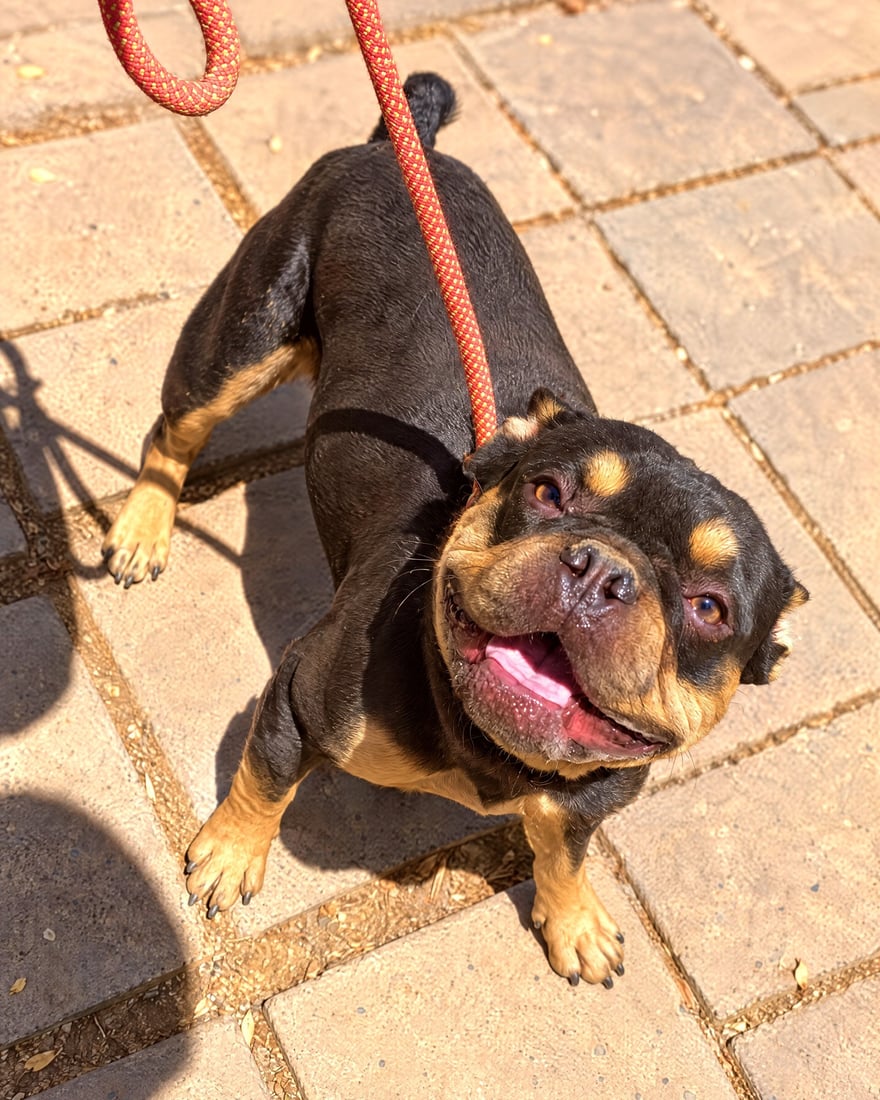
- Heatstroke Dogs cool themselves by panting, not sweating, so a body that climbs past 104 degrees can slide toward organ damage in minutes. Flat-faced breeds like French Bulldogs, Bulldogs, Pugs, and Boston Terriers, along with seniors, puppies, and heavy-coated dogs, reach that line the fastest.
- Pavement burns Asphalt that feels warm to you can hit 165 degrees on a 110-degree afternoon, and that surface blisters paw pads in under a minute. The damage is hidden until your dog is limping and the skin is already raw.
- Dehydration Heavy panting burns through water faster than a dog can replace it, and the slide from thirsty to in trouble is quiet. Sunken eyes, thick drool, and a tacky nose and gums are the early tells.
WHY SOME BREEDS FEEL IT FIRST
Flat-Faced Breeds and the Summer Cooling Problem
Dogs shed heat mainly by panting, and flat-faced breeds are built to do it poorly. French Bulldogs, English Bulldogs, Pugs, Boston Terriers, and Boxers have shortened airways, a condition vets call BOAS, so the fast open-mouthed breathing that should cool them down moves far less air than it does in a long-nosed dog. That is why they overheat sooner, at lower temperatures, and with less warning.
The research is stark. Studies of thousands of dogs found flat-faced breeds are more than twice as likely to suffer heat-related illness in hot conditions, and there is no tidy temperature line where they become safe. Treat any labored breathing, loud raspy panting, or a dog that cannot settle as a reason to stop and cool down.
The practical answer is a smaller heat footprint. Keep outings short and early, skip the midday walk entirely, and give these dogs a cool floor to work and play on when the forecast climbs. A full day in our climate-controlled DaySchool reduces their exposure to outdoor heat and hot pavement while they still get real exercise and training.
THE SIX-STEP SUMMER PROTOCOL
Your Hot-Weather Prevention Checklist
This is the routine our trainers hand every new desert family. Run it from May through September and most heat emergencies never get the chance to start.
- Walk before 7am or after 9pm, and keep it short on the worst days.
- Run the 10-second pavement test every time. If the back of your hand cannot stay on the asphalt for a slow count of ten, it is too hot for paws.
- Carry water and offer it every 15 minutes, even on a short outing.
- Never leave a dog in a parked car, not for a minute. Interior heat climbs past 120 degrees fast, even with the windows cracked.
- Trade the midday walk for shade, indoor play, or a treadmill session when the forecast is brutal.
- Have an AC-failure plan. Know where your dog goes if the power drops at home, before the day it happens.
THE HABIT THAT PREVENTS MOST OF IT
The Pavement Test Takes Ten Seconds
Before you step off the porch, run the test that prevents most summer paw injuries.
- Press the back of your hand flat to the sidewalk.
- Hold it there for a slow count of ten.
- If you cannot keep it there, your dog cannot walk on it either. Pads burn at temperatures that barely register through your shoes.
The numbers are brutal in the desert. Researchers at the Arizona Burn Center measured Phoenix asphalt above 150 degrees at midday, and a surface at 140 degrees can cause a second-degree burn in about five seconds. Sidewalk and rock run cooler than blacktop, but on a summer afternoon both still climb well past safe.
On the days it fails, the walk still happens. It just moves to grass, to early morning, or indoors where the floor is cool and the air is controlled. A dog who misses one hot-afternoon walk is fine. A dog with blistered pads is not.
IF YOU SEE THE SIGNS
Heatstroke: Spot It, Then Act in Order
Know the warning signs. Frantic panting, heavy drooling, bright red or grey gums, glazed eyes, vomiting, weakness, staggering, or collapse. Any one of these in the heat is an emergency, not a wait-and-see.
Get out of the heat first. Move your dog into shade or air conditioning right away and stop all activity. Every extra minute in the sun makes the next steps harder.
Cool with water, not ice. Pour or sponge cool water over the belly, groin, paws, and armpits, and aim a fan at the wet skin. Skip ice-cold water and ice baths, which clamp the blood vessels shut and trap the heat inside.
Offer small sips. Let your dog drink cool water if they are alert and willing, but never force it, and never pour water into the mouth of a dog who is groggy or down.
Call the emergency vet on the way. Head in even if your dog seems to rally. Internal damage from heatstroke can surface hours later, and a vet needs to check for it.
When in doubt, drive. Heatstroke is a true emergency, and minutes decide the outcome.
A SEPARATE SUMMER EMERGENCY
Bloat in Deep-Chested Breeds: Recognize It, Then Drive
This one is not caused by the heat, and it is worth understanding on its own. Bloat, or gastric dilatation-volvulus, is when a stomach fills with gas and can twist. Summer does not cause it, but hot-weather routines can stack the known risk factors, especially heavy exercise paired with gulping a large volume of water or food quickly around that effort, which dogs are far more likely to do when they are hot and thirsty.
Deep-chested breeds carry the most risk: Great Danes, Standard Poodles, German Shepherds, Weimaraners, Dobermans, Setters, Saint Bernards, and Boxers. Learn the warning signs and act on them fast.
- A swollen, tight, or distended belly.
- Unproductive retching, trying to vomit with little or nothing coming up.
- Restlessness, pacing, and an inability to get comfortable.
- Heavy drooling, pale gums, or collapse.
There is nothing to treat at home. Bloat is a true emergency that needs a veterinarian, so drive to the nearest emergency vet the moment you see these signs. To lower the odds, avoid large meals and rapid water gulping right before or after hard exercise, and let a hot dog cool and settle before a full drink or dinner.
WHEN IT IS TOO HOT TO WALK
How Partners Keeps Your Dog Moving All Summer
- Climate-controlled DaySchool. A full day of indoor play and training in the cool, so an active dog burns energy without ever facing the pavement. Explore DaySchool
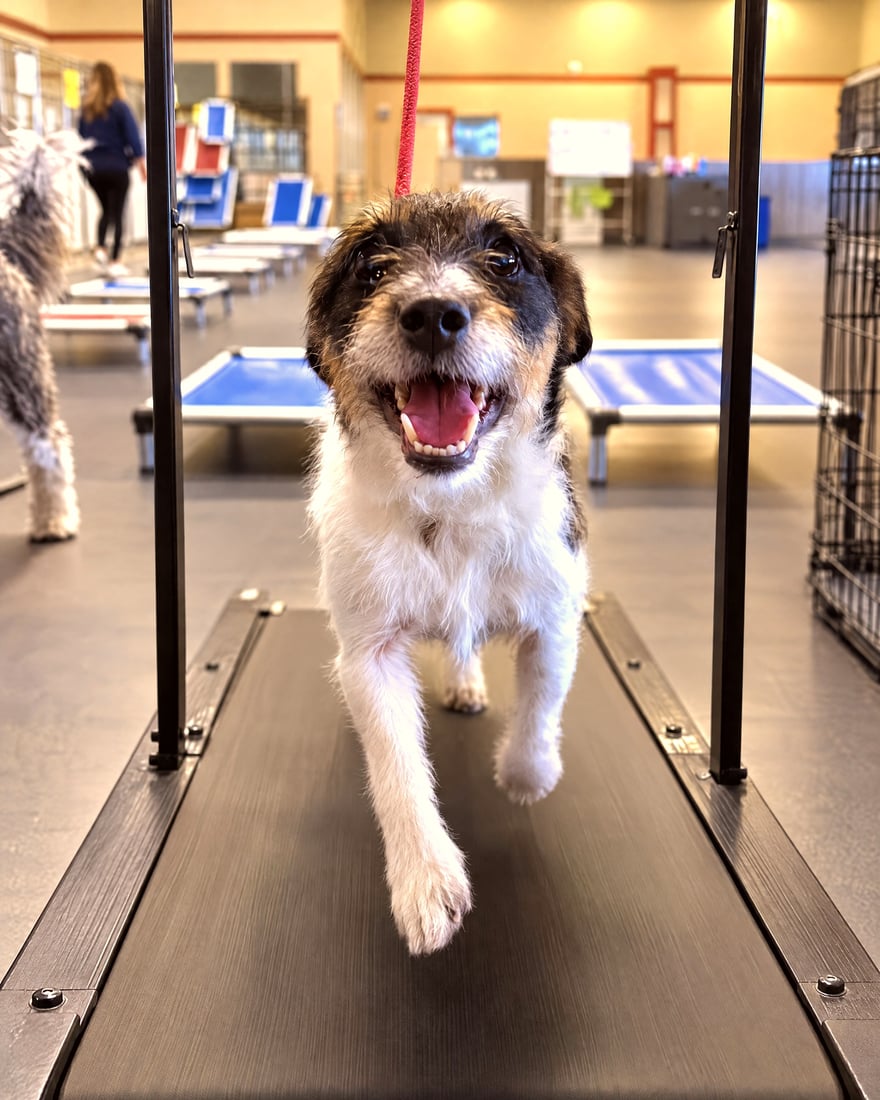
- Indoor treadmill conditioning. A real exercise outlet on the days outside is off the table, one trainer and one dog at a comfortable pace. See treadmill conditioning
- Cool, supervised boarding. Air-conditioned overnight stays with people your dog already knows, and no risk of an AC failure at home going unnoticed. View boarding
- A bath and tidy-up. A summer groom keeps a heavy coat manageable and gives our team a close look at paws and skin. Book grooming
KEEP READING
Related Arizona Care Guides
- Monsoon Prep Guide Storm-season anxiety, flash floods, and the desert toads that send dogs to the ER, handled before the first big storm.
- Seasonal Care Hub The full Arizona year at a glance, with what overlaps when and which season to prep for first.
- The Arizona Owner's Guide The bigger desert picture, from pavement and hydration to wildlife, vaccines, trails, and parks.
Plan your dog's summer before the heat hits
Tell us about your dog and we will map out the cool-weather routine, indoor exercise, and AC-failure backup that keep them active and safe all season. A quick call is all it takes.
Frequently Asked Questions
What time of day is safe to walk a dog in Arizona summer?
Before 7am or after 9pm during June through September. Tighten that further for flat-faced breeds and senior dogs. Always run the 10-second pavement test before stepping off the porch.
What are the signs of heatstroke in dogs?
Excessive panting, heavy drooling, bright red gums, vomiting, weakness, staggering, or collapse. Move the dog to shade or AC, apply cool (not ice-cold) water to the belly and paws, and get to an emergency vet immediately.
Are French Bulldogs and other flat-faced breeds more at risk in Arizona heat?
Yes. Flat-faced breeds like French Bulldogs, English Bulldogs, Pugs, and Boston Terriers have shortened airways that make panting, a dog's main way to cool down, far less effective. Research finds these breeds are more than twice as likely to suffer heat-related illness in hot conditions, so give them shorter, cooler outings and lean on climate-controlled options during the hottest hours.
My dog is a deep-chested breed. What are the warning signs of bloat?
Heat does not cause bloat, but summer routines can raise the risk when a dog does heavy exercise and then gulps a large amount of water or food quickly. Deep-chested breeds like Great Danes, Standard Poodles, German Shepherds, Weimaraners, and Dobermans are the most vulnerable. Watch for a swollen or tight belly, unproductive retching with nothing coming up, restlessness and pacing, heavy drooling, or pale gums. Bloat is a true emergency with no home treatment, so get to an emergency vet right away.