
Foundation Camp
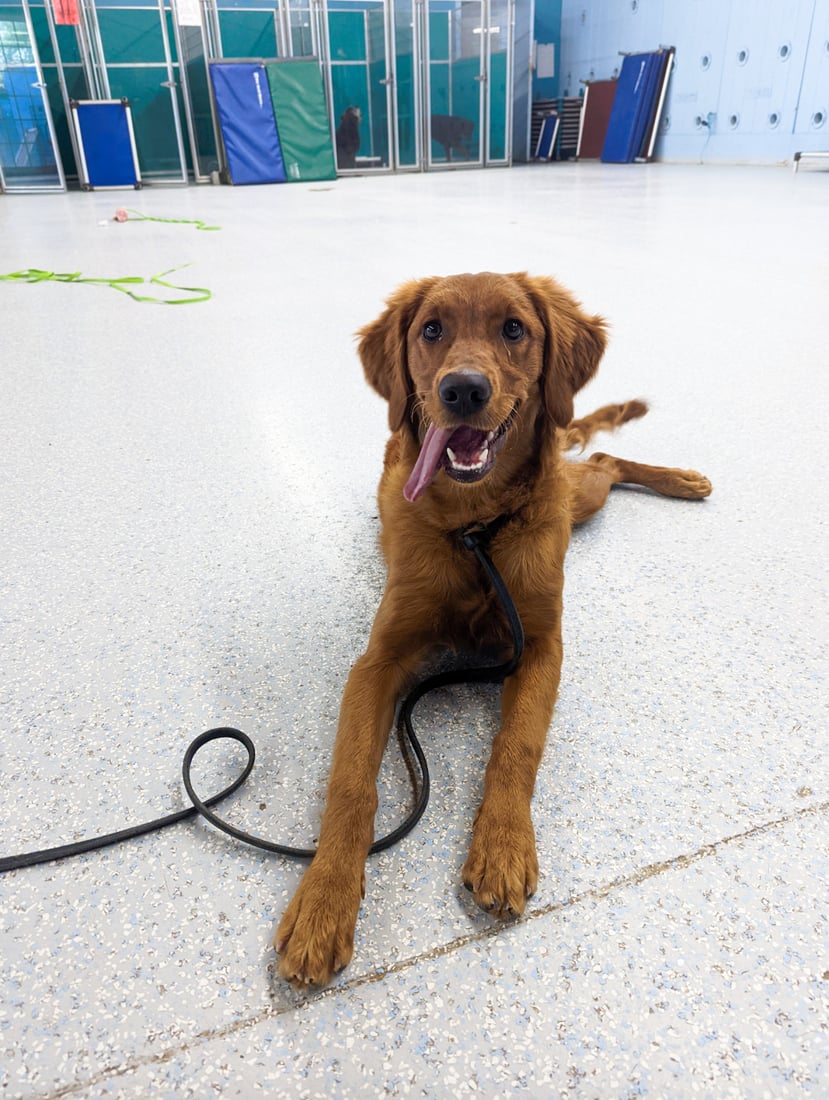
A 21-day board-and-train that builds solid obedience and manners, the right fit for milder issues.
Essential
PD360 AssessmentYour dog's personalized starting point Dog BoardingOvernight stays with trained care Snake AvoidanceRattlesnake safety training GroomingLow-stress bath, brush-out & nailsFoundational
Foundation Camp14-night basics + manners DaySchoolDaily training + structured enrichment Private Lessons1-on-1 coaching for you + your dog Group ClassesWeekly skills in a social settingCurriculum
Grade-Level Curriculum8 grades from Pre-School Puppy to Dogtorate Training JourneyWhat progress looks like, week by week Our MethodologyHow we train and why it lastsDog Behavior Solutions
Behavior severity
MildCommon signs your dog needs crate work
Seek help now
Mild is a starting point for planning, not a diagnosis. Panic connected to being alone, beyond the crate itself, may point to separation anxiety and needs its own plan.
Understanding the behavior
Crate training teaches a dog to see an enclosed space as safe and comfortable rather than something to escape. Done well, it gives your dog a predictable place to settle, supports house-training, and makes travel, vet visits, and boarding far less stressful. Done poorly, usually by moving too fast or using the crate as punishment, it can create the exact anxiety it was meant to prevent.
The training is built in stages: comfort with the crate door open, short closed-door periods while the dog is calm, and gradually longer duration as the dog proves it can settle. Meals and calm attention happen in and around the crate early on so it becomes a good place to be, not a place things stop happening. Timing and pace matter more than any specific piece of equipment.
Most dogs, at any age, can learn to accept and even prefer a properly conditioned crate. Progress is usually steady when the pace matches the dog. A dog who already struggles with being left alone may need separation anxiety work alongside crate training rather than crate training alone.
Partners Dogs has trained Arizona dogs through every kind of crate training case since 1997, at our Scottsdale and Cave Creek facilities. Lifetime trainer support is included with every board-and-train program.
Recommended path · Mild severity
Based on how crate training typically presents, here is where we would start. Not sure which fits? Take the PD360 assessment for a personalized recommendation.
A 21-day board-and-train that builds solid obedience and manners, the right fit for milder issues.
Weekly Pet Parenting classes with our trainers, practice in a structured social environment.
The process
Not sure which program
Take our quick PD360 assessment for a personalized recommendation, or talk to a trainer who has seen crate training many times before.
Good to know
Crate training typically responds to Foundation Camp ($3,509, discounted with membership), our 14-night board-and-train, which rebuilds a positive crate association at a careful pace, or weekly Group Classes for ongoing reinforcement of calm settling habits. A $199 PD360 Assessment, credited toward enrollment in your recommended camp or membership (not toward à la carte bookings or general reservations), helps rule out separation anxiety as the underlying cause first, since that changes the plan.
Letting your dog out while they are actively barking or crying teaches them that barking gets the door open, which usually makes the behavior worse over time, not better. Instead, wait for even a brief pause in the noise before opening the door, and go back to a shorter duration or an easier setup, door open, dog nearby, if the crying suggests you moved too fast. Crate training is built in small, successful steps, not by pushing through distress and hoping it stops.
A properly conditioned crate is not cruel. Most dogs, given the right introduction, come to treat the crate as their own space, somewhere calm and predictable, similar to how a den functions in the wild. What actually causes distress is using the crate as punishment, closing the door before the dog is ready, or leaving a dog crated far longer than is reasonable for their age and bladder capacity. The crate itself is neutral. How it is introduced is what determines the outcome.
The right crate size lets your dog stand up fully, turn around, and lie down stretched out, without extra room to spare. A crate that is too large can actually work against house-training, since it gives a dog enough space to sleep in one corner and eliminate in another. For a growing puppy, a divider panel lets you size the crate up gradually instead of buying a new one at every stage.
For puppies, a common starting guide is about one hour per month of age plus one, so a three-month-old puppy can typically hold it for around four hours, though every puppy is different. Adult dogs can usually handle a typical workday in the crate, but that should not become the default every single day. The crate is a tool for safe, structured rest, not a substitute for real exercise, potty breaks, and attention.
Dogs do not naturally hate crates. A well-conditioned crate is a den, a safe, quiet space dogs choose to nap in. Dogs come to hate crates when one of these has happened:
The fix is rebuilding the crate as a positive space, never closing the door until your dog enters voluntarily, feeding meals inside, building duration slowly. If the dog has injured themselves trying to escape, you have to back up further and rule out separation anxiety first.
Dogs with crate training often show these patterns too. Explore the behaviors below. We treat them all.
Keep learning
Practical reading from our trainers on behavior, everyday manners, and life with a dog in Arizona.

Muzzle training at home for dogs works when it predicts good things, not punishment. A Cave Creek protocol for bite ...
Is my dog trainer insured? Here is what liability coverage should include, how to check it, and why solo in-home ...
Resource guarding in dogs: the trade-up protocol, why never to punish the growl, and when to get help. Start with a ...
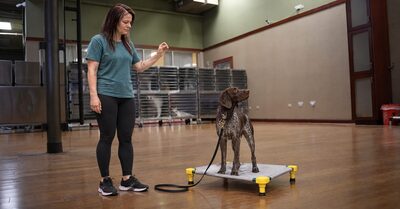
Stop dog jumping on guests: train the place command, run the doorbell protocol, proof the five D's. Private Lessons in ...
Ready for the next step
Every dog and household is different. Get a real conversation with a Partners Dogs trainer who has treated crate training for more than 28 years. You get straight answers and a starting point that fits your home.