
Behavior Camp
A 4 to 6 week immersive behavior-modification program, the best fit for moderate behavior issues.
Essential
PD360 AssessmentYour dog's personalized starting point Dog BoardingOvernight stays with trained care Snake AvoidanceRattlesnake safety training GroomingLow-stress bath, brush-out & nailsFoundational
Foundation Camp14-night basics + manners DaySchoolDaily training + structured enrichment Private Lessons1-on-1 coaching for you + your dog Group ClassesWeekly skills in a social settingCurriculum
Grade-Level Curriculum8 grades from Pre-School Puppy to Dogtorate Training JourneyWhat progress looks like, week by week Our MethodologyHow we train and why it lastsDog Behavior Solutions
Behavior severity
ModerateCommon signs
Seek help now
Moderate is a starting point for planning, not a diagnosis. Dogs with bites, self-injury, or an escape risk need an in-person assessment before group or exposure work.
Understanding the behavior
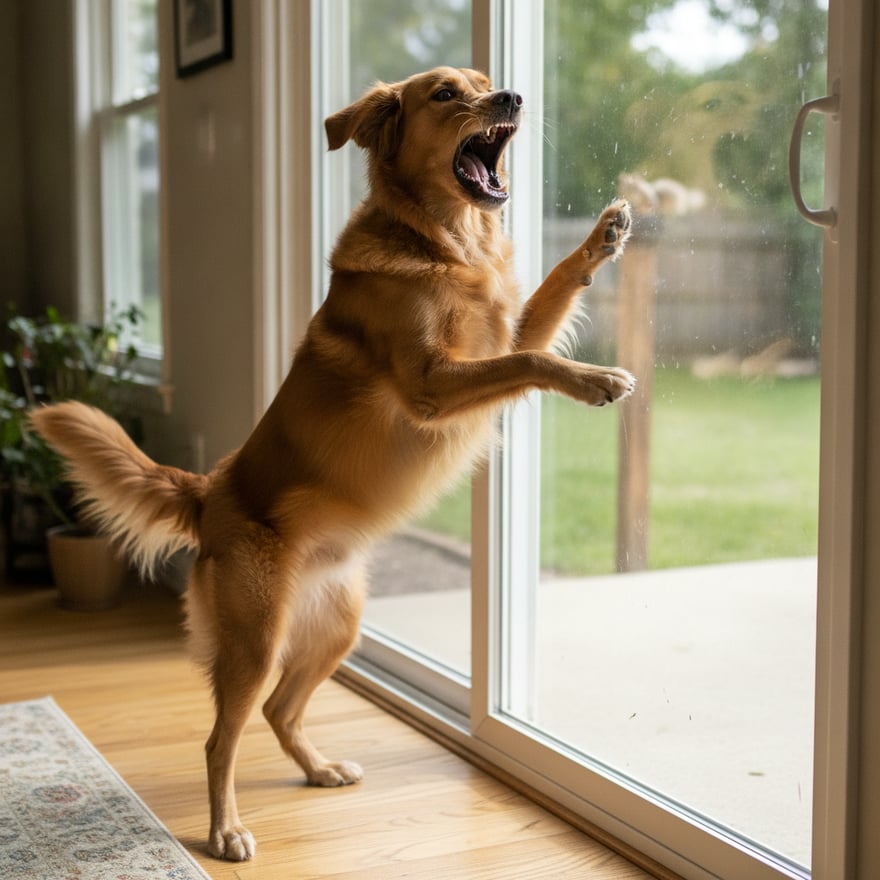
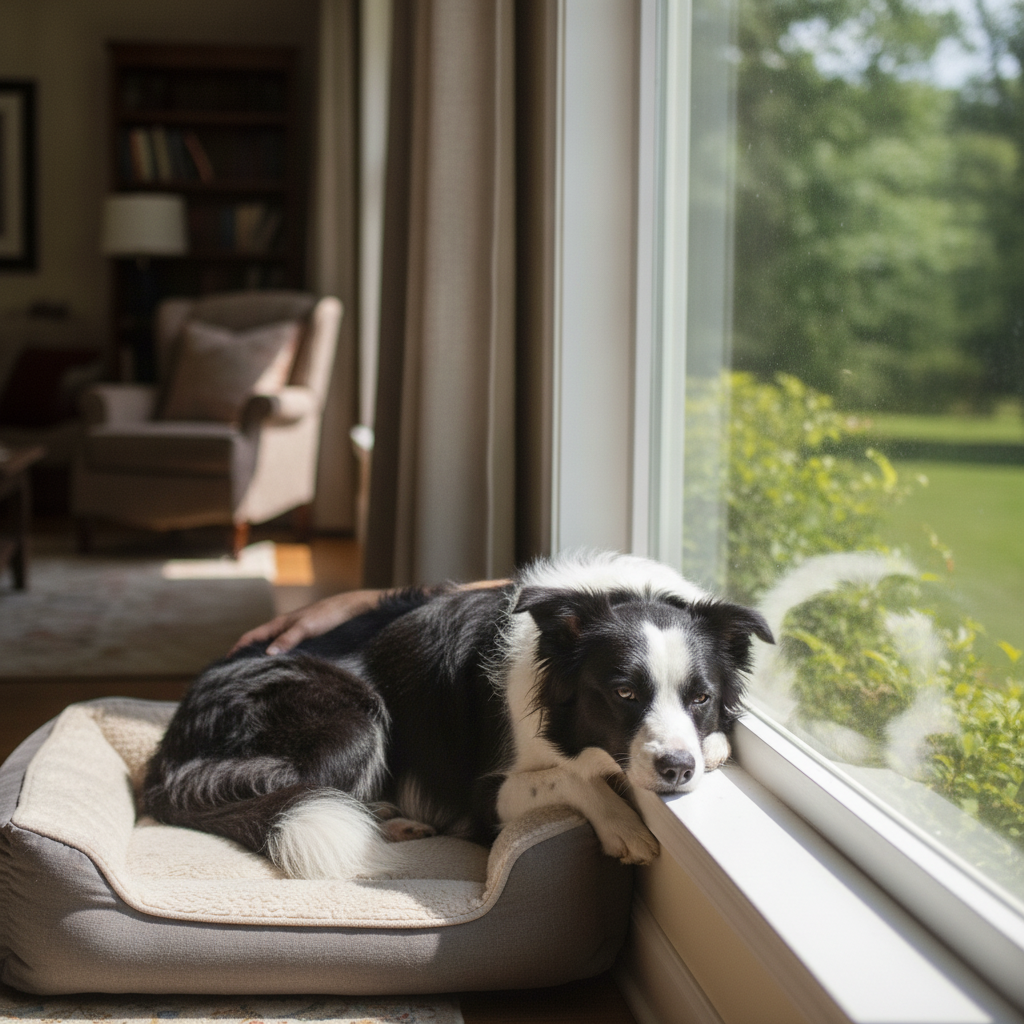
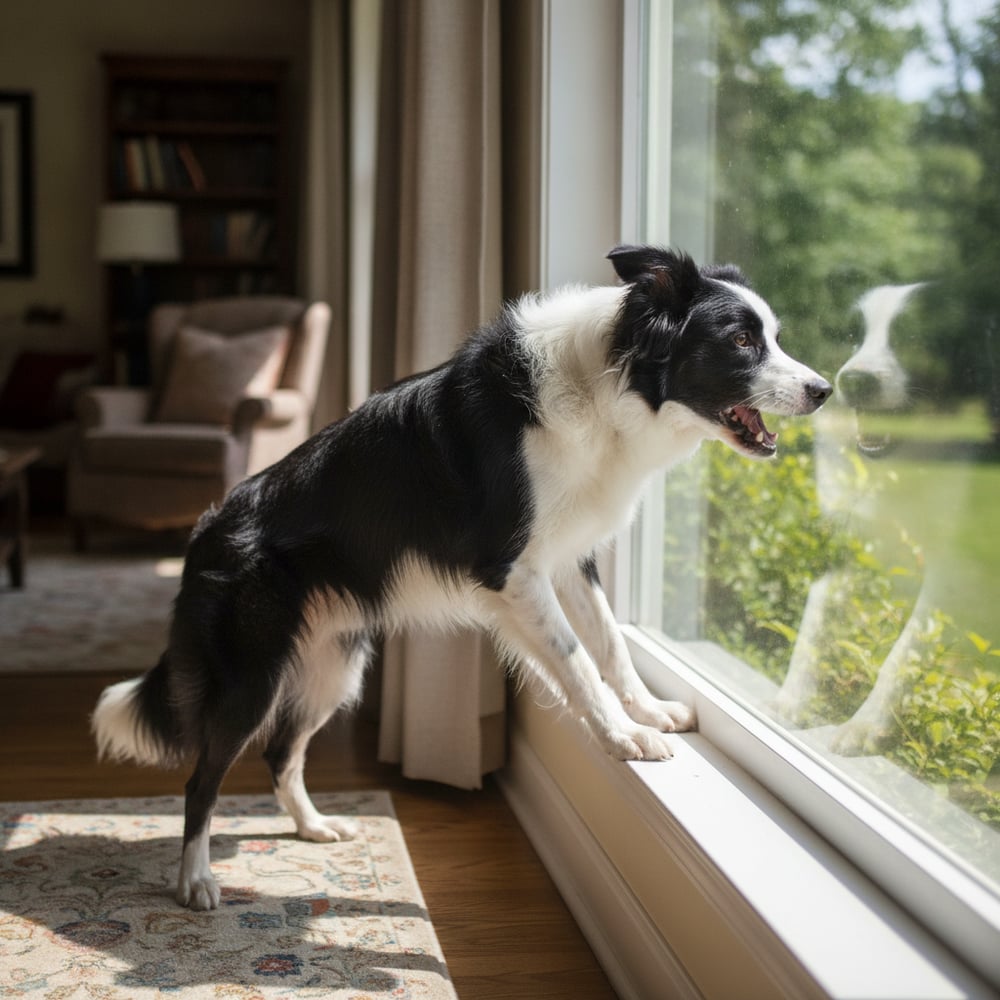
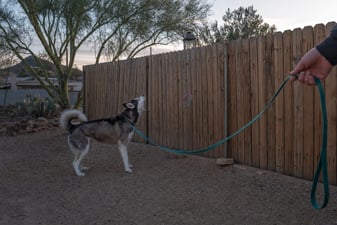
Barrier frustration happens when a fence, window, gate, crate, or leash keeps a dog from reaching something that matters to them. Excitement and frustration build together, and the dog may bark, lunge, scratch, spin, or run the boundary. Some dogs want social contact. Others are fearful or territorial. The display alone does not tell us which motivation is present.
Repeated episodes can make the pattern faster and harder to interrupt. A dog who spends the afternoon patrolling a window or fence is practicing the behavior, not relaxing. Management is therefore part of treatment. Blocking the view, changing yard access, creating distance at the gate, and supervising trigger times can lower pressure while training begins.
The goal is not a silent dog who ignores everything. It is a dog who can notice a trigger, disengage, and return to you before arousal takes over. Many dogs improve with a consistent plan, but results vary with the dog's history, trigger intensity, environment, and the handler's follow-through.
Partners Dogs has trained Arizona dogs through every kind of barrier frustration case since 1997, at our Scottsdale and Cave Creek facilities. Lifetime trainer support is included with every board-and-train program.
The transformation
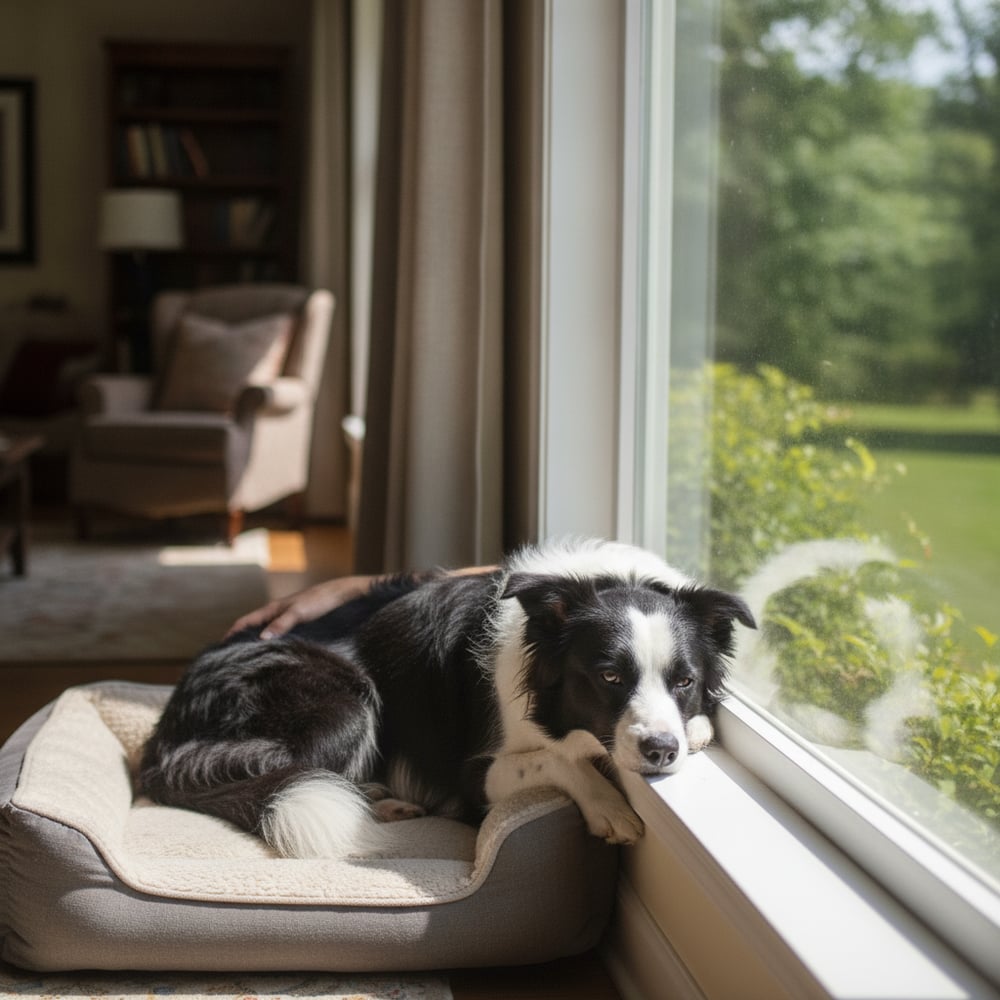
Drag the slider to see the change our programs make for a dog with barrier frustration. Same dog, same home, real outcome.
Watch
Short walkthroughs from our trainers on the exact techniques we use to resolve barrier frustration. See how the work actually looks, then choose the path that fits your dog.
Recommended path · Moderate severity
Based on how barrier frustration typically presents, here is where we would start. Not sure which fits? Take the PD360 assessment for a personalized recommendation.
A 4 to 6 week immersive behavior-modification program, the best fit for moderate behavior issues.
One-on-one sessions to address specific triggers and transfer trainer skills to you.
The process
Not sure which program
Take our quick PD360 assessment for a personalized recommendation, or talk to a trainer who has seen barrier frustration many times before.
“"Our backyard has a shared fence with a family who has two dogs. What started as some barking turned into our dog sprinting the fence line for an hour every morning. The neighbors were getting frustrated, and honestly so were we, our yard had become unusable. Behavior Camp addressed the actual arousal problem. He can be in the backyard now without turning into a different dog the moment he spots them."”
“"Hazel would lose her mind at the front window. Every dog, every jogger, every delivery truck set her off. Our neighbors had started to avoid walking past our house. I knew it wasn't aggression but I didn't know how to fix it. The Partners team explained barrier frustration clearly, worked on it in camp, and gave me a real protocol for managing the windows at home. It's genuinely a different house now."”
Good to know
Watch for a bite or attempted contact through the barrier, fence or gate damage that creates an escape risk, self-injury from crashing into or climbing the barrier, or a sudden change in behavior. Any of those move barrier frustration from a training issue to one needing an in-person assessment, plus a veterinary check if there is injury.
Barrier frustration is a moderate-severity behavior, so we typically start with Behavior Camp, our 21-day immersive board-and-train ($6,244, discounted with a Partners membership). Private Lessons are the alternative for dogs who mainly need targeted trigger work. The $199 PD360 Assessment, credited toward enrollment in your recommended camp or membership (not toward à la carte bookings or general reservations), confirms which path fits your dog.
Most families see a real shift during the 21-day Behavior Camp, and management steps like blocking the window or adding yard distance can lower the daily intensity almost immediately. Full reliability afterward depends on trigger intensity and how consistently the household keeps up blocked sightlines and gate distance once training ends.
Fence-line patrolling is one of the harder patterns to break because the rehearsal is constant, every time your dog is in the yard, they have the opportunity to practice. The plan:
If the fence-running has graduated into reactivity on walks or aggression toward neighbor dogs, it is a Behavior Camp case at Partners Dogs.
Barrier frustration is what happens when a dog's natural arousal toward a trigger gets amplified by being unable to reach it. The fence, the window, the leash, the crate door, anything that blocks access while the trigger is visible creates an over-aroused, can-not-disengage state.
The pattern usually develops because:
At Partners Dogs we treat barrier frustration through Behavior Camp paired with private lessons that include environmental management at your actual fence and windows. You cannot train through it without also preventing rehearsal.
Dogs with barrier frustration often show these patterns too. Explore the behaviors below. We treat them all.
Keep learning
Practical reading from our trainers on behavior, everyday manners, and life with a dog in Arizona.
The 3-3-3 rule dog adoption guide: what decompression gets right, where the timeline breaks, and the upgrade, read the ...
Is the PD360 Assessment worth the fee? See what the full day includes, when the fee becomes store credit, and how ...
The AVSAB humane training position says only reward-based methods should be used for dog training and aversive tools ...
Scottsdale barking ordinance Sec. 4-17(C) explained: complaint steps, fines, HOA pet rules, and how to fix barking. ...
Ready for the next step
Every dog and household is different. Get a real conversation with a Partners Dogs trainer who has treated barrier frustration for more than 28 years. You get straight answers and a starting point that fits your home.