Skip to content
Family-owned · Est. 1997 70,000+ dogs trained 4.8 stars · 2,000+ parent reviews
    Home
    Programs
    Locations
    Resources
    Shop

    Dog Behavior Solutions

    Leave Home Without Leaving Your Dog in Panic

    Separation anxiety can trap both ends of the leash at home. Partners Dogs helps you understand what happens after the door closes and build alone-time your dog can tolerate, one realistic step at a time.
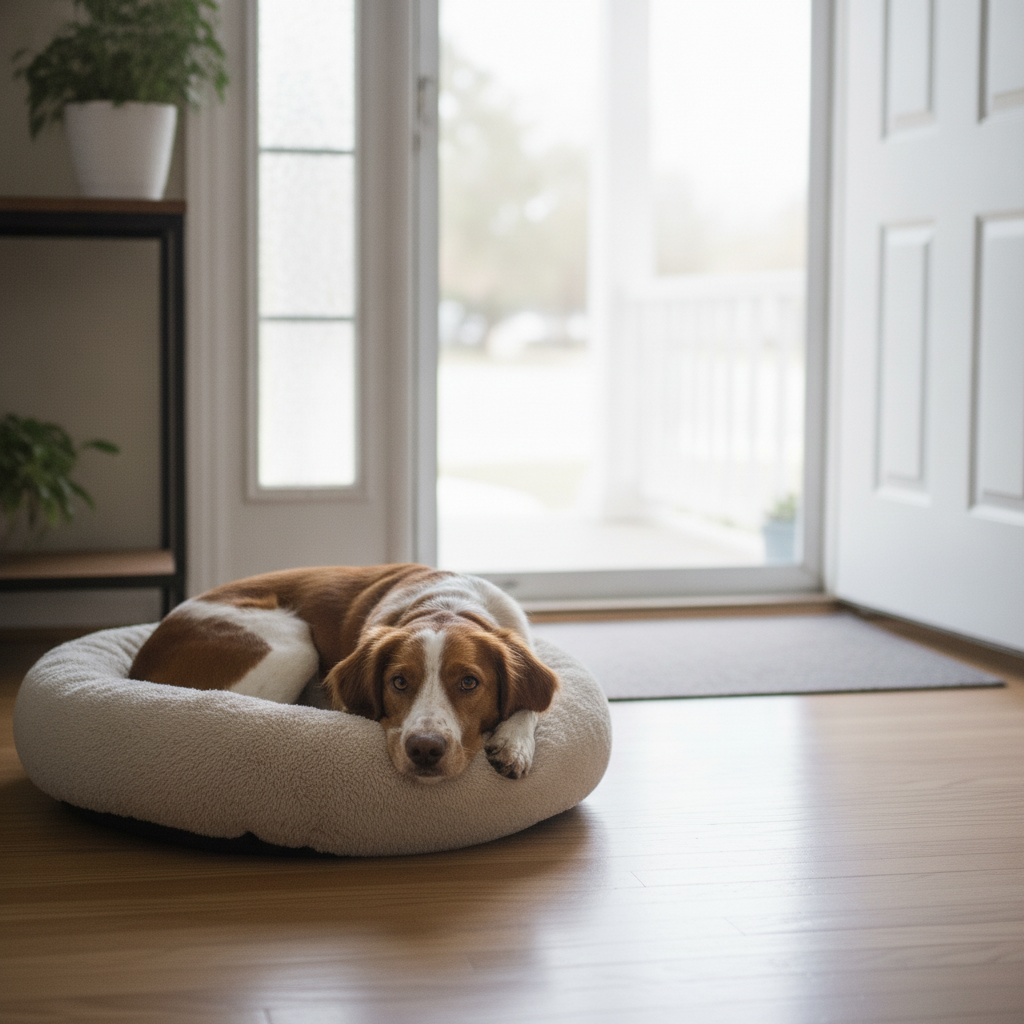
    Calm relaxed Brittany resting contentedly on a dog bed by the front door after Partners Dogs separation anxiety training.

    Behavior severity

    Moderate

    What you may be seeing

    Common signs

    • Vocalizing, pacing, panting, drooling, or trembling around departures
    • Destruction concentrated near doors, windows, or confinement areas
    • House-soiling only or mainly during absences
    • Refusing food and being unable to settle when alone
    • Following people constantly and reacting to departure cues

    Seek help now

    • Broken teeth, bloody paws, cuts, or other self-injury during escape attempts
    • Breaking through crates, doors, windows, or fences
    • Sudden onset, confusion, pain, or abrupt house-soiling
    • Collapse, breathing difficulty, or inability to function normally

    Moderate is a starting point for planning, not a diagnosis. Self-injury, escape, or severe panic requires veterinary care and an in-person assessment before program placement.

    Understanding the behavior

    What is separation anxiety?

    Separation anxiety is distress related to being apart from a person or left alone. It is not spite. Barking, destruction, house-soiling, pacing, drooling, and escape attempts may be signs of panic, but video and history help distinguish separation distress from boredom, confinement fear, outside triggers, or a medical problem.

    Training uses absences short enough to avoid full panic and increases duration according to the dog's response. Repeatedly leaving a dog to cry it out can intensify distress. Some dogs also need changes to confinement because a crate can increase panic rather than create safety.

    Sudden onset or house-soiling warrants a veterinary check. Medication prescribed by a veterinarian may be appropriate for moderate or severe cases. Many dogs improve with a consistent plan, but progress is rarely linear and results vary with severity, household logistics, medical factors, and follow-through.

    Partners Dogs has trained Arizona dogs through every kind of separation anxiety case since 1997, at our Scottsdale and Cave Creek facilities. Lifetime trainer support is included with every board-and-train program.

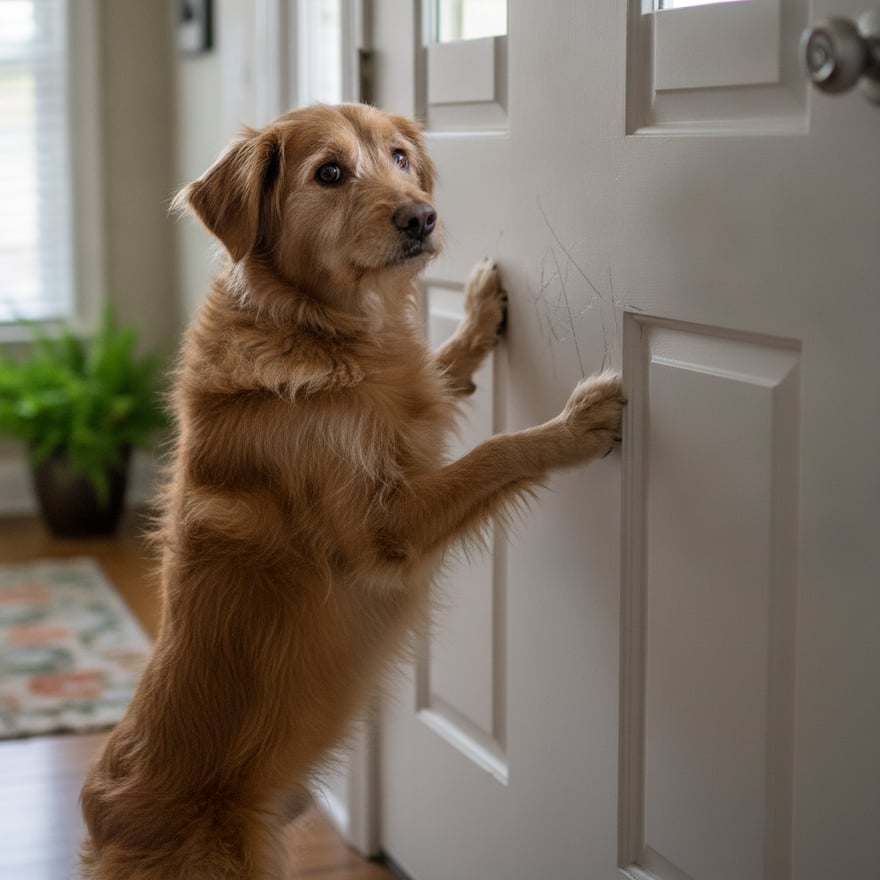
    Anxious adult Brittany pawing and scratching frantically at a closed front door from separation anxiety at home.

    The transformation

    Before and after training

    Drag the slider to see the change our programs make for a dog with separation anxiety. Same dog, same home, real outcome.
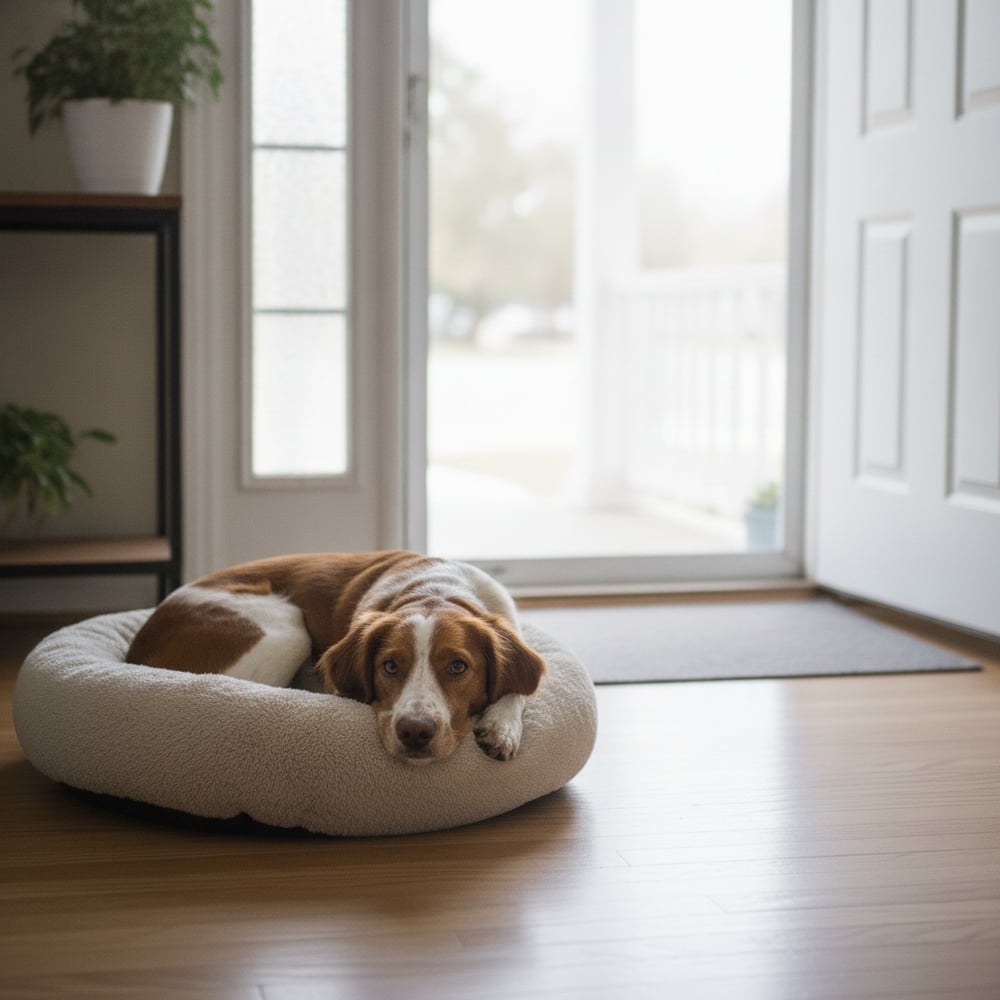
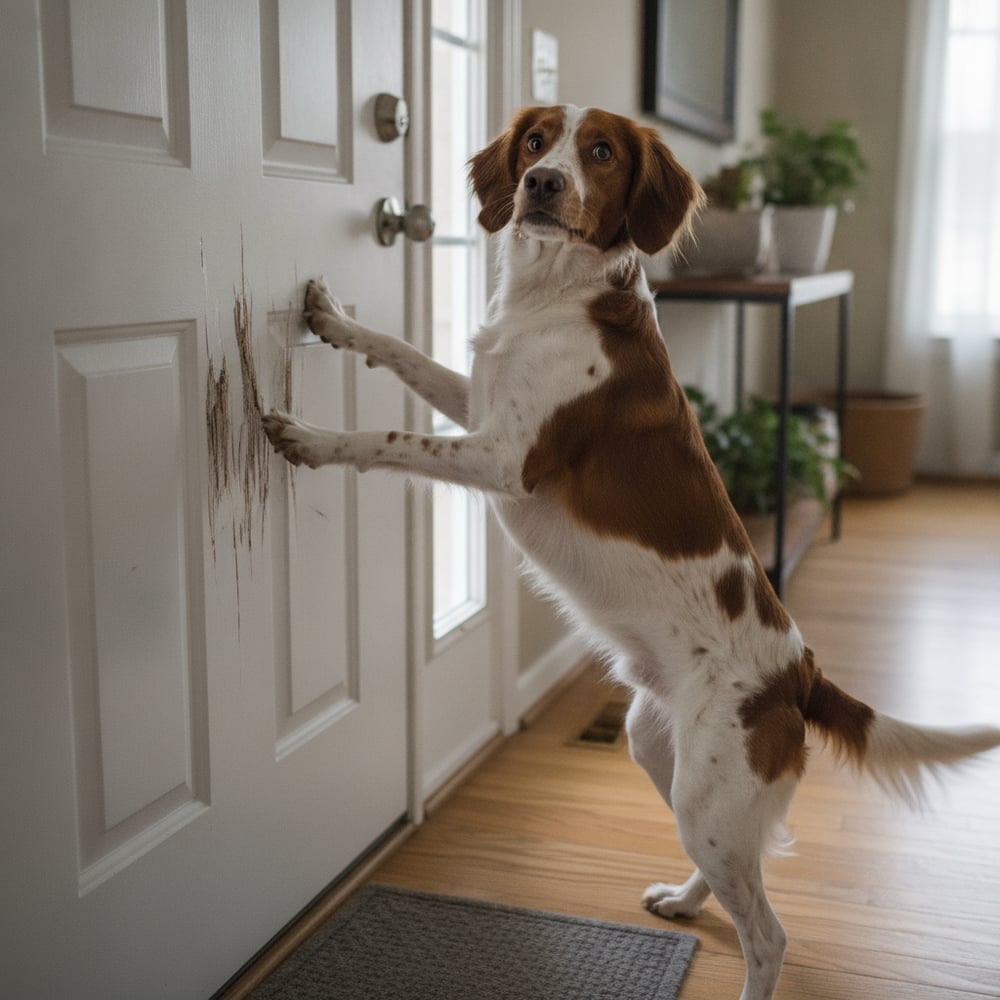
    Calm relaxed Brittany resting contentedly on a dog bed by the front door after Partners Dogs separation anxiety training. Anxious adult Brittany pawing and scratching frantically at a closed front door from separation anxiety at home.

    Watch

    How we work on separation anxiety

    Short walkthroughs from our trainers on the exact techniques we use to resolve separation anxiety. See how the work actually looks, then choose the path that fits your dog.

    Charlie  Episode 1 video thumbnail
    Charlie Episode 1
    Xela  Episode 1 video thumbnail
    Xela Episode 1
    Puppy Behaviors  Howling-Whining video thumbnail
    Puppy Behaviors Howling-Whining
    70,000+Dogs Trained
    28+Years Experience
    4.8★Average Rating
    2Arizona Campuses

    Recommended path · Moderate severity

    The right program for separation anxiety

    Based on how separation anxiety typically presents, here is where we would start. Not sure which fits? Take the PD360 assessment for a personalized recommendation.

    Alternative

    Private Lessons

    One-on-one sessions to address specific triggers and transfer trainer skills to you.

    The process

    How it works

    1

    Assessment and check-in

    • We verify vaccination records and complete pre-check-in forms.
    • Your dog receives a full behavioral assessment.
    • We set goals and build a personalized training plan.
    • You meet the primary trainer and tour the facility.
    2

    Training and progress reports

    • Multiple active training sessions every day.
    • Controlled exposure and desensitization to triggers.
    • Immersive socialization in a managed environment.
    • Regular progress reports with photos and video.
    3

    Transition and follow-up

    • Private lessons that transfer the training to you.
    • Pet Parenting group classes for ongoing support.
    • Access to our full Pet Parent Guide.
    • Weeks of follow-up so the change lasts at home.

    Not sure which program

    Get a recommendation in minutes

    Take our quick PD360 assessment for a personalized recommendation, or talk to a trainer who has seen separation anxiety many times before.

    What our clients say

    “"I was working from home full-time just because I couldn't bear leaving Maple alone. After Behavior Camp and our home follow-through, she can handle meaningful time by herself without the old level of distress. I actually cried on the drive home the first time I left her and nothing happened."”

    Jenna R.

    “"Our neighbors had approached us twice about the barking. We were embarrassed and at our wit's end. The team at Partners Dogs didn't just work with Biscuit, they changed how we approached being alone. Six months later, he settles on his bed when we leave."”

    Marcus T.

    Live Reviews

    What our families are saying

    Real reviews from real families across our Scottsdale and Cave Creek campuses.

    4.8average rating
    2,000+reviews collected

    Showing 12 recent reviews

    Janet S. Scottsdale Jul 2026 Google

    Always a great experience. Staff are dedicated to the dogs and are extremely helpful.

    Joey S. Cave Creek Jul 2026 Google

    First time boarding our two German Shepherds at Partners for a 7 day stay, and we couldn't be happier. Both dogs have medical conditions and take multiple medications, so finding a place that truly pays attention to detail was important. Megan and her team were fantastic, good communication, and thoughtful care. We'll definitely be using them again. Here's a picture of our two tired pups after coming home 🙂

    Cathi T. Cave Creek Jul 2026 Google

    I absolutely love this place, from the loving attention they get to the discipline they get when they behave badly! They pay close attention to our dog's special needs, and they come home exhausted. Every single employee seems to love the dogs, too 😁

    Leslie L. Scottsdale Jul 2026 Google

    Very nice welcome. My dog's name was on the welcome sign out front with other dogs names coming in today. Nicole was very personable and informative as to what the assessment would entail. Upon pick up I saw a video of my dog in playtime and what she would benefit in training. Felt confident to sign up for training camp.

    Lauren B. Cave Creek Jun 2026 Google

    Highly recommend their foundations board and train camp!! Not only did our puppy come back home with new obedience skills, but he has LOVED coming back for doggie daycare days (INCLUDED in the foundations package!). The team here is top of the line and so caring! It's such a great feeling knowing we invested in our pup and trusted experts to make him feel confident and cared for!

    Judith K. Scottsdale Jun 2026 Google

    Daisy loves going to daycare, rather than stay at home alone, when I'm gone all day. She gets to play with all the other pups & her favorite humans! She even gets some training during her stay.

    Lindsey H. Cave Creek Jun 2026 Google

    I recently brought my young dog in for snake avoidance training, I am not going to lie.. I was a little skeptical because we were in and out of there in a couple of minutes. Well tonight while out for our last potty break before bed we walked past a bush and heard a rattle…. My dog jumped back and ran the other way. Very pleased with the results and will definitely be back for a refresher course!

    Chris K. Scottsdale Jun 2026 Google

    Going to Partners Dog training was the best decision I’ve made since adopting my pup. She was night and day after her training camp and she loves to go to doggy daycare. The staff/trainers are very helpful and professional. You can tell they’ve been doing this for a while.

    Barbara M. Scottsdale Jun 2026 Google

    Great staff and attitude. The dogs love their day there.

    Carol S. Scottsdale Jun 2026 Google

    Hi German Shepherd, Strider has been going to Partners Dog Training since he was a puppy. I have been so happy with the training he has received there! Everyone there has been so wonderful and caring! I have learned so much in how to be a good dog parent! We have done the agility course, Private lessons, Boot Camp, group lessons, daycare, and boarding at this facility..I highly recommend Partners if you want your dog to sharpen his skills and be a great obedient companion!

    Mj P. Scottsdale Jun 2026 Google

    Partners daycare always treats my boxer well and she comes back better trained and ready for a nap! It is really helpful during the 100+ heat providing a safe and fun place for her. Thanks for putting her booties on for pick up too!

    Courtney P. Scottsdale Jun 2026 Google

    Partners is run like a finely tuned engine. The staff is knowledgeable, thorough, interested and supportive. Albeit on the spendy side, but worth every dollar invested. Their facility is impressive. The individual care of each dog is loving and caring, yet authoritative. Partners is an investment in not only your dog, but you too! I have two things I am a little disappointed with (and this has NOTHING to do with Partners training or the dog). Because Partners is pricey (like I said, an investment) I tthink a discount for a second family dog to go thru trsining camp should be offered. The other minor plaint is while Sundays are closed, allow pick-ups ONLY for boarders. And pick-ups only. You're forced to pay another night even if you're able to get b your furbaby. Otherwise... Bravo Partners! Shout out to the entire team- Kay, Lexi and Atina.

    Loved working with us? Leave a review

    Good to know

    Frequently asked questions

    Why does my dog hate the crate?

    Dogs do not naturally hate crates. A well-conditioned crate is a den, a safe, quiet space dogs choose to nap in. Dogs come to hate crates when one of these has happened:

    • It was used as punishment. “Go to your kennel” said in a sharp voice has poisoned the crate for a lot of dogs.
    • They were locked in too long, too soon. A puppy who was crated for eight hours their first night learned that the crate equals panic.
    • They were never properly introduced. The crate just appeared, the dog was put inside, the door closed. No conditioning, no positive associations.
    • Separation anxiety. Some dogs hate the crate because they hate being alone, not because they hate the crate.

    The fix is rebuilding the crate as a positive space, never closing the door until your dog enters voluntarily, feeding meals inside, building duration slowly. If the dog has injured themselves trying to escape, you have to back up further and rule out separation anxiety first.

    How do I crate train a puppy?

    The right way to crate train a puppy in the first week home:

    1. Set the crate up before the puppy arrives. Comfortable bedding, a few toys, in a quiet but not isolated room.
    2. Feed every meal in the crate with the door open. The crate becomes the place good things happen.
    3. Closed-door rest periods, short to start. 5 minutes, 10 minutes, while the puppy is calm and tired. Not when they are wound up.
    4. Build duration gradually. By the end of week one, 30-60 minute naps. By week three, 2-3 hours during daytime sleep.
    5. Overnight is separate from daytime. Puppies sleep longer overnight. Crate near your bed for the first few weeks so they are not isolated.

    Never use the crate as punishment. Never force the puppy in. Never leave a puppy crated longer than their bladder can manage (roughly one hour per month of age, up to about four hours).

    Should I crate a dog with separation anxiety?

    It depends entirely on the dog's history with the crate. A well-conditioned crate can be a safe den that lowers anxiety. A dog who has only experienced the crate as a punishment, or who has injured themselves trying to escape one, will panic harder in it.

    Here is how we think about it:

    • If the crate is already a positive space (your dog naps in it voluntarily, eats meals in it, settles calmly), continuing crate use during desensitization is often fine.
    • If the crate is associated with panic (bent bars, broken teeth, blood, urine and feces inside), forcing crate use will make the anxiety worse. We work on a different management strategy first.
    • Never use the crate as the “solution” to separation anxiety. Containment is management, not treatment.

    At Partners Dogs we condition crates as a positive space first, then layer them into the separation work, never the other way around.

    How do I know if my dog has separation anxiety or is just bored?

    The destruction can look identical, but the patterns are different. Separation anxiety usually shows these markers:

    • Distress starts before you leave. Panting, pacing, drooling, or shadow-following as you put on shoes and grab keys.
    • Destruction is focused near exits. Door frames, windows, baseboards near the front door, not random shoes and pillows across the house.
    • Vocalization. Howling, persistent barking, whining that neighbors hear.
    • Distress within minutes of your departure. Video shows the dog unable to settle in the first 15-30 minutes.
    • House soiling in a housetrained dog.
    • Desperate greeting when you return.

    Boredom destruction tends to happen across the day, scattered around the house, in a dog who was fine in the first hour. If you are not sure, set up a camera. The first 30 minutes after you leave will tell you.

    How do you treat separation anxiety in dogs?

    Real separation anxiety responds to a structured behavior modification protocol, not generic obedience work. At Partners Dogs we treat it through Behavior Camp paired with in-home private lessons. The core components:

    1. Systematic desensitization to departure cues. Keys, shoes, bag, coat. Your dog reads these like a countdown. We decouple them from your actual leaving by performing them dozens of times a day without leaving.
    2. Graduated absences. Starting from absences your dog can handle without panic, sometimes just five seconds, and building duration in small steps.
    3. Independence work at home. A dog who shadows you everywhere when you are home does not have the practice of being alone. We build that capacity first.
    4. Confidence work in general. Place commands, structured walks, and impulse control training all build the dog's sense of being okay on their own.

    This is one area where DIY rarely succeeds because the steps are too small to feel like progress and the timeline is too long to sustain alone. Get professional eyes on it.

    Why does my dog have separation anxiety?

    Separation anxiety almost always traces back to one of three patterns:

    • Over-reliance on human presence for emotional regulation. Your dog learned, often through no one's fault, that safety equals you. When you are gone, safety is gone.
    • Early life disruption. Dogs who were rehomed, who came from shelters, or who experienced a major routine change (move, new baby, divorce, owner's job change) often develop separation anxiety in the aftermath.
    • A scary alone experience. A storm during a long absence, a burglar alarm, a single panicked first-time-alone event, sometimes one bad experience tips a vulnerable dog into ongoing anxiety.

    This is genuine panic, not spite or stubbornness. If your dog could reason their way out of it, they would. The fix is rebuilding their emotional capacity to be alone gradually, not punishing them when you come home to chewed baseboards.

    Ready for the next step

    Talk to a trainer now

    Every dog and household is different. Get a real conversation with a Partners Dogs trainer who has treated separation anxiety for more than 28 years. No pressure, just guidance on your dog's best path forward.