
Foundation Camp
A 21-day board-and-train that builds solid obedience and manners, the right fit for milder issues.
Essential
PD360 AssessmentYour dog's personalized starting point Dog BoardingOvernight stays with trained care Snake AvoidanceRattlesnake safety training GroomingLow-stress bath, brush-out & nailsFoundational
Foundation Camp14-night basics + manners DaySchoolDaily training + structured enrichment Private Lessons1-on-1 coaching for you + your dog Group ClassesWeekly skills in a social settingCurriculum
Grade-Level Curriculum8 grades from Pre-School Puppy to Dogtorate Training JourneyWhat progress looks like, week by week Our MethodologyHow we train and why it lastsDog Behavior Solutions

Behavior severity
MildCommon signs
Seek help now
Mild is a starting point for planning, not a diagnosis. Injury risk, aggression, or escape changes the safety plan and may require an in-person assessment.
Understanding the behavior
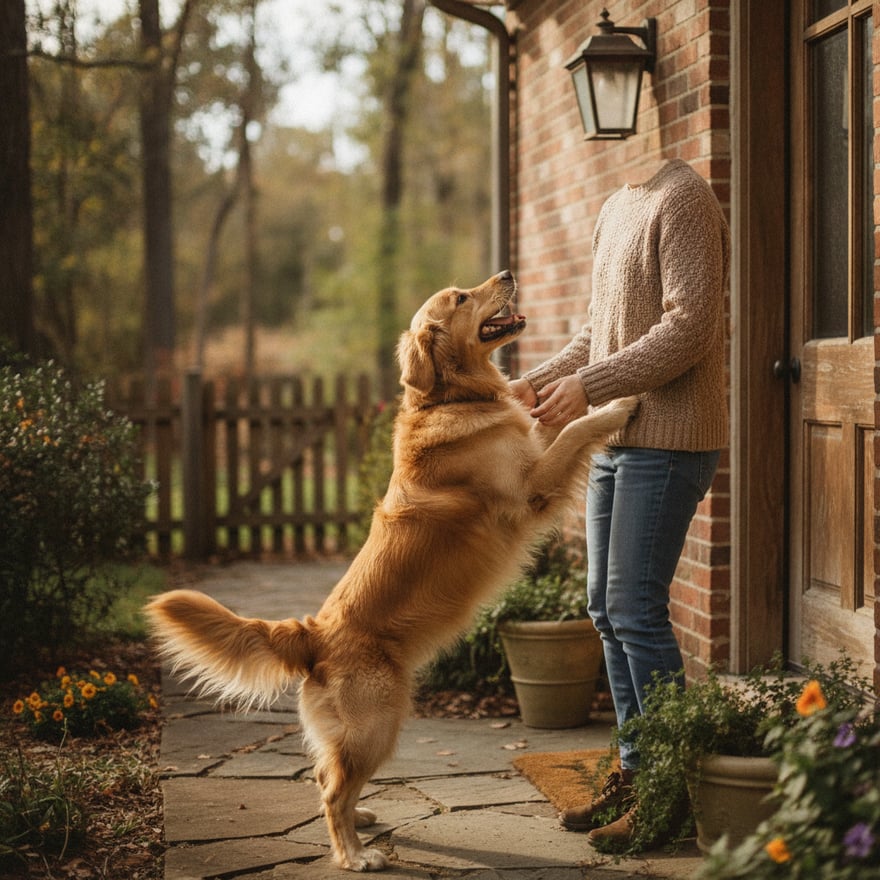
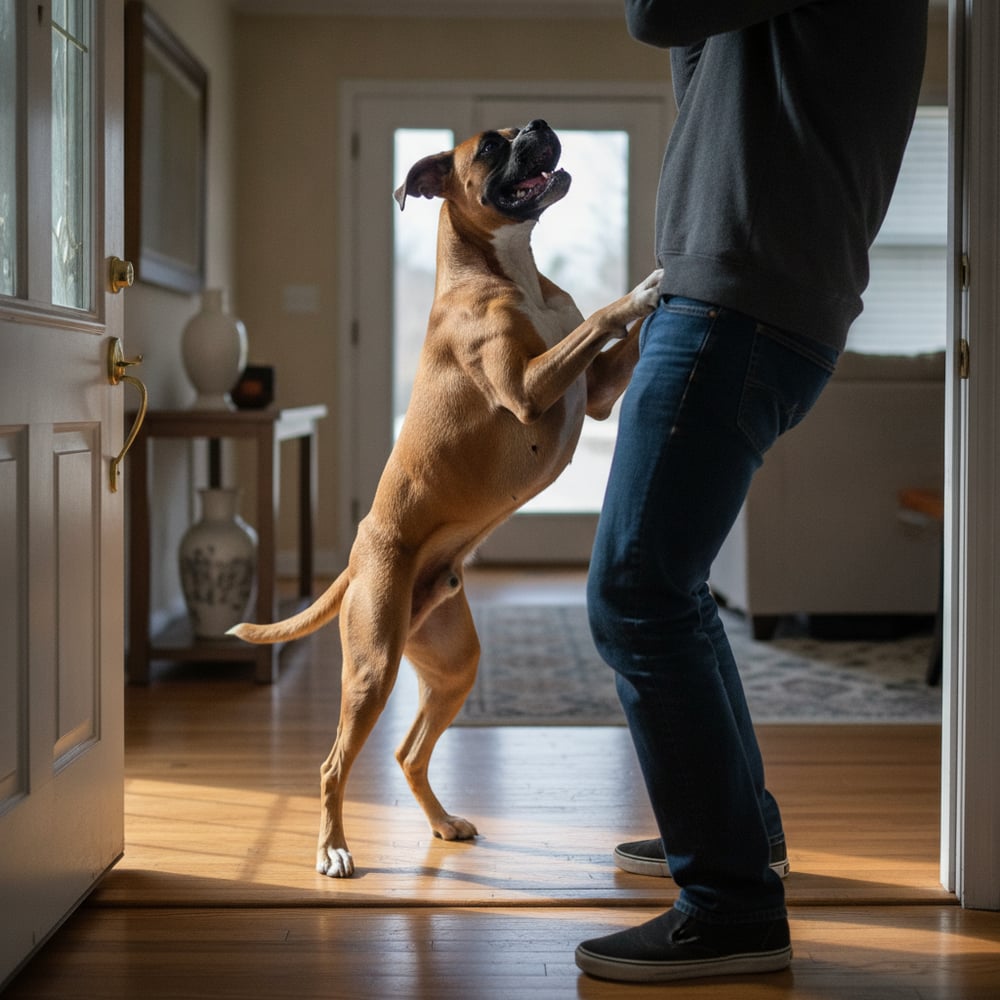
Jumping is usually reinforced by contact, eye attention, movement, or access to the person. Even pushing a dog down can keep the interaction going. Excitement and inconsistent guest responses make the habit stronger.
A useful plan controls access to the greeting and teaches a clear alternative. Leashes, gates, place, and four paws on the floor give the dog a repeatable route to attention. Practice starts with predictable setups before surprise visitors raise the difficulty.
Many dogs improve when every person follows the same routine. The goal is a friendly dog who can keep their body under control, not a dog who loses all enthusiasm.
Partners Dogs has trained Arizona dogs through every kind of jumping on people case since 1997, at our Scottsdale and Cave Creek facilities. Lifetime trainer support is included with every board-and-train program.
The transformation
Drag the slider to see the change our programs make for a dog with jumping on people. Same dog, same home, real outcome.

Watch
Short walkthroughs from our trainers on the exact techniques we use to resolve jumping on people. See how the work actually looks, then choose the path that fits your dog.

Recommended path · Mild severity
Based on how jumping on people typically presents, here is where we would start. Not sure which fits? Take the PD360 assessment for a personalized recommendation.
A 21-day board-and-train that builds solid obedience and manners, the right fit for milder issues.
Weekly Pet Parenting classes with our trainers, practice in a structured social environment.
The process
Not sure which program
Take our quick PD360 assessment for a personalized recommendation, or talk to a trainer who has seen jumping on people many times before.
“"Bella was launching herself at every person who came over. I had toddlers visiting and it was genuinely scary. After Foundation Camp, she sits at the door and waits. I've had guests ask me what we did because they can't believe it's the same dog. Honestly, neither can I."”
“"We had the most enthusiastic, impossible-to-contain golden retriever. I loved her energy but I was so embarrassed every time we had company. Partners taught us a system that the whole family could actually follow. Six weeks later, she greets people calmly. She's still the friendliest dog alive, she just keeps four paws on the ground."”
Good to know
Jumping on people typically responds to Foundation Camp, our 14-day board-and-train that builds obedience and greeting manners ($3,509, discounted with membership), or weekly Group Classes for ongoing practice with real people and real distractions. A $199 PD360 Assessment, credited toward enrollment in your recommended camp or membership (not toward à la carte bookings or general reservations), confirms the right starting point for your dog.
The front door is the hardest place to fix jumping because the energy spike is enormous and the timing window is short. Here is the layered approach we use:
The doorbell is one of the highest-arousal moments in a dog's day. Expecting them to be polite without training is unrealistic.
No. Dogs do not grow out of jumping. They grow into it. The behavior gets worse as the dog gets bigger and stronger, and every month it goes unaddressed cements the pattern. A 70-pound Labrador jumping on your 80-year-old mother is not a phase. It is a four-month-old puppy whose habit was allowed to mature.
The window to prevent jumping is short. By 12-14 weeks, your puppy should already be practicing four-on-the-floor greetings. By six months, the pattern is set either way. We see plenty of adult dogs in Foundation Camp at Partners Dogs whose owners said exactly this sentence about the puppy: “He will grow out of it.”
Adult dogs absolutely can unlearn jumping. It just takes longer than installing the habit correctly from the start.
The fix is consistent, but it requires everyone in the household to follow the same protocol. That is the part that breaks down. Here is what we teach:
If your household has multiple people who cannot run the same protocol, Foundation Camp at Partners Dogs gives your dog three weeks of consistent practice and then we teach the whole family the system at handoff.
Your dog jumps because it works. They jump, they get attention, even negative attention, even being pushed away, and the behavior is reinforced. Dogs do not care whether the attention is positive or negative; they care that they got attention at all.
The pattern almost always starts in puppyhood, when a 12-pound puppy standing up to greet you is cute. Then the puppy grows, the jumping intensifies, and everyone in the household is doing something different, the kids laugh, grandma loves it, you push the dog off but then pet them anyway. Mixed signals, inconsistent responses, no result. The dog only learned one thing clearly: jumping produces interaction.
The good news is that jumping is one of the most fixable behaviors in our entire library. It responds quickly once everyone in the household is teaching the same incompatible behavior, usually a sit-to-say-hi.
Dogs with jumping on people often show these patterns too. Explore the behaviors below. We treat them all.
Keep learning
Practical reading from our trainers on behavior, everyday manners, and life with a dog in Arizona.
Is the PD360 Assessment worth the fee? See what the full day includes, when the fee becomes store credit, and how ...
The AVSAB humane training position says only reward-based methods should be used for dog training and aversive tools ...
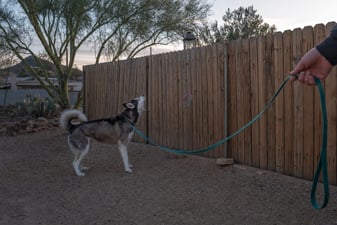
Scottsdale barking ordinance Sec. 4-17(C) explained: complaint steps, fines, HOA pet rules, and how to fix barking. ...
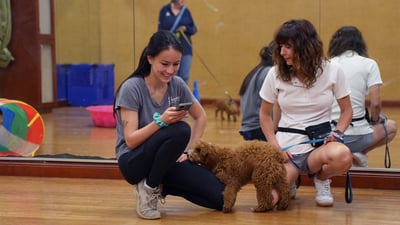
In-home puppy training vs puppy class: see how Pre-School Puppy near Carefree and Cave Creek compares on scheduling, ...
Ready for the next step
Every dog and household is different. Get a real conversation with a Partners Dogs trainer who has treated jumping on people for more than 28 years. We use the time to lay out the first steps and a realistic timeline.