
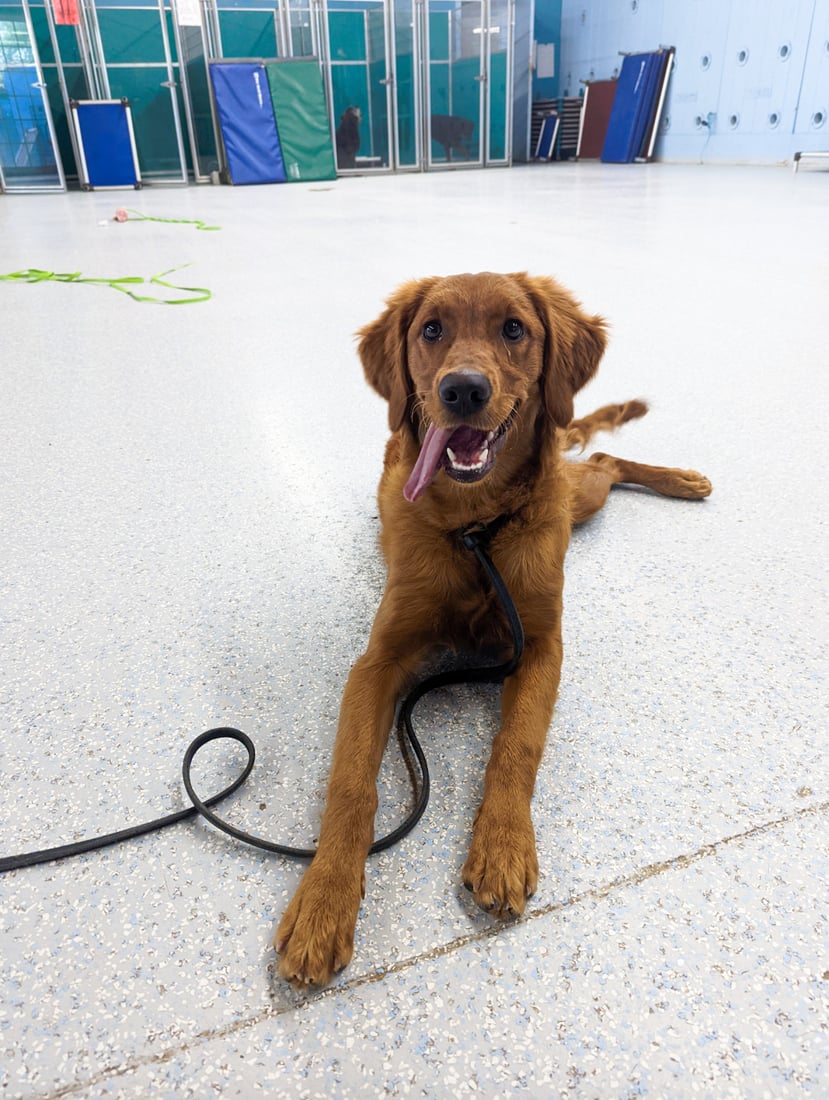
Foundation Camp
A 21-day board-and-train that builds solid obedience and manners, the right fit for milder issues.
Essential
PD360 AssessmentYour dog's personalized starting point Dog BoardingOvernight stays with trained care Snake AvoidanceRattlesnake safety training GroomingLow-stress bath, brush-out & nailsFoundational
Foundation Camp14-night basics + manners DaySchoolDaily training + structured enrichment Private Lessons1-on-1 coaching for you + your dog Group ClassesWeekly skills in a social settingCurriculum
Grade-Level Curriculum8 grades from Pre-School Puppy to Dogtorate Training JourneyWhat progress looks like, week by week Our MethodologyHow we train and why it lastsDog Behavior Solutions
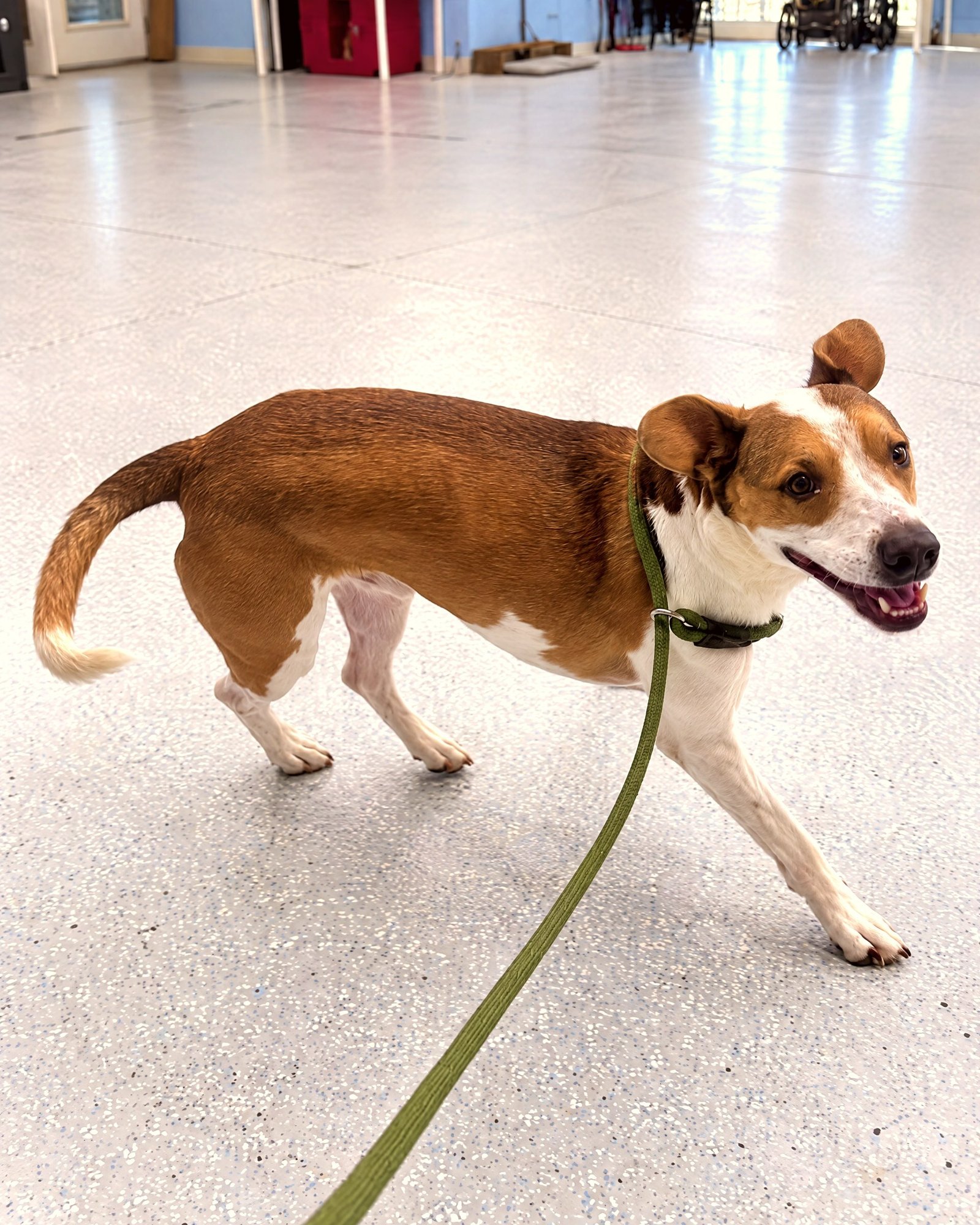
Behavior severity
MildCommon signs
Seek help now
Mild is a starting point for planning, not a diagnosis. Reactive barking or lunging at triggers is a different problem and needs its own assessment.
Understanding the behavior
Loose leash walking is different from heel. Heel is a specific position your dog holds at your side on command. Loose leash walking is a general standard for everyday walks: the leash stays slack, your dog does not drag you toward every smell and squirrel, and you can walk the neighborhood without bracing your arm. Your dog does not need to be glued to your leg to walk on a loose leash. They just need to stop pulling.
The training builds the same underlying skills as heel, engagement, pace matching, impulse control around distractions, but applies them more loosely, for a comfortable walk rather than a formal position. We teach handlers to reward a slack leash consistently, change direction when tension builds, and let the dog learn that forward motion happens on a loose leash, not a tight one.
Most dogs improve with clear, consistent practice. A dog who already knows heel from our curriculum usually picks up loose leash walking fast, since the underlying skills overlap. A dog with no leash training at all starts from the basics: comfort with equipment, engagement with the handler, and reinforcement for staying near you.
Partners Dogs has trained Arizona dogs through every kind of loose leash walking case since 1997, at our Scottsdale and Cave Creek facilities. Lifetime trainer support is included with every board-and-train program.
Recommended path · Mild severity
Based on how loose leash walking typically presents, here is where we would start. Not sure which fits? Take the PD360 assessment for a personalized recommendation.
A 21-day board-and-train that builds solid obedience and manners, the right fit for milder issues.
Weekly Pet Parenting classes with our trainers, practice in a structured social environment.
The process
Not sure which program
Take our quick PD360 assessment for a personalized recommendation, or talk to a trainer who has seen loose leash walking many times before.
Good to know
Loose leash walking responds well to Foundation Camp, our 14-night board-and-train ($3,509, discounted with membership), which rebuilds leash mechanics before you take your dog home, or weekly Group Classes for ongoing hands-on practice. A $199 PD360 Assessment, credited toward enrollment in your recommended camp or membership (not toward à la carte bookings or general reservations), helps confirm the right starting point and rules out a reactivity component first.
We generally recommend teaching loose leash walking with each dog individually before walking them together. Dogs feed off each other's arousal and pulling, so if both are still learning, walking them together from the start usually reinforces the exact habit you are trying to remove, since each dog's excitement escalates the other's. Once each dog is solid on their own, combining them goes much faster.
A standard six-foot leash paired with a flat collar, slip lead, or front-clip harness works for most dogs during the teaching phase. The front-clip harness is management, it reduces pulling power while the dog learns, not a training tool on its own. Retractable leashes actively teach pulling, since tension is normal on them, so we do not recommend them for a dog still building loose leash habits.
Switching equipment can make pulling more manageable, but it rarely fixes it on its own, because pulling continues as long as it still works. Every step your dog takes while the leash is tight, if that tight leash still gets them closer to a smell, a person, or another dog, they are being rewarded for pulling regardless of what is clipped to their collar. Real loose leash walking training changes what a tight leash predicts: instead of forward motion, it starts predicting a pause or a direction change, until slack becomes the thing that actually gets your dog where they want to go.
For most households, loose leash walking is the actual goal, a slack leash and a comfortable pace, not a formal position. Heel is more precise and more useful in specific situations, crowded sidewalks, obedience work, moments when you need your dog glued to your side, but it is not required just to enjoy a normal walk. We can teach either or both depending on what you actually need day to day.
Heel is a specific, trained position: your dog stays at your side, matching your pace and turns, until released. Loose leash walking is a broader everyday standard, your dog just needs to keep the leash slack, not hold an exact spot. Both stop pulling. Heel is the more precise, more demanding skill, and it is what we teach first in Kindergarten because the mechanics underneath it, engagement, position awareness, impulse control, make loose leash walking easier to build afterward.
Dogs with loose leash walking often show these patterns too. Explore the behaviors below. We treat them all.
Keep learning
Practical reading from our trainers on behavior, everyday manners, and life with a dog in Arizona.
Muzzle training at home for dogs works when it predicts good things, not punishment. A Cave Creek protocol for bite ...
Is my dog trainer insured? Here is what liability coverage should include, how to check it, and why solo in-home ...
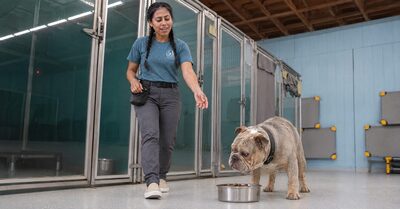
Resource guarding in dogs: the trade-up protocol, why never to punish the growl, and when to get help. Start with a ...
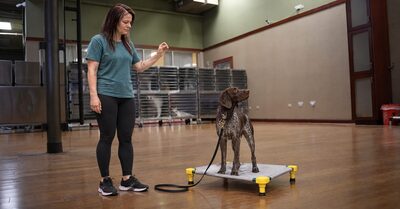
Stop dog jumping on guests: train the place command, run the doorbell protocol, proof the five D's. Private Lessons in ...
Ready for the next step
Every dog and household is different. Get a real conversation with a Partners Dogs trainer who has treated loose leash walking for more than 28 years. You hear how we would approach it, and you decide from there.