
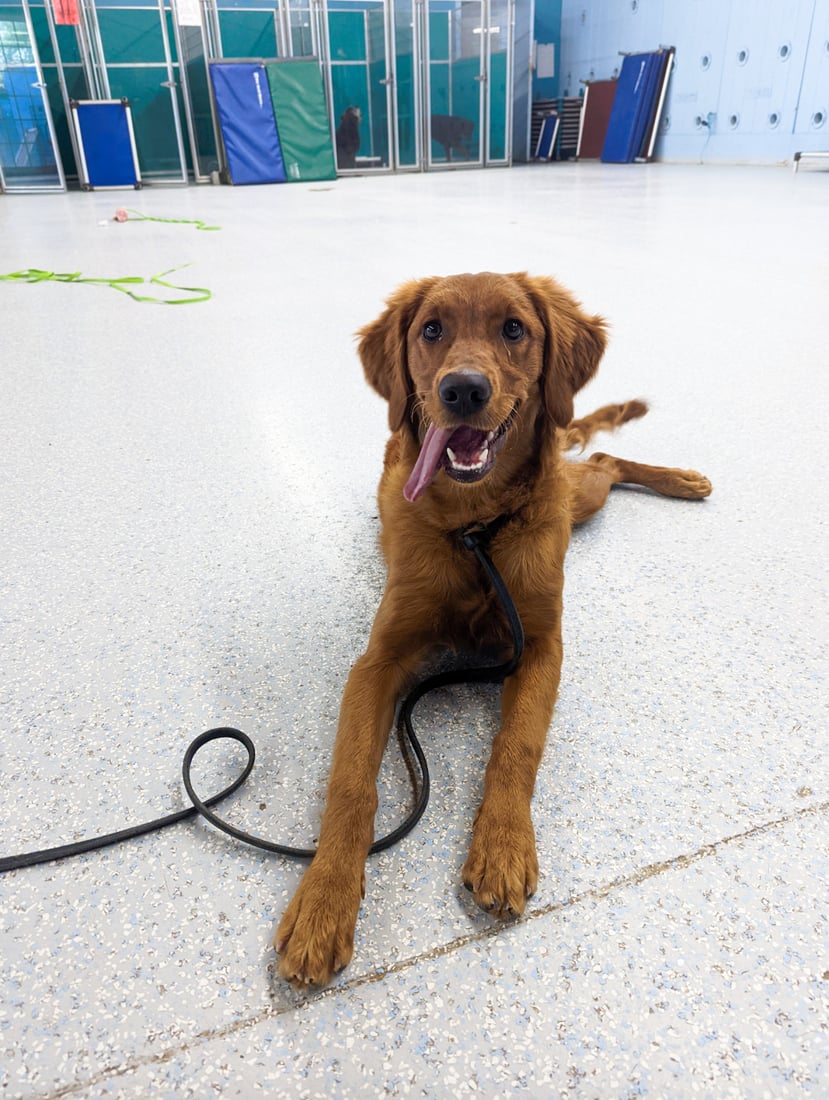
Foundation Camp
A 21-day board-and-train that builds solid obedience and manners, the right fit for milder issues.
Essential
PD360 AssessmentYour dog's personalized starting point Dog BoardingOvernight stays with trained care Snake AvoidanceRattlesnake safety training GroomingLow-stress bath, brush-out & nailsFoundational
Foundation Camp14-night basics + manners DaySchoolDaily training + structured enrichment Private Lessons1-on-1 coaching for you + your dog Group ClassesWeekly skills in a social settingCurriculum
Grade-Level Curriculum8 grades from Pre-School Puppy to Dogtorate Training JourneyWhat progress looks like, week by week Our MethodologyHow we train and why it lastsDog Behavior Solutions
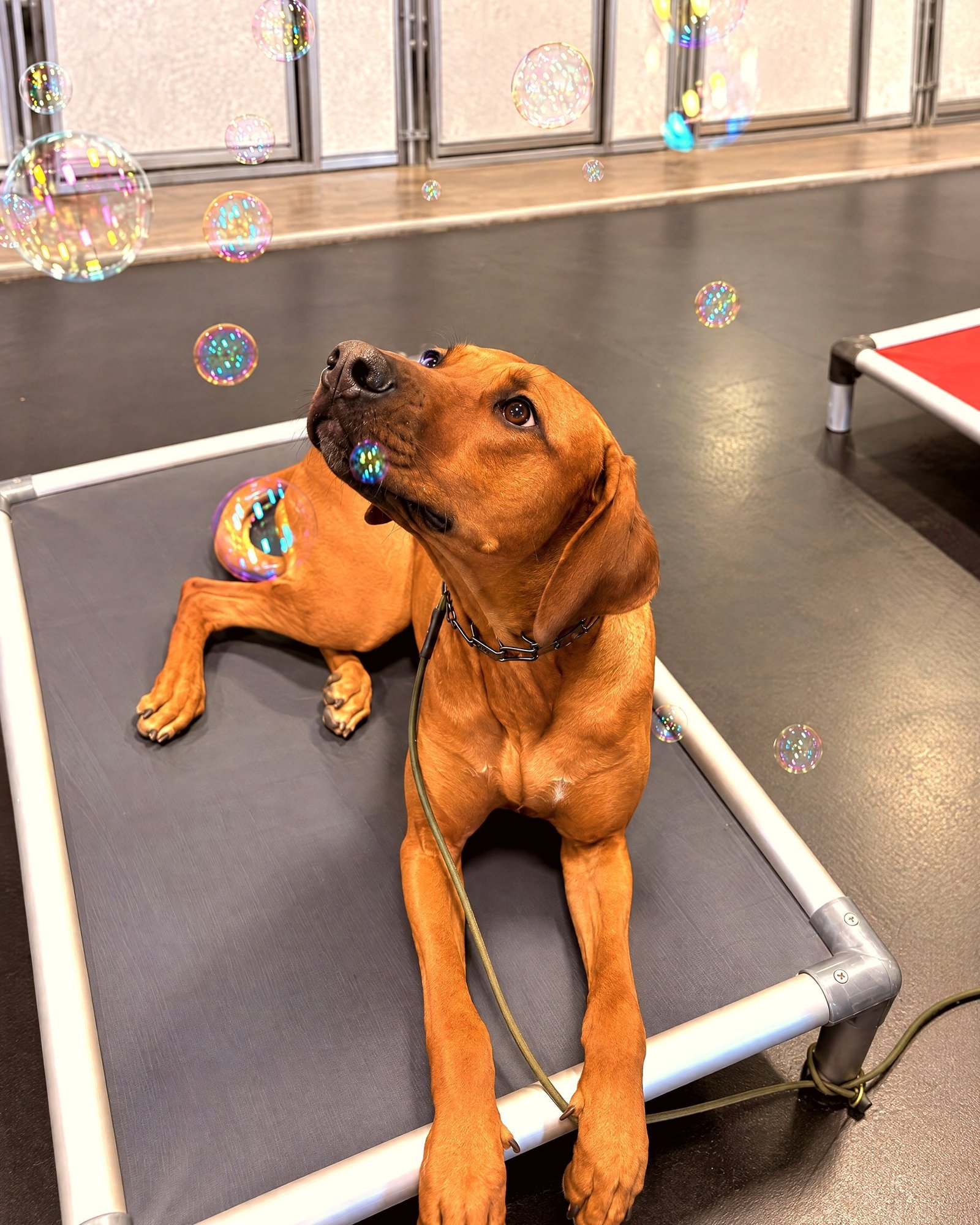
Behavior severity
MildCommon signs your dog needs impulse control work
Worth a closer look
Mild is a starting point for planning, not a diagnosis. If jumping or grabbing has an aggressive edge, like guarding what was grabbed, that is a different problem and needs its own assessment.
Understanding the behavior
Impulse control is a dog's ability to wait, resist a temptation, or hold still before acting on an urge, whether that urge is jumping on a guest, bolting through a door, or grabbing food off a counter. It is not one specific command. It is an underlying skill that shows up across dozens of everyday situations, and it is usually the missing piece behind behaviors that look unrelated on the surface.
We introduce impulse control explicitly in Kindergarten, built around thresholds, wait-before-release exercises, and structured practice at doors, mealtimes, and greetings. A dog does not learn impulse control from being told no repeatedly. They learn it from structured exercises that reward waiting, until a pause before action becomes the default, not the exception.
Most dogs build real impulse control with consistent practice across real situations as well as training-room drills. The skill transfers unevenly at first, a dog who waits at the door may still bolt at greetings, so proofing it across contexts is usually most of the work.
Partners Dogs has trained Arizona dogs through every kind of impulse control case since 1997, at our Scottsdale and Cave Creek facilities. Lifetime trainer support is included with every board-and-train program.
Recommended path · Mild severity
Based on how impulse control typically presents, here is where we would start. Not sure which fits? Take the PD360 assessment for a personalized recommendation.
A 21-day board-and-train that builds solid obedience and manners, the right fit for milder issues.
Weekly Pet Parenting classes with our trainers, practice in a structured social environment.
The process
Not sure which program
Take our quick PD360 assessment for a personalized recommendation, or talk to a trainer who has seen impulse control many times before.
Good to know
Impulse control is installed in Foundation Camp, our 14-night board-and-train ($3,509, discounted with membership), which builds it as its own foundation rather than an afterthought, then proofed under real distraction in weekly Group Classes. A $199 PD360 Assessment, credited toward enrollment in your recommended camp or membership (not toward à la carte bookings or general reservations), confirms the right starting point for your dog and household.
Food is one of the highest-value motivators for most dogs, so it is common for impulse control to hold up everywhere else and still break down specifically around it. This usually just means food-specific impulse control needs its own dedicated practice, structured leave-it work, waiting for a released meal, rather than assuming the general skill will cover it automatically. If grabbing food is paired with any guarding behavior, stiffening, growling, snapping when approached while eating, that shifts the picture and is worth its own closer assessment.
This is a very common pattern. Impulse control does not automatically transfer from one situation to another, a dog who reliably waits at the door may still bolt into a greeting, because the skill has to be practiced and proofed in each specific context, doors, mealtimes, greetings, the counter, separately, at least at first. Over time, with enough varied practice, dogs generalize the underlying pattern, pause before acting, more broadly, but expecting one context to automatically fix another is where most households get stuck.
Impulse control is introduced explicitly in Kindergarten, the second level of our curriculum, built around thresholds and wait-before-release exercises at doors, mealtimes, and greetings. It is not a skill that finishes at one level, though, it continues developing and gets tested under more distraction as a dog moves up through Elementary and beyond, since real self-control has to hold up in situations far more tempting than a quiet training room.
Impulse control is a dog's ability to wait, resist a temptation, or hold still before acting on an urge, whether that urge is jumping on a guest, bolting through a door, or grabbing food off a counter. It is an underlying skill, bigger than any one command, that shows up across dozens of everyday situations, which is why so many seemingly unrelated household problems often trace back to the same missing foundation.
Counter surfing is a mild-severity habit, so most families see real change within the 14-day Foundation Camp or a few consistent weeks of Group Classes practice. Because one successful grab can reward many failed attempts, the timeline depends heavily on keeping counters genuinely clear while your dog learns the new leave-it and station habits.
Dogs with impulse control often show these patterns too. Explore the behaviors below. We treat them all.
Keep learning
Practical reading from our trainers on behavior, everyday manners, and life with a dog in Arizona.
Muzzle training at home for dogs works when it predicts good things, not punishment. A Cave Creek protocol for bite ...
Is my dog trainer insured? Here is what liability coverage should include, how to check it, and why solo in-home ...
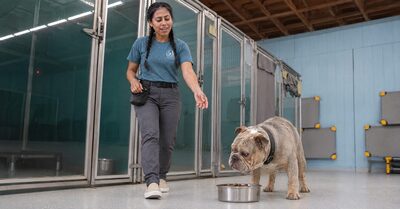
Resource guarding in dogs: the trade-up protocol, why never to punish the growl, and when to get help. Start with a ...
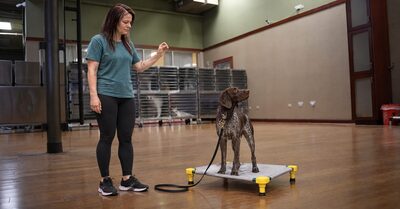
Stop dog jumping on guests: train the place command, run the doorbell protocol, proof the five D's. Private Lessons in ...
Ready for the next step
Every dog and household is different. Get a real conversation with a Partners Dogs trainer who has treated impulse control for more than 28 years. We help you sort out what to try first and what can wait.