
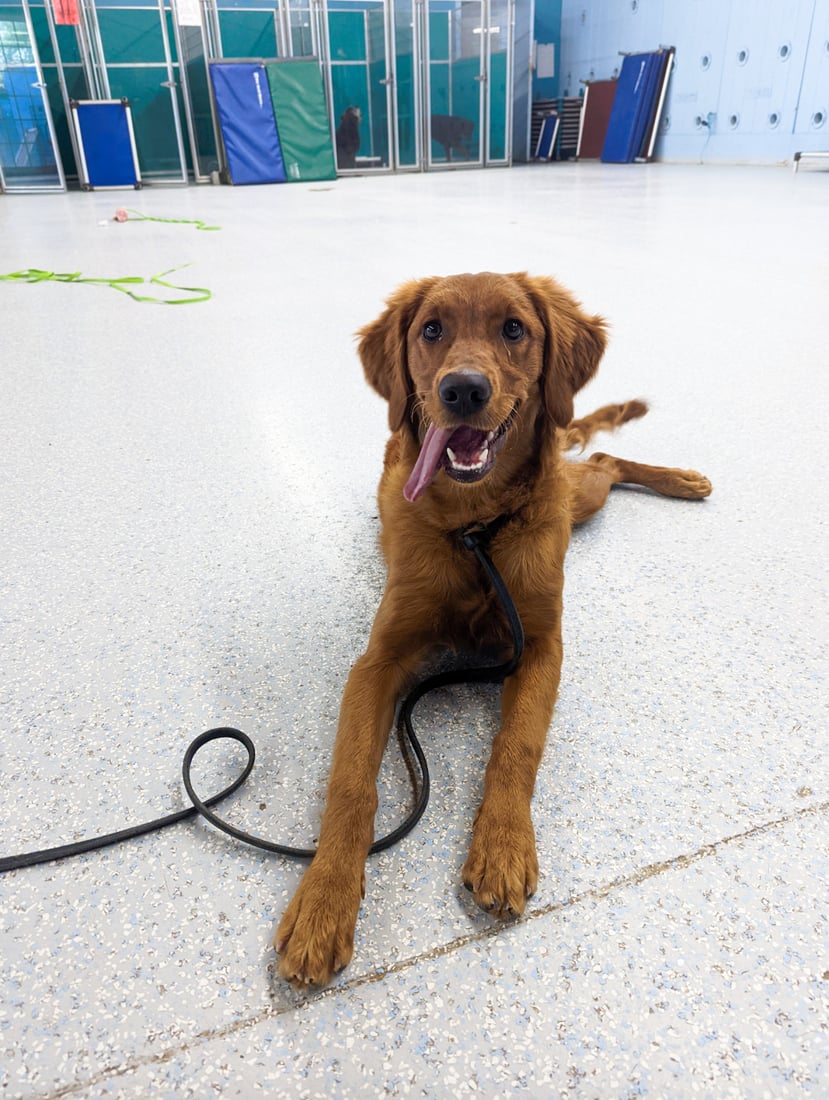
Foundation Camp
A 21-day board-and-train that builds solid obedience and manners, the right fit for milder issues.
Essential
PD360 AssessmentYour dog's personalized starting point Dog BoardingOvernight stays with trained care Snake AvoidanceRattlesnake safety training GroomingLow-stress bath, brush-out & nailsFoundational
Foundation Camp14-night basics + manners DaySchoolDaily training + structured enrichment Private Lessons1-on-1 coaching for you + your dog Group ClassesWeekly skills in a social settingCurriculum
Grade-Level Curriculum8 grades from Pre-School Puppy to Dogtorate Training JourneyWhat progress looks like, week by week Our MethodologyHow we train and why it lastsDog Behavior Solutions
Behavior severity
MildCommon signs your dog needs place work
Worth a closer look
Mild is a starting point for planning, not a diagnosis. If settling anywhere is genuinely difficult, beyond one trigger, that may point to a broader anxiety issue worth a closer look.
Understanding the behavior
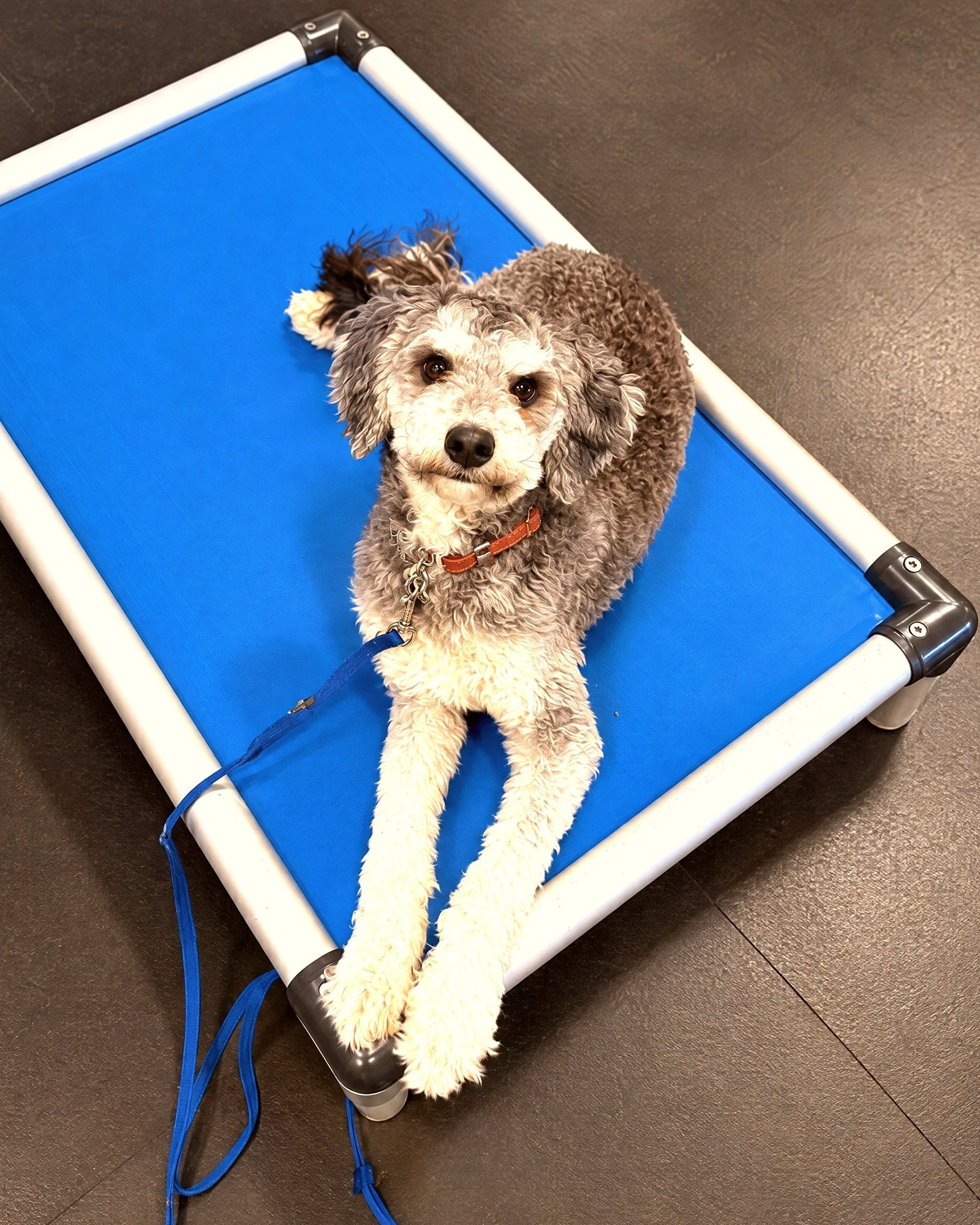
Place is a command that sends your dog to a designated spot, a mat, bed, or platform, and asks them to settle there until released. It is one of the most useful everyday commands a dog can know: a place to send a jumping dog when guests arrive, a way to keep a dog out from underfoot at mealtimes, and a genuine off-switch for a dog who does not otherwise know how to settle.
We introduce place in Kindergarten, alongside heel and stay, as one of the foundational behaviors everything else builds on. Training starts close, with a clear marker and reward for getting on the spot, then adds duration, distance, and distraction in stages: a knock at the door, a dropped plate, another dog walking by. A dog who reliably holds place through real household chaos has usually had that distraction built in gradually, not thrown at them all at once.
Most dogs learn the basic mechanics of place quickly. What separates a party trick from a genuinely useful command is proofing it against the exact situations you actually need it for at home.
Partners Dogs has trained Arizona dogs through every kind of place command case since 1997, at our Scottsdale and Cave Creek facilities. Lifetime trainer support is included with every board-and-train program.
Recommended path · Mild severity
Based on how place command typically presents, here is where we would start. Not sure which fits? Take the PD360 assessment for a personalized recommendation.
A 21-day board-and-train that builds solid obedience and manners, the right fit for milder issues.
Weekly Pet Parenting classes with our trainers, practice in a structured social environment.
The process
Not sure which program
Take our quick PD360 assessment for a personalized recommendation, or talk to a trainer who has seen place command many times before.
Good to know
Place is built in Foundation Camp, our 14-night board-and-train ($3,509, discounted with membership), which installs a genuinely reliable place command proofed against real distraction before it comes home with you. Weekly Group Classes then keep it sharp around other dogs and handlers. A $199 PD360 Assessment, credited toward enrollment in your recommended camp or membership (not toward à la carte bookings or general reservations), confirms the right starting point for your dog.
Stay simply asks your dog to hold their current position, wherever that happens to be. Place adds a destination: your dog has to go to a specific spot, usually a mat or bed, and then hold that position until released. In practice, place tends to be more useful around the house, since it gives your dog one consistent, familiar spot to settle into, rather than a stay that could be anywhere and offers no real comfort or structure.
This is the most common place complaint we hear, and it almost always comes down to proofing, not the dog's understanding of the command itself. A dog can genuinely know what place means and still break it the moment real distraction hits, a knock at the door, a guest walking in, a dropped plate, because that distraction was never built into training gradually. Solid place work adds difficulty in stages: first a quiet room, then a knock at the door, then an actual guest, until your dog can hold the spot through the real chaos you actually need it for.
Place is introduced in Kindergarten, the second level of our progressive curriculum, taught alongside heel and stay as one of the foundational behaviors everything else builds on. There is no age cutoff for learning it, an adult dog with zero prior training picks up place on a similar timeline to a young dog, since the skill is mechanical: go to the spot, stay on the spot, wait for release.
Place is a command that sends your dog to a specific spot, usually a mat, bed, or raised platform, and asks them to stay settled there until you give a release cue. It is one of the most practical everyday commands we teach: a place to send a jumping dog when guests arrive, a way to keep a dog out from underfoot at mealtimes, and a genuine off-switch for a dog who otherwise struggles to settle at all.
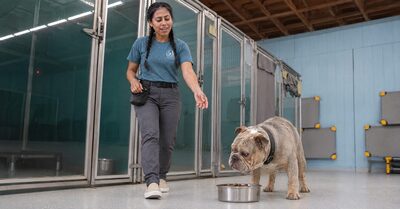
Begging is a household pattern as much as a dog problem. If one family member or a well-meaning guest sneaks food, the dog learns the habit still works, even if everyone else holds the line. Brief guests before meals, keep treats out of reach, and give your dog a mat or place cue as their job instead.
Dogs with place command often show these patterns too. Explore the behaviors below. We treat them all.
Keep learning
Practical reading from our trainers on behavior, everyday manners, and life with a dog in Arizona.
Muzzle training at home for dogs works when it predicts good things, not punishment. A Cave Creek protocol for bite ...
Is my dog trainer insured? Here is what liability coverage should include, how to check it, and why solo in-home ...
Resource guarding in dogs: the trade-up protocol, why never to punish the growl, and when to get help. Start with a ...
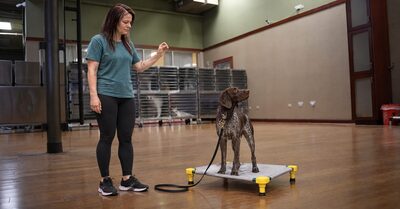
Stop dog jumping on guests: train the place command, run the doorbell protocol, proof the five D's. Private Lessons in ...
Ready for the next step
Every dog and household is different. Get a real conversation with a Partners Dogs trainer who has treated place command for more than 28 years. You leave the call with practical steps you can start at your own pace.