Skip to content
Family-owned · Est. 1997 70,000+ dogs trained 4.8 stars · 2,000+ parent reviews
    Home
    Programs
    Locations
    Resources
    Shop

    Dog Behavior Solutions

    Walk Without Planning Every Escape Route

    If every corner could become a barking, lunging crisis, walks stop feeling restorative. Partners Dogs helps you gain distance, control, and a plan for the real triggers in your neighborhood.
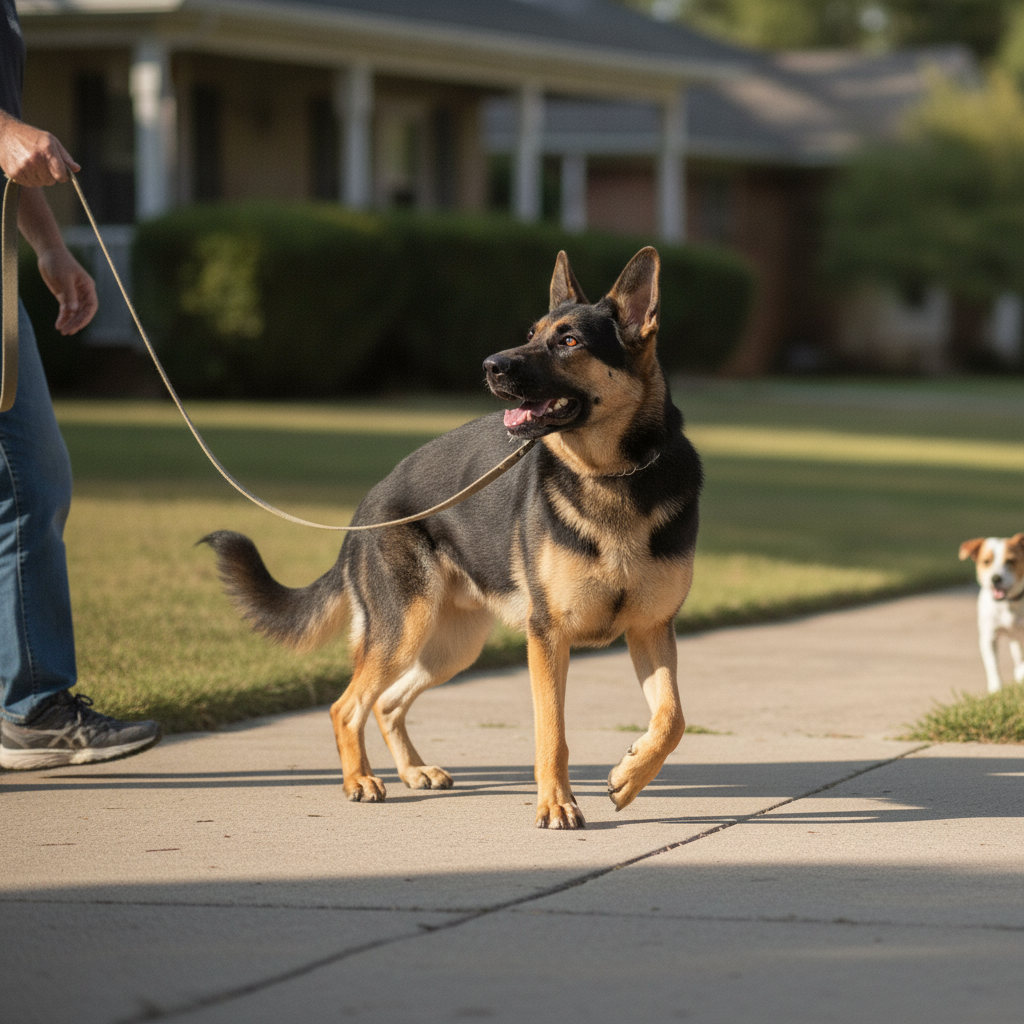
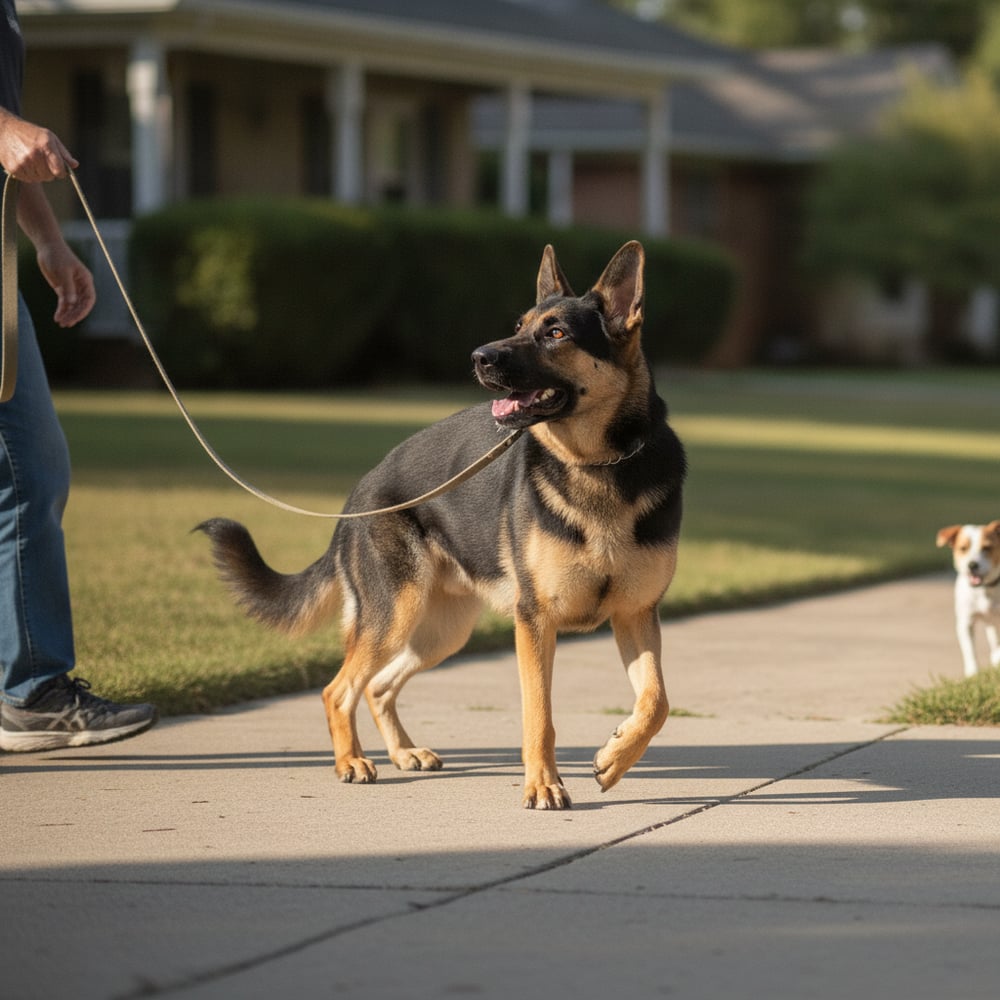
    Calm German Shepherd walking on a loose leash looking up at its owner after leash reactivity training at Partners Dogs

    Behavior severity

    Moderate

    What you may be seeing

    Common signs

    • Freezing, staring, barking, lunging, or spinning on leash
    • Pulling hard enough to unbalance the handler
    • Reacting to dogs, people, wheels, vehicles, or wildlife
    • Redirecting frustration onto the leash
    • Remaining keyed up after the trigger has passed

    Seek help now

    • Any bite, redirected contact, or escape from equipment
    • Pulling that causes a fall, injury, or traffic risk
    • Pursuit after a trigger retreats
    • Sudden onset, pain, or a rapid increase in intensity

    Moderate is a starting point for planning, not a diagnosis. Bites or unsafe handling require veterinary review and an in-person assessment before group work.

    Understanding the behavior

    What is leash reactivity?

    Leash reactivity is an intense response to a trigger while restrained. Fear, frustration, overarousal, or aggression can produce similar displays, so barking and lunging alone do not reveal intent. The dog's history, body language, distance, and recovery guide the plan.

    Good training starts below the point where the dog cannot think. Route changes, visual barriers, safer equipment, and planned distance prevent repeated explosions while the dog learns to notice, disengage, and return attention to the handler.

    The goal is a walk you can manage, not a promise that the dog will enjoy close contact with every trigger. Many dogs improve with consistent practice, but results vary with motivation, bite history, environment, and handler follow-through.

    Partners Dogs has trained Arizona dogs through every kind of leash reactivity case since 1997, at our Scottsdale and Cave Creek facilities. Lifetime trainer support is included with every board-and-train program.

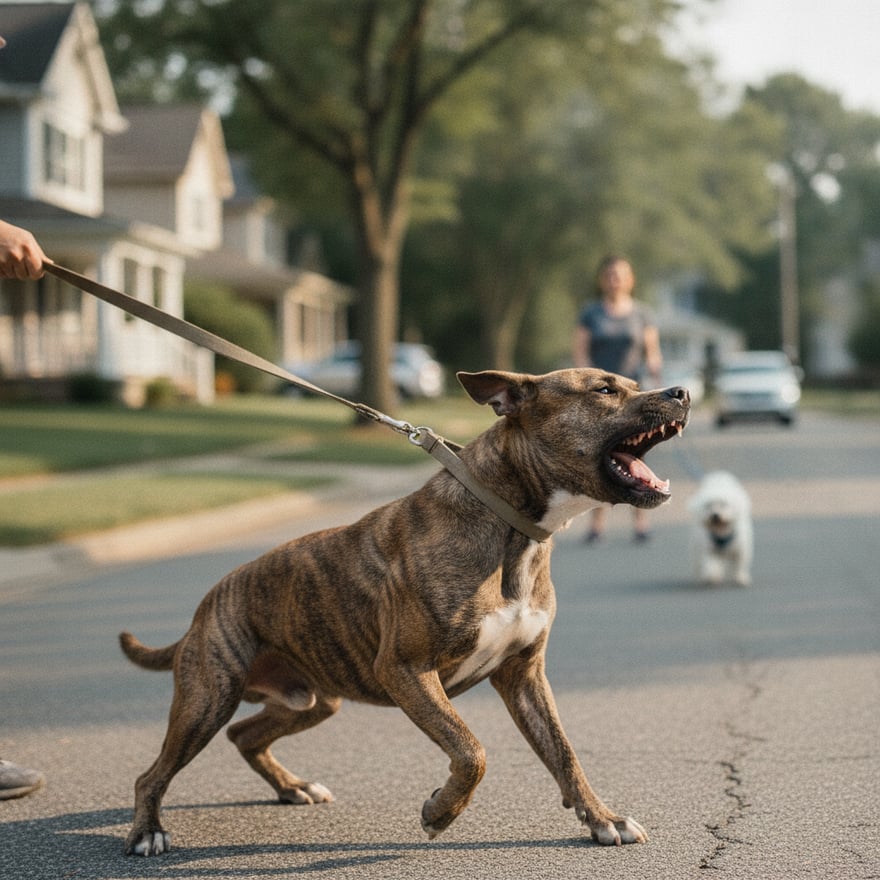
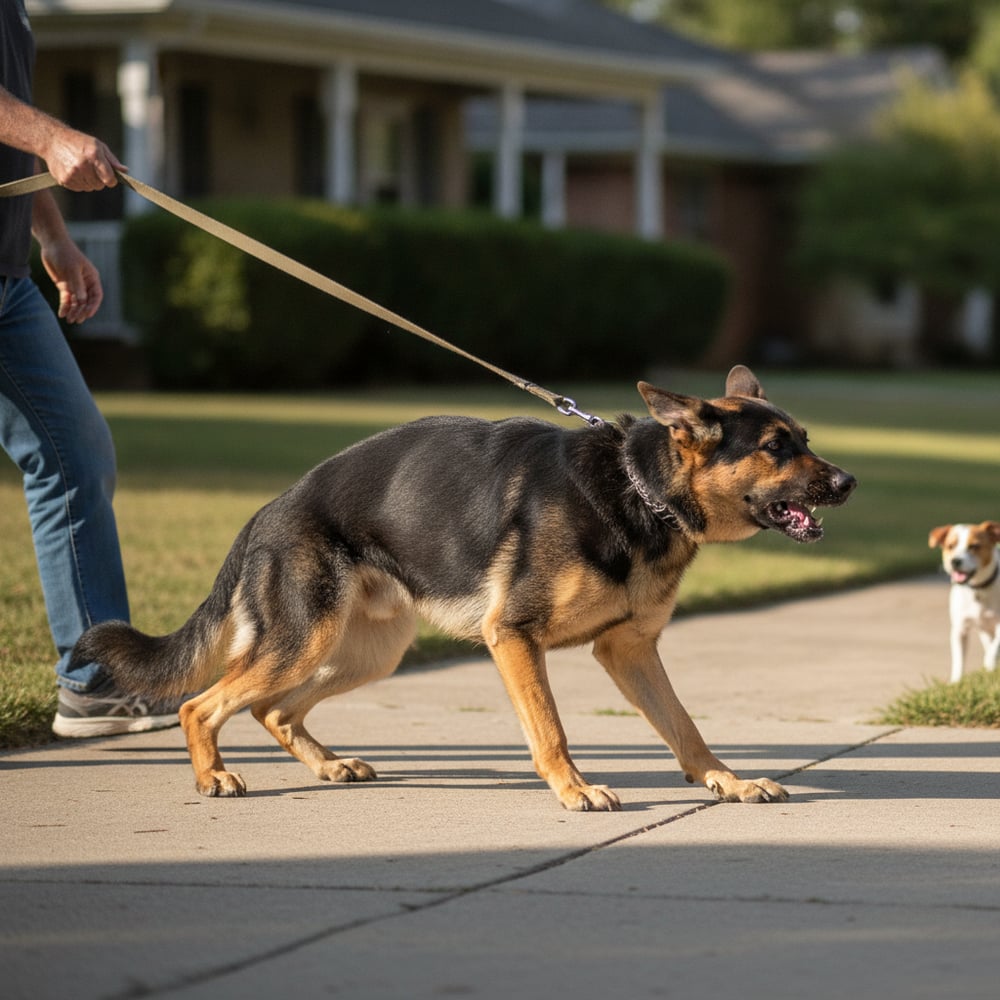
    Reactive adult German Shepherd lunging and barking on a tight leash toward another dog on a neighborhood walk

    The transformation

    Before and after training

    Drag the slider to see the change our programs make for a dog with leash reactivity. Same dog, same home, real outcome.
    Calm German Shepherd walking on a loose leash looking up at its owner after leash reactivity training at Partners Dogs Reactive adult German Shepherd lunging and barking on a tight leash toward another dog on a neighborhood walk

    Watch

    How we work on leash reactivity

    Short walkthroughs from our trainers on the exact techniques we use to resolve leash reactivity. See how the work actually looks, then choose the path that fits your dog.

    Lulu & Moonshine  Episode 1 video thumbnail
    Lulu & Moonshine Episode 1
    Wyatt  Episode 1 video thumbnail
    Wyatt Episode 1
    Reactivity  Leash Reactivity video thumbnail
    Reactivity Leash Reactivity
    70,000+Dogs Trained
    28+Years Experience
    4.8★Average Rating
    2Arizona Campuses

    Recommended path · Moderate severity

    The right program for leash reactivity

    Based on how leash reactivity typically presents, here is where we would start. Not sure which fits? Take the PD360 assessment for a personalized recommendation.

    Alternative

    Private Lessons

    One-on-one sessions to address specific triggers and transfer trainer skills to you.

    The process

    How it works

    1

    Assessment and check-in

    • We verify vaccination records and complete pre-check-in forms.
    • Your dog receives a full behavioral assessment.
    • We set goals and build a personalized training plan.
    • You meet the primary trainer and tour the facility.
    2

    Training and progress reports

    • Multiple active training sessions every day.
    • Controlled exposure and desensitization to triggers.
    • Immersive socialization in a managed environment.
    • Regular progress reports with photos and video.
    3

    Transition and follow-up

    • Private lessons that transfer the training to you.
    • Pet Parenting group classes for ongoing support.
    • Access to our full Pet Parent Guide.
    • Weeks of follow-up so the change lasts at home.

    Not sure which program

    Get a recommendation in minutes

    Take our quick PD360 assessment for a personalized recommendation, or talk to a trainer who has seen leash reactivity many times before.

    What our clients say

    “"Apollo used to drag me to the ground when he saw another dog. I stopped taking him out past 6am just to avoid people. After Behavior Camp, we walked the Greenbelt last weekend and passed six dogs without a single incident. I honestly couldn't believe it was the same dog."”

    Keisha M.

    “"Everyone kept telling me my dog was just 'dominant' or 'not well-socialized.' The Partners team actually explained what was happening in his brain and built a real plan around it. Three months later, our walks are something I actually look forward to."”

    Derek S.

    Live Reviews

    What our families are saying

    Real reviews from real families across our Scottsdale and Cave Creek campuses.

    4.8average rating
    2,000+reviews collected

    Showing 12 recent reviews

    Christi B. Cave Creek Sep 2026 Google

    Excellent experience for our adopted puppy and for me! The staff are amazing, caring, and knowledgeable. Our puppy has learned so many valuable skills, including socialization and walking on a leash, and has become much more confident around other dogs. I’ve also learned a lot about training and how to better support our puppy at home.

    Marina S. Cave Creek Sep 2026 Google

    We had to go out of town and had absolutely no one to watch our furry friend. I trust the opinions of a few staff members and decided it was time for our girls first boarding session. I knew my dog was going to get absolutely loved on and taken good care of, even without add ons like training sessions or daycare. That she was! I have never seen this girl happier to just exist somewhere other than home or her favorite park. Staff communication was on point, especially at pick up when a kennel worker was explaining she ruined her dog bed, asking if I still wanted to take it home. So sweet. Some other staff could use some training on how to be personable, but over all 10/10 would recommend.

    Emily T. Scottsdale Sep 2026 Google

    all of the staff are so kind and attentive. Val has been working 1 on 1 with my puppy and she has been amazing my puppy always leaves happy and will be tired all day when she comes home I’ve had to make 2 changes and they were so accommodating and kind about it please if you are looking into this resort for any type of service I highly recommend

    Boyd D. Cave Creek Sep 2026 Google

    Chastity all 3 of my guys. The Huskys the worst. When he comes out of the trailer, man he's Handsome

    Dan P. Cave Creek Sep 2026 Google

    Lucy and Noa have been so great to work with!

    Cheryl S. Cave Creek Sep 2026 Google

    The people nd trainers are 150% awesome. The cost takes a little getting used to but likely worth it.

    Norbert D. Scottsdale Sep 2026 Google

    Sky is always excited to spend days at her favorite dog hotel… she is also happy when we pick her up, all fed and washed. Great place.

    Ursula A. Scottsdale Sep 2026 Google

    We had an great experience with our dog training. The training was professional, patient, knowledgeable, and truly worked with us to get what our dog needed. We especially appreciated the guidance and support in earning our AKC Community Canine (CGCA) and AKC Urban Canine (CGCU) certificates. Every step was clearly explained, and the classes gave plenty of group time with practical tools that helped build our dog’s confidence, manners, and skills in real-world situations. If you are looking for relaxed and patient trainers who genuinely cares about both the dog and the people at the other end of the leash, we recommend them.

    Nancy S. Scottsdale Sep 2026 Google

    The facility and staff are always very friendly and attentive. I love the concept of the dogs being able to play while they are also reinforcing their training! My dog always loves going to daycare and best of all I know he is being taken care of and is having fun with his friends. Thank you, Partners!!!!!

    John Y. Scottsdale Aug 2026 Google

    Great staff, our dog loves going there.She gets very excited when we say want to go to partners.

    Judy S. Scottsdale Jul 2026 Google

    Our Bouvier (Willie)loves everything about Partners. He looks forward to the daycare, parents class, and even boarding. He loves this facility as much as the staff loves him. I can't say enough good things about this place.

    Janet S. Scottsdale Jul 2026 Google

    Always a great experience. Staff are dedicated to the dogs and are extremely helpful.

    Loved working with us? Leave a review

    Good to know

    Frequently asked questions

    What program is recommended for leash reactivity and how much does it cost?

    Leash reactivity typically starts with Behavior Camp, our 21-day immersive board-and-train ($6,244, discounted with membership), followed by Private Lessons on your actual walking route to generalize the work. A $199 PD360 Assessment, credited toward enrollment in your recommended camp or membership (not toward à la carte bookings or general reservations), tells you if you are looking at frustration-based reactivity or something more serious before we recommend a plan.

    Does leash reactivity mean my dog is actually aggressive?

    Not usually, but it is the most common fear owners bring to us. Leash reactivity looks alarming: barking, lunging, snapping at the air, but it is almost always a frustration or over-threshold response, not true aggression.

    • The tell: most leash-reactive dogs are perfectly social off-leash, at daycare, or at the dog park. The leash itself, not the other dog, is the trigger.
    • What real aggression looks like instead: a stiff, still body, direct hard eye contact, and reactivity that shows up even without a barrier or restraint present.
    • Why the distinction matters: frustration-based reactivity responds well to distance management and engagement training. Genuine aggression needs a different assessment and a more careful protocol.

    If you are not sure which one you are looking at, that is exactly what the PD360 Assessment is for. We will tell you plainly which pattern your dog is showing.

    Can I fix leash reactivity at home without a trainer?

    Mild leash reactivity can absolutely be improved at home, but it takes the right tools and a real plan, because willpower alone runs out. The work that helps most:

    • Manage distance. Cross the street, change direction, or step behind a parked car before your dog hits their threshold. Every reaction strengthens the pattern.
    • Reward engagement. Pay heavily for any moment your dog looks at a trigger and then back to you. That “check-in” is the behavior you are building.
    • Use training-focused equipment. A structured six-foot leash paired with a properly-fitted slip lead gives you the clean, direct communication that leash reactivity work requires. Depending on the dog, your trainer may also fit a prong collar or e-collar, whichever produces the cleanest signal. Retractables and flat-collar-only setups give you minimal control and make the work harder.
    • Walk at quieter times. Buy yourself success by walking when fewer triggers are out, early morning, mid-afternoon in the heat.

    If your dog is over threshold within a block of leaving the house, or if you cannot manufacture distance on your route, that is when DIY stalls. Bring in help before the pattern gets older.

    When does leash reactivity need a professional trainer?

    Bring in a trainer when any of these are true:

    • Your dog is reactive within a block of leaving the house
    • You have stopped walking your dog because it is too stressful
    • The reactions include redirected aggression (your dog snapping at the leash, your hand, or another dog in the household)
    • You have tried DIY work for 60 days with no improvement
    • Your dog is 50+ pounds and the lunging puts you at risk of being pulled down

    At Partners Dogs, leash reactivity is usually a Behavior Camp case, 21 days of immersive board-and-train at our Scottsdale or Cave Creek facility, followed by private lessons in your actual neighborhood. We start every case with a PD360 Assessment so we know which one you are looking at: frustration, fear, or genuine social aggression. Those need different protocols.

    Why is my dog reactive on a leash but fine off-leash?

    Leash reactivity is one of the most common patterns we see at Partners Dogs, and it usually comes from three things working together:

    • Frustration: the leash prevents your dog from greeting the other dog, and over time that frustration builds into a snap-bark-lunge response.
    • Barrier-trapped feeling: when your dog cannot choose to retreat (because they are tied to you), their instinct shifts to making the trigger leave instead.
    • Reinforcement loop: every time the other dog walks past after your dog reacted, your dog's brain logs “barking worked,” which strengthens the pattern.

    Off-leash, dogs have agency. They can approach, retreat, or sniff at their own pace, which usually defuses the trigger. That is why so many leash-reactive dogs are perfectly social at the dog park or in DaySchool.

    What's the difference between pulling and leash reactivity?

    They look similar at the end of the leash but they are different problems:

    • Pulling is mechanical. Your dog moves forward, faster than you, all the time, toward everything. It is steady forward pressure with no real emotional component.
    • Reactivity is emotional. Your dog is fine until a specific trigger appears (another dog, a stranger, a bike), then explodes into barking, lunging, and spinning. They may be relaxed two minutes later.

    Many dogs have both. They pull when calm and react when triggered. The training plans overlap (both build engagement and impulse control), but reactivity requires additional work on the dog's emotional response to the trigger. That is why severe reactivity is usually a Behavior Camp case, while plain pulling is a Foundation Camp case.

    Ready for the next step

    Talk to a trainer now

    Every dog and household is different. Get a real conversation with a Partners Dogs trainer who has treated leash reactivity for more than 28 years. You hear how we would approach it, and you decide from there.