Skip to content
Family-owned · Est. 1997 70,000+ dogs trained 4.8 stars · 2,000+ parent reviews
    Home
    Programs
    Locations
    Resources
    Shop

    Dog Behavior Solutions

    Stop Organizing Your Home Around a Growl

    Stepping around bowls, beds, toys, or a guarded person is exhausting and risky. Partners Dogs helps protect the household first, then builds a plan around what your dog guards and why.
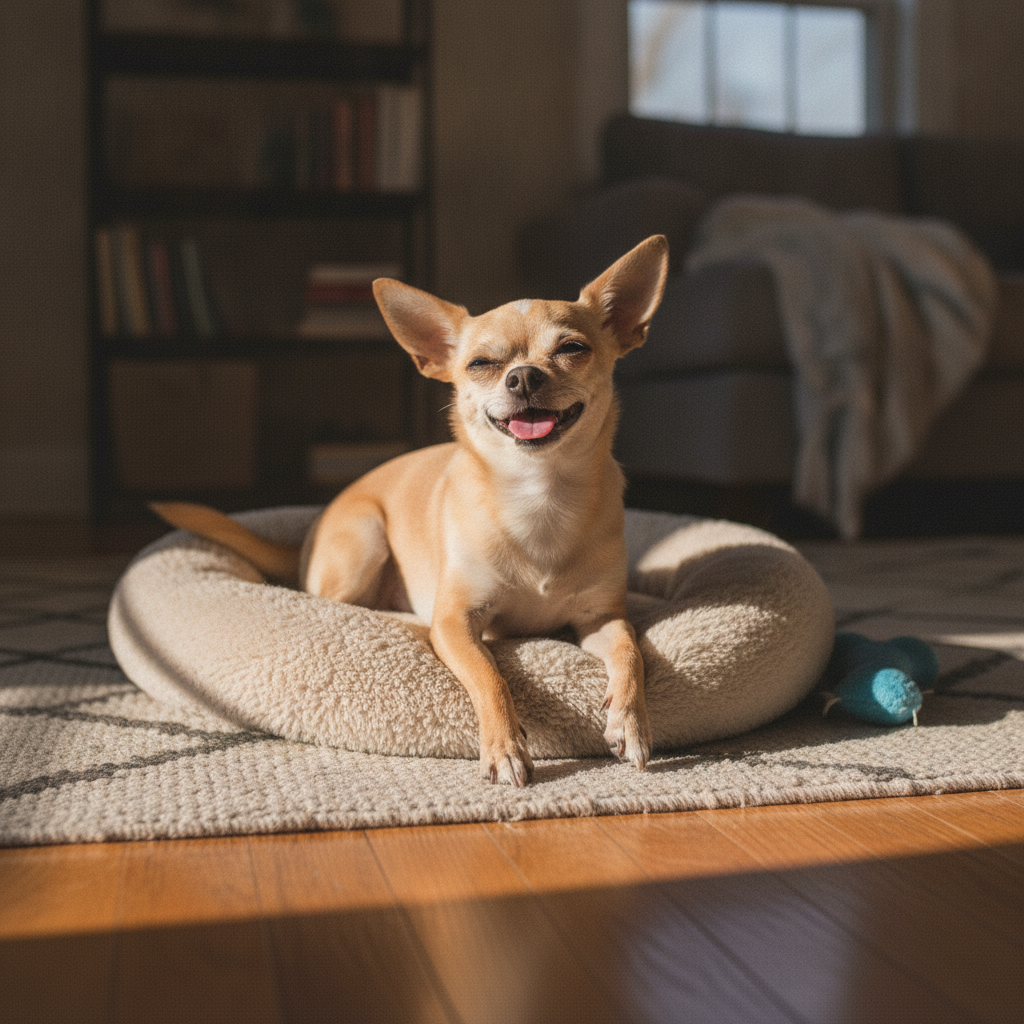
    Relaxed happy adult Chihuahua resting on a dog bed looking up at its owner after Partners Dogs resource guarding training.

    Behavior severity

    Moderate

    What you may be seeing

    Common signs

    • Freezing, hovering, hard staring, growling, or eating faster on approach
    • Blocking access to a bed, doorway, person, toy, or found object
    • Carrying an item away and becoming tense when followed
    • Guarding only selected high-value resources
    • Conflict between household animals over access

    Seek help now

    • Any snap, bite, puncture, or fight over a resource
    • Guarding around a child or vulnerable adult
    • Escalation from warnings to contact
    • Sudden onset, pain, appetite change, or neurological signs

    Moderate is a starting point for planning, not a diagnosis. Bites, children, or unpredictable guarding require veterinary care and an in-person assessment before exercises begin.

    Understanding the behavior

    What is resource guarding?

    Resource guarding is defensive behavior around something a dog values, including food, toys, resting spaces, found objects, doorways, or people. Early signs such as freezing and hard staring matter. Punishing a growl or taking an item by force can increase conflict and remove warning signals.

    Management prevents confrontations while the case is assessed. Separate dogs for high-value items, keep children away from guarded resources, trade rather than grab when safe, and control access to predictable triggers.

    Any bite or sudden onset warrants veterinary evaluation. Pain and medical changes can affect guarding. Many dogs improve with careful behavior work, but prognosis varies and some resources may need permanent management.

    Partners Dogs has trained Arizona dogs through every kind of resource guarding case since 1997, at our Scottsdale and Cave Creek facilities. Lifetime trainer support is included with every board-and-train program.

    Tan adult Chihuahua lying stiff and hovering over a toy on a rug, showing resource guarding behavior before Partners Dogs training.

    The transformation

    Before and after training

    Drag the slider to see the change our programs make for a dog with resource guarding. Same dog, same home, real outcome.
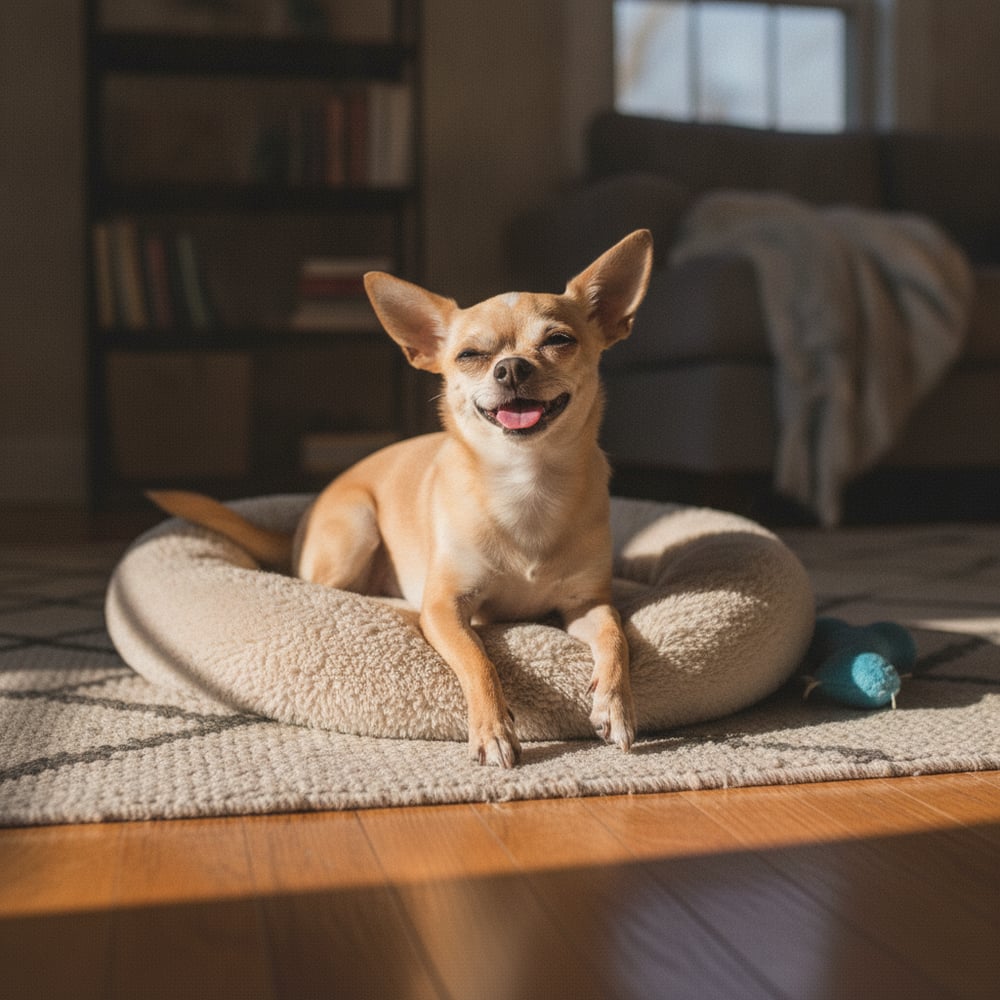
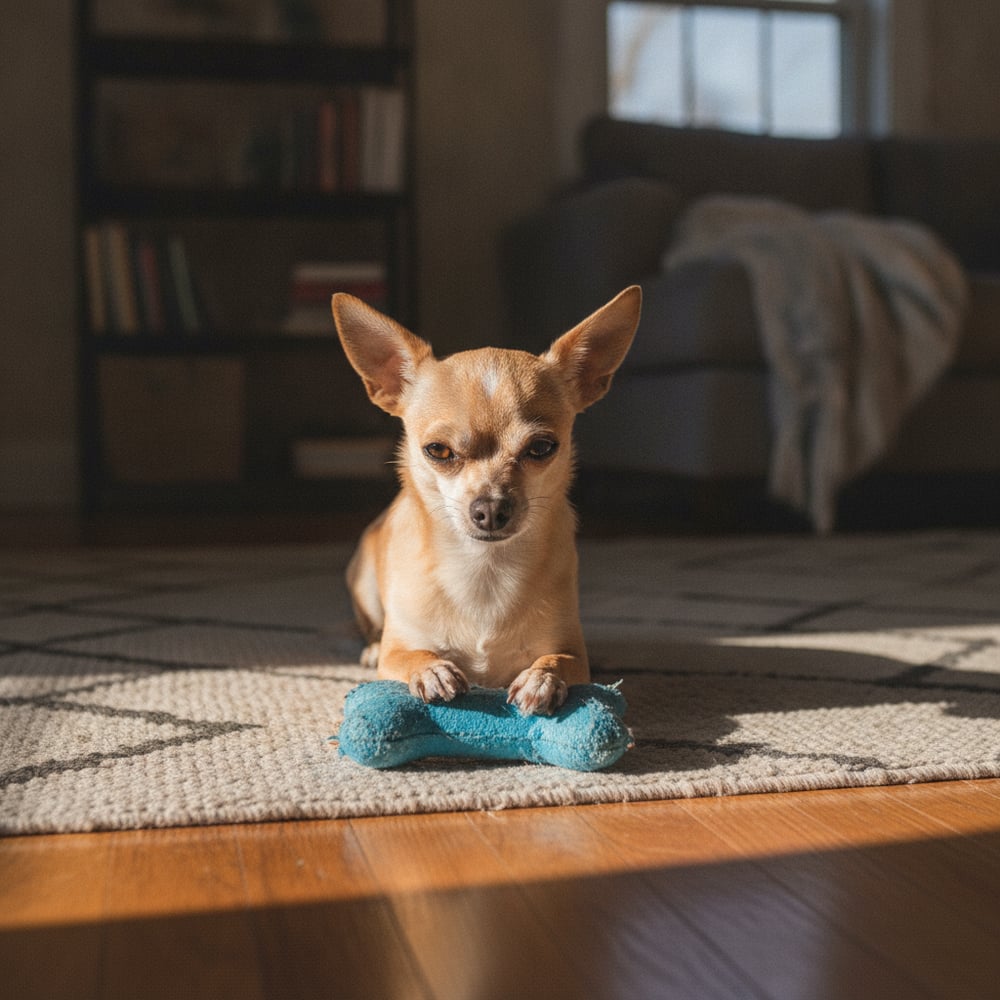
    Relaxed happy adult Chihuahua resting on a dog bed looking up at its owner after Partners Dogs resource guarding training. Tan adult Chihuahua lying stiff and hovering over a toy on a rug, showing resource guarding behavior before Partners Dogs training.

    Watch

    How we work on resource guarding

    Short walkthroughs from our trainers on the exact techniques we use to resolve resource guarding. See how the work actually looks, then choose the path that fits your dog.
    Bruno  Episode 1 video thumbnail
    Bruno Episode 1
    Reactivity  Growling video thumbnail
    Reactivity Growling
    Reactivity  Resource Guarding video thumbnail
    Reactivity Resource Guarding
    70,000+Dogs Trained
    28+Years Experience
    4.8★Average Rating
    2Arizona Campuses

    Recommended path · Moderate severity

    The right program for resource guarding

    Based on how resource guarding typically presents, here is where we would start. Not sure which fits? Take the PD360 assessment for a personalized recommendation.

    Alternative

    Private Lessons

    One-on-one sessions to address specific triggers and transfer trainer skills to you.

    The process

    How it works

    1

    Assessment and check-in

    • We verify vaccination records and complete pre-check-in forms.
    • Your dog receives a full behavioral assessment.
    • We set goals and build a personalized training plan.
    • You meet the primary trainer and tour the facility.
    2

    Training and progress reports

    • Multiple active training sessions every day.
    • Controlled exposure and desensitization to triggers.
    • Immersive socialization in a managed environment.
    • Regular progress reports with photos and video.
    3

    Transition and follow-up

    • Private lessons that transfer the training to you.
    • Pet Parenting group classes for ongoing support.
    • Access to our full Pet Parent Guide.
    • Weeks of follow-up so the change lasts at home.

    Not sure which program

    Get a recommendation in minutes

    Take our quick PD360 assessment for a personalized recommendation, or talk to a trainer who has seen resource guarding many times before.

    What our clients say

    “"We had three kids and a dog who would snap if anyone walked near his bowl. We were managing the problem for two years before we called Partners. The household changed significantly after training, and we still use adult supervision and clear mealtime rules. I wish we'd called sooner."”

    Tina G.

    “"Rosie would guard the couch, guard her toys, guard me from my husband, it was exhausting and a little scary. The Partners team explained exactly what was happening and why, and the private lessons gave us a real protocol to follow. With consistent work, the guarding dropped significantly. It's a different atmosphere at home."”

    Brian K.

    Live Reviews

    What our families are saying

    Real reviews from real families across our Scottsdale and Cave Creek campuses.

    4.8average rating
    2,000+reviews collected

    Showing 12 recent reviews

    Christi B. Cave Creek Sep 2026 Google

    Excellent experience for our adopted puppy and for me! The staff are amazing, caring, and knowledgeable. Our puppy has learned so many valuable skills, including socialization and walking on a leash, and has become much more confident around other dogs. I’ve also learned a lot about training and how to better support our puppy at home.

    Marina S. Cave Creek Sep 2026 Google

    We had to go out of town and had absolutely no one to watch our furry friend. I trust the opinions of a few staff members and decided it was time for our girls first boarding session. I knew my dog was going to get absolutely loved on and taken good care of, even without add ons like training sessions or daycare. That she was! I have never seen this girl happier to just exist somewhere other than home or her favorite park. Staff communication was on point, especially at pick up when a kennel worker was explaining she ruined her dog bed, asking if I still wanted to take it home. So sweet. Some other staff could use some training on how to be personable, but over all 10/10 would recommend.

    Emily T. Scottsdale Sep 2026 Google

    all of the staff are so kind and attentive. Val has been working 1 on 1 with my puppy and she has been amazing my puppy always leaves happy and will be tired all day when she comes home I’ve had to make 2 changes and they were so accommodating and kind about it please if you are looking into this resort for any type of service I highly recommend

    Boyd D. Cave Creek Sep 2026 Google

    Chastity all 3 of my guys. The Huskys the worst. When he comes out of the trailer, man he's Handsome

    Dan P. Cave Creek Sep 2026 Google

    Lucy and Noa have been so great to work with!

    Cheryl S. Cave Creek Sep 2026 Google

    The people nd trainers are 150% awesome. The cost takes a little getting used to but likely worth it.

    Norbert D. Scottsdale Sep 2026 Google

    Sky is always excited to spend days at her favorite dog hotel… she is also happy when we pick her up, all fed and washed. Great place.

    Ursula A. Scottsdale Sep 2026 Google

    We had an great experience with our dog training. The training was professional, patient, knowledgeable, and truly worked with us to get what our dog needed. We especially appreciated the guidance and support in earning our AKC Community Canine (CGCA) and AKC Urban Canine (CGCU) certificates. Every step was clearly explained, and the classes gave plenty of group time with practical tools that helped build our dog’s confidence, manners, and skills in real-world situations. If you are looking for relaxed and patient trainers who genuinely cares about both the dog and the people at the other end of the leash, we recommend them.

    Nancy S. Scottsdale Sep 2026 Google

    The facility and staff are always very friendly and attentive. I love the concept of the dogs being able to play while they are also reinforcing their training! My dog always loves going to daycare and best of all I know he is being taken care of and is having fun with his friends. Thank you, Partners!!!!!

    John Y. Scottsdale Aug 2026 Google

    Great staff, our dog loves going there.She gets very excited when we say want to go to partners.

    Judy S. Scottsdale Jul 2026 Google

    Our Bouvier (Willie)loves everything about Partners. He looks forward to the daycare, parents class, and even boarding. He loves this facility as much as the staff loves him. I can't say enough good things about this place.

    Janet S. Scottsdale Jul 2026 Google

    Always a great experience. Staff are dedicated to the dogs and are extremely helpful.

    Loved working with us? Leave a review

    Good to know

    Frequently asked questions

    What program is recommended for resource guarding, and how much does it cost?

    Resource guarding typically calls for Behavior Camp, our 21-day board-and-train focused on trade-based training and impulse control ($6,244, discounted with membership), with private lessons layered in for households where the guarding is specific to certain people or other dogs. A $199 PD360 Assessment, credited toward enrollment in your recommended camp or membership (not toward à la carte bookings or general reservations), confirms severity before we recommend a plan.

    Is resource guarding a sign my dog will become aggressive in other situations?

    Not necessarily, and this is a common worry we can usually put to rest with more context.

    • Guarding is often narrow and context-specific. A dog can guard a bully stick with real intensity and be completely relaxed about everything else, sharing space, being handled, greeting strangers.
    • It's a resource-value response, not a personality trait. The behavior is about protecting something the dog perceives as scarce or valuable, not a general disposition toward conflict.
    • It's still worth addressing. Left unmanaged, guarding around one resource can occasionally generalize to others, or escalate in intensity over time as early warnings get ignored or punished.

    The safest approach is treating any guarding behavior seriously and getting ahead of it, without assuming it means something bigger is wrong with your dog.

    How do I safely take something away from a dog that guards?

    The instinct to just grab the item is exactly what makes guarding worse. The safer approach is trading, not taking.

    • Trade up. Offer something the dog values more than what they currently have, then let them make the choice to drop the lower-value item on their own.
    • Build the “drop” or “trade” cue with low stakes first. Practice with items your dog doesn't actually care much about before you ever need it for a genuinely high-value item.
    • Never reach in or grab. No sudden movements toward the mouth, no staring the dog down, no cornering. All of that raises the stakes for a guarding dog instead of lowering them.
    • If your dog already guards intensely, practice this with a professional first rather than testing it live with a real high-value item in the house.

    This is core work in a resource guarding protocol, and it's one of the fastest things to improve with the right technique.

    How do I stop my dogs from fighting over food and toys?

    Inter-dog resource guarding is one of the most stressful patterns in a multi-dog household and one of the easiest to make worse with the wrong approach. The non-negotiables:

    • Feed separately. Different rooms, behind closed doors or baby gates. Do not feed dogs side by side and hope they figure it out.
    • Remove high-value chews and toys until you have a real plan. Bones, bully sticks, and stuffed Kongs are the most common fight triggers.
    • Do not let dogs “work it out.” Every fight makes the next one more likely. Each incident reinforces the pattern.
    • Address the underlying tension. Resource guarding between dogs is usually a symptom of broader social conflict in the household. Structure, predictability, and clear human leadership reduce the pressure.

    If fights have drawn blood, this is sibling aggression territory and a Transform Camp case at Partners Dogs. The PD360 Assessment will determine whether the work can be done with one dog or whether both need behavior modification.

    Why does my dog growl when I get near their food or toys?

    Resource guarding is a normal canine behavior gone unmanaged. In a wolf pack or feral context, a dog who let others take food simply did not survive. The instinct to protect a high-value resource is hard-wired.

    What turns it into a problem is when the guarding escalates from a freeze or a stare into a growl, then a snap, then a bite, usually because the early warning signs were ignored, dismissed, or punished.

    Common patterns we see:

    • Puppies who were corrected or had food taken away learn that humans approaching their bowl means losing food. Guarding escalates.
    • Multi-dog households with food competition. Dogs guard against each other and the pattern generalizes to humans.
    • Underlying anxiety that makes the dog feel like resources are scarce even when they are not.

    The fix is teaching your dog that humans approaching their stuff predicts more stuff, not less. Never just take items away. Never punish the growl.

    What if my dogs are fighting each other over food, not guarding from me?

    Conflict between household dogs at feeding time is common and needs the same immediate management as guarding from a person: complete separation at meals, no shared bowls, and picking up food only once every dog has left the area. The dogs may also need individually tailored work, since one guarding dog can put every dog in the home at risk.

    Ready for the next step

    Talk to a trainer now

    Every dog and household is different. Get a real conversation with a Partners Dogs trainer who has treated resource guarding for more than 28 years. You leave the call with practical steps you can start at your own pace.